
Reading the World Through Touch, Dignity, and Inclusion

There is a wonder in reading in Braille that the sighted will never know: to touch words and to have them touch you back.
– Jim Fiebig
Most of us take the ability to read for granted. But for those without sight, it is not. Braille, a tactile writing system, enables the visually impaired to read.
Braille Day marks the birth anniversary of Louis Braille, the French educator who lost his sight at age three and revolutionized literacy for blind and partially sighted individuals. Nearly two centuries after he developed the six-dot code that bears his name, Braille remains a powerful symbol of independence, dignity, and equality.
More than dots on paper
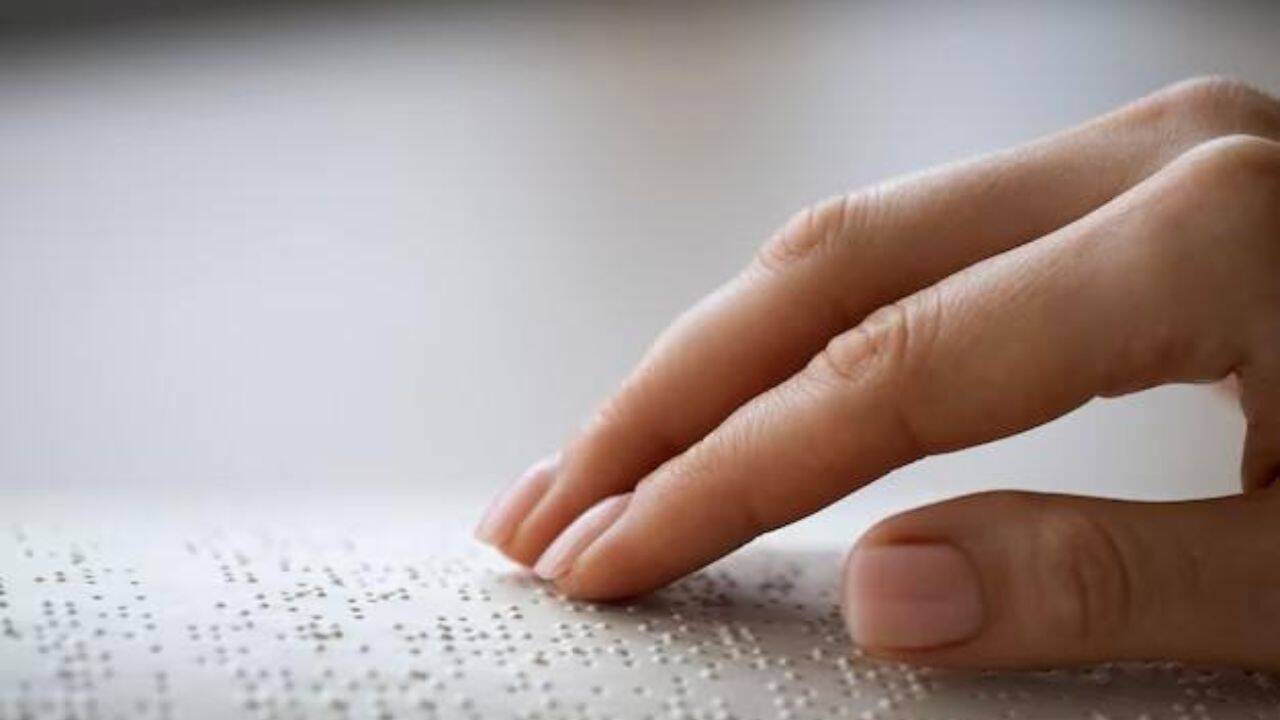
At its core, Braille is a system of raised dots arranged in cells of six, enabling the representation of letters, numbers, punctuation, and even musical and mathematical notation through touch. However, reducing Braille to a mere technical description overlooks its more profound significance.

For a blind child learning to read, Braille is not just about decoding words; it is about developing language skills, confidence, and cognitive independence. Studies across countries consistently show that blind adults proficient in Braille have higher rates of employment and education than those who are not. Literacy, regardless of format, shapes opportunity.
In a world dominated by screens, audio assistants, and speech-to-text tools, Braille continues to offer something unique: privacy, precision, and permanence. While listening to information is beneficial, reading allows individuals to skim, reread, pause, analyze, and truly possess knowledge.
India and the reality of visual impairment
India is home to one of the largest populations of visually impaired individuals in the world. Estimates suggest that millions live with partial or complete vision loss, spanning various ages, geographic locations, and economic statuses. However, access to Braille education and materials remains inconsistent.
Urban centers may have specialized schools, libraries, and assistive technologies, but rural and semi-urban areas often face shortages of trained teachers, updated textbooks, and affordable devices. For many visually impaired students, the journey to literacy is influenced as much by systemic barriers as by personal determination.
In the Indian context, World Braille Day serves as both a celebration and an opportunity for introspection. It raises challenging questions: Are Braille textbooks available on time? Are public examinations accessible? Do libraries, museums, and government offices provide information in formats that everyone can read?
Braille in a digital age
There is a common misconception that Braille is becoming obsolete in the age of smartphones and artificial intelligence. However, the reality is more nuanced. Technology has not replaced Braille; instead, it has transformed how Braille is produced, distributed, and utilized.
Refreshable Braille displays now enable users to read digital content line by line through dynamic tactile cells. Braille embossers can produce textbooks at unprecedented speeds. When paired with assistive software, smartphones and computers enable users to seamlessly switch between audio and tactile reading.
Despite these advancements, such technologies are often expensive and inaccessible to those who need them most. Bridging this digital divide is as crucial as promoting Braille itself. Inclusion should not be a luxury reserved for a select few.
Language, culture, and identity
Braille is not a singular universal language; it adapts to various scripts and cultures worldwide. In India, Braille is available in multiple languages, including Hindi, Tamil, Bengali, Marathi, and Urdu. This linguistic diversity is significant.
Access to Braille in one’s mother tongue enhances cultural identity and learning outcomes. A child who can read stories, poems, and textbooks in their language experiences education not as charity, but as a right.
Thus, preserving and expanding multilingual Braille resources is an act of cultural inclusion and not merely a technical accommodation.
The role of society
Inclusion is not solely the responsibility of the visually impaired community; it is a shared obligation. Publishers can ensure that books are offered in accessible formats. Architects and urban planners can incorporate Braille signage in public spaces. Employers can recognize that accessibility tools are enablers, not special favors.
Even small actions can make a difference. Elevators equipped with Braille buttons, medicine labels in tactile print, and restaurant menus in Braille all signal respect. They communicate, without words, that individuals belong.
World Braille Day also serves as an opportunity for parents, educators, and policymakers to reaffirm their commitment to inclusive education. Teaching Braille early, alongside other skills, empowers children to navigate the world on their own terms.
Beyond awareness, towards action
Awareness days often risk becoming mere symbolic gestures—a social media post, a hashtag, a speech. However, the true spirit of World Braille Day lies in sustained action.
This involves investing in teacher training, subsidizing assistive devices, updating curricula, and enforcing accessibility standards. It also means including visually impaired individuals in decision-making processes, not merely as beneficiaries but as experts of their own lived experiences.
Most importantly, it means recognizing that accessibility benefits everyone. Features designed for inclusion often enhance usability for all—a principle known as universal design.
Reading the future
Live without seeing but be what you are. – Louis Braille
Louis Braille could not have envisioned the digital world we live in today, yet his invention remains profoundly relevant. In an era inundated with information, the right to read—quietly, independently, and with dignity—is more critical than ever.
World Braille Day is not merely an occasion to honor a historical innovation. It demonstrates a commitment to a future in which no one is excluded from knowledge because of their worldview.
As we observe this day, the question is not whether Braille remains significant. The real question is whether we, as a society, are doing enough to ensure that everyone has access to the tools necessary for reading, learning, and full participation. Inclusion, much like literacy, requires active effort to build—dot by dot.
Disclaimer
Views expressed above are the author’s own.
END OF ARTICLE