Cockroaches with tiny backpacks could become the world’s most unexpected spy technology |
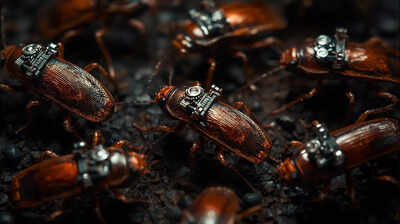
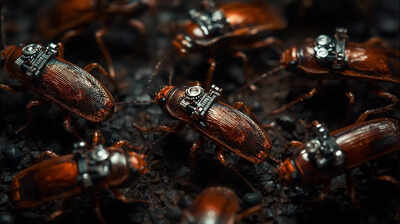
For years, the future was envisioned as clean lines and loud machinery. Flying vehicles, metal outfits, and flashing weapons. None of this prepared many people for the possibility that espionage could crawl rather than soar. Nonetheless, in a small area of Germany’s IT landscape, insects have emerged as a major topic of discussion regarding defence and surveillance. SWARM Biotactics, a startup company created in 2024, is gaining traction for transforming cockroaches into mobile intelligence instruments. It seems unsettling, even ludicrous, until the logic sinks in. These are not Sci-Fi props. They are live creatures equipped with little packs that move across areas where machines fail and humans cannot safely travel.
Cockroaches may become the next spy technology and rescuers
The logic is practical rather than dramatic. Insects already go where humans avoid. Collapsed buildings. Tight gaps. Damaged infrastructure. Areas under watch. Traditional drones struggle indoors. Ground robots get stuck. People face obvious risks.Cockroaches, on the other hand, are built for chaos. They survive pressure, darkness, and debris. SWARM’s founders believe this makes them useful, not as replacements for existing tools, but as something different altogether. A way to gather small pieces of information from spaces that are otherwise unreachable. The timing also matters. Germany is reassessing its defence capabilities, especially as war in Ukraine reshapes how intelligence and access are viewed.Antennae are characteristic insect features that play a crucial role in the creatures’ life. Cockroaches utilise their antennae to identify impediments such as walls and travel around them. SWARM took advantage of this feature by putting a pair of electrodes on their spyware backpacks that connect to the cockroach’s antennae. By transmitting impulses through these electrodes, the scientists may trigger their inherent navigation instincts and steer them in certain routes. This can be done with a remote control, piloting the bug like an RC car; however, the company is also working on algorithms for autonomous directions, which would allow them to control an entire swarm of cockroaches, each with different technologies built into their backpacks, such as cameras, microphones, GPS, and communication equipment.
Madagascar hissing cockroach might be a choice
The insect is large enough to carry equipment without collapsing under the weight. It is resilient. It has been studied for decades, meaning scientists understand its behaviour and biology better than many other insects.This familiarity lowers uncertainty. It allows engineers to design systems that work with the insect’s natural movement instead of against it. The aim is not to force behaviour but to guide it.
Is this only about military use
SWARM often talks about defence, but it also mentions disaster response. Earthquakes. Building collapses. Areas are unsafe for rescue teams. In those settings, small moving sensors could locate survivors or assess structural damage.Whether the technology will be used this way remains to be seen. Military funding often shapes early development, even if civilian uses are later proposed.