

Lessons in longevity: Meet the 93-year-old, with the heart of a 40-year-old. His secret? Clean eating, exercise, and….
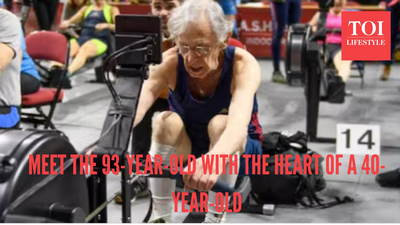

Richard Morgan, a 93-year-old former coal miner from Ireland, rows like a champion, and has the heart and muscles of a much younger man. According to doctors, his body fat percentage is just 15%, while his lean muscle mass is a staggering 80%. This revealed that his heart health equals that of an average 40-year-old athlete. The now nonagenarian started competitive rowing at age 72, and now rows every day while completing 20 kilometers of rowing per week and doing intense weightlifting, to win four world championships since turning 80. Let’s see what keeps him going…Starting late paid offMorgan demonstrates that age does not prevent people from achieving fitness progress. He took up rowing at 72, when many retire from sports, and built world-class ability by 80. Research evidence supports this discovery, because older adults who perform aerobic training develop their VO2 max levels, which show heart-lung fitness, but most people experience a decline in these levels as they age.
A research study which combined 41 clinical trials, with more than 2000 elderly participants, demonstrated that endurance training leads to a 3.5 ml/kg/min increase in VO2 max, which reduces heart disease risk, and improves daily functioning. Rowing specifically raises aerobic capacity by 22% in the elderly after six months, without weight loss. Late starters such as Morgan achieve muscle growth, endurance and vitality, demonstrating that starting late does not prevent success when compared to early beginnings.Daily rowing builds heart strengthRowing allows the body to use all its muscles at once while improving cardiovascular health. Morgan rows 20 km weekly plus 40-minute morning sessions, pushing his heart rate to 153 bpm during tests. This exceeds typical 90s levels and matches the intensity of vigorous exercise for a 40-year-old.

The full-body cardio exercise helps people use oxygen more effectively, which becomes vital for aging hearts to operate correctly. Research on elite older rowers shows their VO2 max values range from 31 to 49 ml/kg/min, which surpasses the VO2 max range of sedentary people (19-37). Their aging process moves at a rate that is multiple years slower. Rowing exercises help people aged 50 or older decrease their chances of developing metabolic syndrome and sarcopenia while building bone density. The exercise enables Morgan to maintain his young-adult “oxygen uptake kinetics”, because it provides his muscles with fast fuel delivery while protecting him from stroke development.Weight training keeps muscles youngLifting to failure preserves Morgan’s 80% muscle mass at 93. He uses rowing exercises together with weightlifting to fight sarcopenia because this condition leads to muscle loss, which begins at age 30 and progresses at 3-5% annually. Strength training helps reduce its effects.Research shows that seniors who perform strength exercises before their aerobic workouts achieve better VO2 peak results, lower blood pressure and stronger muscles than those who only do cardio. Athletes who compete in endurance rowing events demonstrate better cardiorespiratory fitness than resistance trainers, but Morgan reaches his peak performance through the combination of both exercise types. The two exercises help him achieve better carotid stiffness results, strengthen his muscles, and maintain his body fat percentage at 15%.Fuel right for lasting energyMorgan uses food for performance purposes by consuming 2.3g of protein for every kilogram of his lean body weight each day, viewing his diet as a source of energy. High protein supports his muscle repairs from training.

Older athletes who want to maintain their weight and athletic performance during their 90s, need sufficient calorie intake along with protein consumption. Research indicates that eating with purpose combined with physical exercise, helps older adults lower their death risk, which aligns with Morgan’s method of living with purpose. Clean fuel enables his body to recover while maintaining low inflammation levels which support the lean body mass that protects his joints and heart.Lessons from a ChampionMorgan defines aging through his constant active lifestyle. His daily routine includes physical exercise and smart eating habits, which help him fight against normal age-related changes.Elite older athletes achieve their peak fitness through continuous dedicated training. Rowing serves as a low-impact exercise which provides seniors with full-body physical benefits, while improving their cognitive abilities and joint health, and creating positive mental changes. Morgan’s tests show that people of all ages can develop powerful heart function, quick oxygen delivery and strong muscles by putting in consistent work. Disclaimer: This article is informational only and not a substitute for medical advice