

Fatal gap: Bengaluru doctors warn vaccine alone not enough for severe dogbites | Bengaluru News
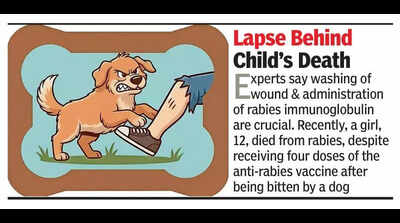
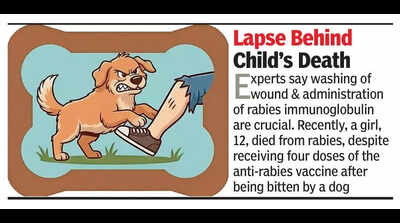
Bengaluru: The death of a 12-year-old girl from rabies, weeks after a dogbite, has exposed a fatal gap in post-exposure care: the failure to administer Rabies Immunoglobulin (RIG), which is mandatory for severe bites.Despite receiving four doses of the anti-rabies vaccine, the tween developed paralytic rabies and died at a city hospital. Doctors warned that vaccination alone cannot prevent the virus without timely RIG. The girl had sustained a category-3 dogbite — puncture to the skin where the dog’s saliva enters the wound — on her right leg but was not given RIG, which neutralises the virus at the wound site before it reaches the nervous system. Specialists at Indira Gandhi Institute of Child Health (IGICH), where she was treated, stated that vaccination alone is insufficient in high-risk injuries. “Rabies prevention is effective only when complete post-exposure prophylaxis — wound-washing, vaccine, and RIG — is administered,” the doctors stressed.
Nearly two months after the bite, she was admitted to IGICH with low-grade fever, progressive weakness in both legs, vomiting, and headache. Her condition worsened, resulting in difficulty walking, sitting, and urinary retention. Importantly, she did not initially show classic rabies symptoms such as hydrophobia, seizures, or altered behaviour, making diagnosis difficult.Doctors first considered acute demyelinating encephalomyelitis (ADEM), Guillain-Barré Syndrome (GBS), and acute flaccid paralysis (AFP). By the ninth day, she developed altered sensorium, dystonic limb movements, and loss of brainstem reflexes. On suspicion of rabies encephalitis, saliva PCR tests were done three times before the infection was confirmed.“Diagnosis of rabies encephalitis can be challenging, especially in its paralytic form, as it may masquerade as other neurological disorders such as Guillain-Barré Syndrome or acute disseminated encephalomyelitis. In this case, the absence of typical symptoms such as hydrophobia, along with progressive motor weakness, neurogenic bladder, and dystonia, made the diagnosis more complex. Though the history of dogbite and the pattern of symptom progression strongly suggested rabies infection, other differentials were initially considered,” said Dr Vykunta Raju Gowda, a paediatric neurologist at IGICH.He added, “This case emphasises the importance of clinical suspicion for rabies in children presenting with progressive lower limb weakness and the necessity of timely and complete post-exposure prophylaxis to prevent such rare but fatal outcomes.”The reason for not administering RIG remains unclear. The family claimed they were not informed, while a British Medical Journal (BMJ) case report suggests that RIG may not have been available in the rural area where the initial treatment was administered. The report notes that this highlights a critical gap in access to complete rabies prophylaxis in such regions.