

When phones disappear, time telling disappears too: How NYC classrooms exposed an unexpected skills gap
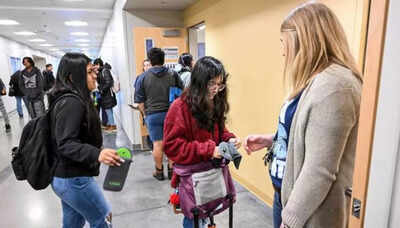
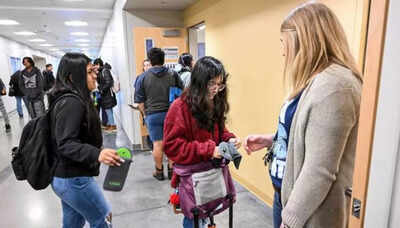
New York City’s ban on smartphones in schools has delivered quieter corridors, faster foot traffic between classes and more focused lessons. But it has also revealed an unforeseen problem: many students struggle to read analogue clocks without their phones.Teachers across the city say the absence of smartphones has exposed gaps in basic time-telling skills that were previously masked by constant access to digital displays. The issue has surfaced despite long-standing curriculum requirements that students learn to read clocks in early primary school.Classrooms notice an old skill fadingTiana Millen, assistant principal at Cardozo High School in Queens, said the ban has largely improved school life, according to comments quoted by the Gothamist. Students are socialising more at lunch and arriving to class on time, she said in conversation with the Gothamist. However, she added that many do not realise they are punctual “because they don’t know how to read the clocks,” a remark attributed to Millen by the Gothamist.English teacher Madi Mornhinweg, who works at a Manhattan high school, said students frequently interrupt lessons to ask the time, as quoted by the Gothamist. She explained that the constant questions became frustrating, and she began responding by asking students to identify the big hand and the little hand, according to her account shared with the Gothamist.Early lessons, little practiceThe city’s education department said students are taught to read both analogue and digital clocks in first and second grade. Spokesperson Isla Gething said NYCPS recognises the importance of traditional time-reading skills, noting that terms such as “o’clock”, “half-past” and “quarter-to” are taught early, as quoted by the Gothamist.Outside Midwood High School in Brooklyn, students acknowledged mixed abilities among their peers. Cheyenne Francis, 14, said she can read a clock but believes classmates forgot the skill because they relied on phones, a view she shared with the Gothamist. She added that incorrect clock settings sometimes cause confusion, according to the Gothamist.Farzona Yakuba, 15, told the Gothamist she understands analogue clocks but often asks others out of habit. She said students can become lazy about checking the time when answers are easily available, as quoted by the Gothamist.A wider digital shiftConcern about clock literacy predates the phone ban. A 2017 study in Oklahoma found only one in five children aged six to 12 could read clocks. Teachers say broken clocks in school buildings compound the problem.Travis Malekpour, a teacher at Cardozo, said he has incorporated telling time and calendar management into algebra lessons, according to comments he made to the Gothamist. Kris Perry, executive director of Children and Screens, said teens raised in digital environments have had little reason to practise analogue skills, in remarks quoted by the Gothamist.At the same time, educators noted students’ strong digital abilities. Mornhinweg recalled struggling with new software, saying her students guided her through it calmly, a moment she described to the Gothamist.