
Pollution, purifiers and public good

In the smog-choked winter of Northern India, a profound philosophical question becomes alarmingly practical: Is life worth living when the very air you breathe is toxic? Albert Camus argued that happiness—or more broadly, wellbeing—is our moral obligation. Yet, for millions of Indians, this obligation is smothered under a blanket of “particulate matter” (PM). This is not mere discomfort; it is the slow attrition of a nation’s health, cognition, and economic vitality.
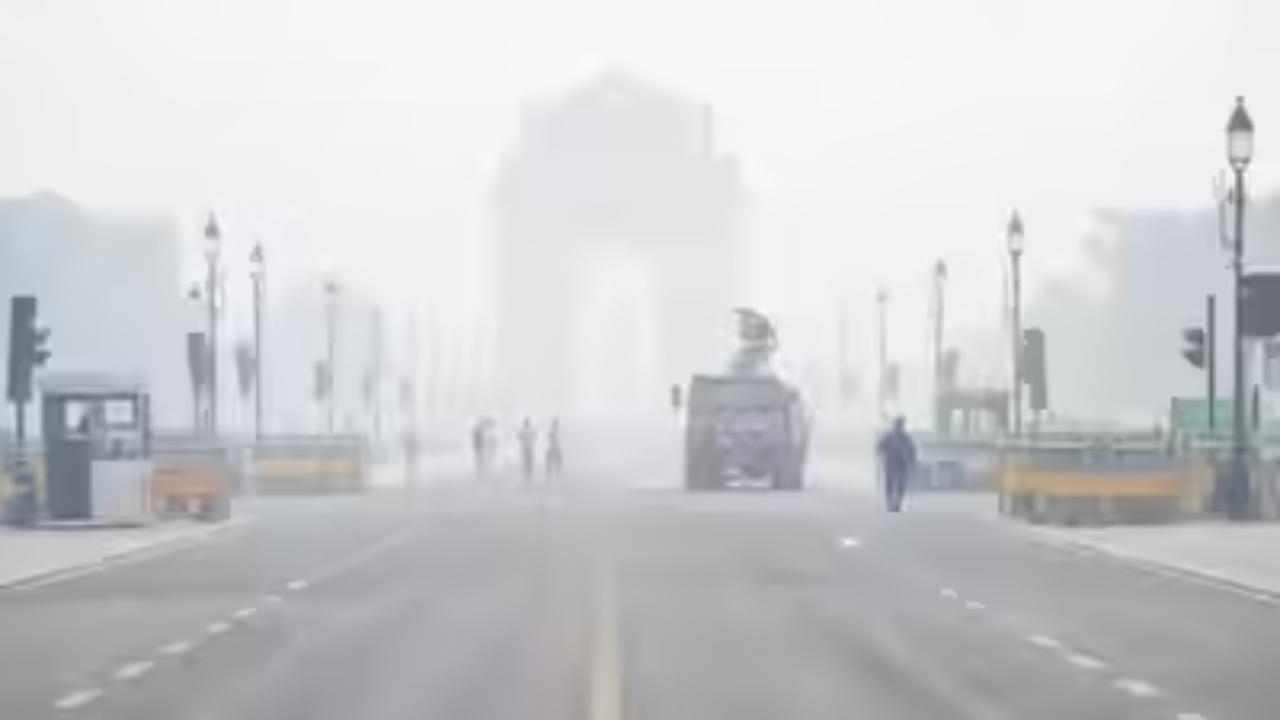

The costs of polluted air are not just respiratory distress or an occasional news headline. They are measurable losses in national output and human potential. Recent OECD work finds that a 10 per cent increase in particulate pollution is associated with nearly a full percentage-point fall in real GDP in the same year — the majority of that hit coming from reduced output per worker through absenteeism and lost productivity. In short: dirty air makes us poorer. India’s growth is literally being stifled by its own air.
The narrative of air pollution as a “winter problem” is dangerously archaic. Research shows that winter and festive periods merely expose a year-round crisis of dangerously high baseline pollution levels. A study by the Centre for Research on Energy and Clean Air (CREA) revealed that by October 2025, 255 of 293 monitored Indian cities had already breached the World Health Organization’s (WHO) safe limit for PM 2.5. The human cost is measured in lost years: residents of Delhi could live over eight years longer if pollution met WHO guidelines. This systemic failure transcends geography. While the Indo-Gangetic Plain remains the epicenter, with cities like Dharuhera (Haryana) and Delhi recording severe levels, the problem is nationwide. This is not an environmental issue; it is a catastrophic public health failure. The policy response, however, remains tragically disjointed—caught between stringent but unenforced industrial regulations and a market-based private solution made inaccessible by the state’s own tax policies.
India addresses pollution through a strict command-and-control regulatory framework, theoretically empowered to impose severe penalties. However, this approach is crippled by “low state capacity”—a mix of weak enforcement, understaffed Pollution Control Boards, and corruption. Consequently, a vast gap exists between legal statutes and on-ground reality, leaving many polluted cities outside mitigation plans like the National Clean Air Programme (NCAP). This systemic failure creates perverse incentives: industries often find risking sporadic fines cheaper than compliance. Ultimately, the lack of consistent monitoring renders the policy ineffective as a genuine deterrent against environmental degradation.
Into this void of public protection has rushed a private market solution: the air purifier. The market is booming, valued at over USD 1.1 billion and projected to grow rapidly. Sales are intensely seasonal, with over 85% occurring between October and January, directly tracking the panic induced by “Severe” AQI readings. Delhi-NCR alone accounts for roughly 70% of national sales.
Yet, this market displays a curious paradox. Despite rapid growth, air purifiers are conspicuously absent from mainstream advertising. Brands appear to treat them as distress purchases, fueled not by aspirational marketing but by sheer panic, and purchase spikes during crises may not reward large, durable advertising bets.
Currently, air purifiers are classified as consumer electronics, like televisions or air conditioners, and taxed at the luxury goods rate of 18% GST. Unsurprisingly, the Delhi High Court minced no words, stating, “Every citizen requires fresh air. If you cannot provide it, at least reduce the GST”. The government’s opposition to reclassifying purifiers as essential medical devices (taxed at 5%) creates an untenable contradiction. On one hand, it declares health emergencies, shuts schools, and implements the Graded Response Action Plan (GRAP). On the other, it levies a luxury tax on a device that offers a last resort for indoor safety, making it prohibitively expensive for the masses who suffer the most.
Escaping this trap requires a policy revolution that addresses causes, not just symptoms. If wellbeing is a moral and civic duty, how should we reframe policy?
Treat air as a public good and price it accordingly. Market instruments — targeted pollution taxes, emissions trading for industrial and power sectors, and congestion-adjusted road use pricing — can realign incentives faster and more transparently than a system that relies mainly on inspectors and fines.
Price pollution, not compliance. Instead of making air purifiers cheaper as a long-term policy objective, target subsidies and finance for cleaner household cooking, decarbonised grid power and low-emission heating solutions, and for factories and power plants to adopt best-available controls. Public spending that lowers emissions at source benefits everyone; vouchers for purifiers protect only buyers!
Govern with data, not discretion. Real-time, hyperlocal monitoring and transparent public dashboards make it harder to hide malfeasance and easier to design local interventions — banning crop residue burning on particular days, altering freight schedules during inversion periods, or temporary industrial restrictions linked to measured AQI thresholds.
Rebuild enforcement around predictable, calibrated penalties linked to emissions outcomes, not ad-hoc criminalisation. Criminal penalties can be appropriate for egregious intent; but overreliance on punitive law invites rent-seeking and uneven application. A consistent, predictable fiscal and administrative regime reduces opportunities for corruption.
Make public health the lodestar. Schools, hospitals and public institutions deserve priority protections: better ventilation standards, public procurement of filtration for high-risk facilities, and curricular adjustments when outdoor AQI crosses harmful thresholds.
Clean air is not merely a marketable appliance or a convenient administrative classification. What is missing is the political willingness to treat clean air not as a negotiable concession, but as a non-negotiable public good. The moral obligation of wellbeing demands nothing less.
Disclaimer
Views expressed above are the author’s own.
END OF ARTICLE