
Trump’s federal research cuts shake Pittsburgh universities and raise concerns over academic freedom
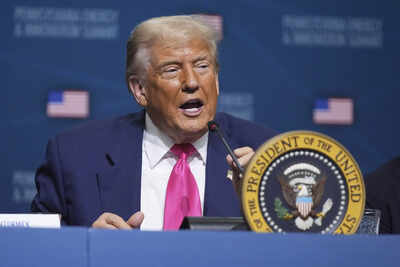
After taking office, former U.S. President Donald Trump implemented executive orders and administrative changes that sharply reduced federal research funding and limited the topics eligible for study. According to an AP News report, these moves disrupted universities across the country, including in Pittsburgh, where schools heavily depend on federal research grants.Local universities have faced hiring freezes, paused Ph.D. admissions, and layoffs due to these funding cuts. The Science and Community Impacts Mapping Project (SCIMaP) estimates that $24 million in federal research money and 104 jobs were lost in Allegheny County alone. If proposed budgets for the National Institutes of Health (NIH) and the National Science Foundation (NSF) are approved, the impact could grow even further.Beyond the financial consequences, researchers say the cuts have affected academic freedom, a core principle of higher education that allows scholars to explore ideas freely.
Academic freedom under pressure
Academic freedom means researchers can do their work without politics getting in the way. Some professors say that deals between universities and the government, like at Columbia, Cornell, and Northwestern, have weakened this freedom so the schools could get their funding back.The Trump administration defended its actions, stating that they were needed to restore trust in U.S. higher education by reversing what it called “left-wing ideological capture” and removing discrimination hidden in diversity, equity, and inclusion (DEI) policies.
Disparities research faces funding challenges
Miranda Yaver, assistant public health professor at the University of Pittsburgh, studies health insurance disparities. She had planned to apply for NSF and Agency for Healthcare Research and Quality grants, but after Trump’s executive order against DEI, she felt she could no longer submit her applications.“There is some research that can be camouflaged, but my work is hard to hide,” Yaver told AP News. Attempts to secure private foundation support also failed, leaving her with no research funding starting next year. She added that many ideas that could benefit the health care industry remain unexplored because of these restrictions.Jeremy Berg, a former NIH institute director who now works at Pitt, noted that researchers are still pursuing important work but often have to change the language they use in grant proposals to comply with new rules.
Language restrictions affect research
Michael Gold, a Pitt neurobiology professor, experienced funding disruptions firsthand. A grant aimed at supporting trainees from marginalized groups in pain research had to be rewritten to align with the NIH’s revised priorities, which now emphasize merit-based training, autism research, and “scientifically justified” disparities research. The NIH stated that research relying on poorly defined concepts, such as systemic racism, would not meet its standards.Gold said the restrictions not only limit academic freedom but also slow progress on important research with real-world impact. “The loss of momentum on these topics has generational consequences,” he told AP News.
Universities respond carefully
Since the funding changes began, university leaders have mostly avoided public criticism of the federal government. Many have joined lawsuits against proposed research cuts or issued broad statements supporting higher education, but faculty members feel that more decisive action is needed.Berg warned that universities risk losing the trust of their faculty, staff, and students if they do not actively defend principles like academic freedom. “Universities are running the risk of appearing to agree to anything for the sake of funding,” he said.