

Navi Mumbai Airport Officially Opens: A New Era in Air Travel with AI Innovations | Mumbai News
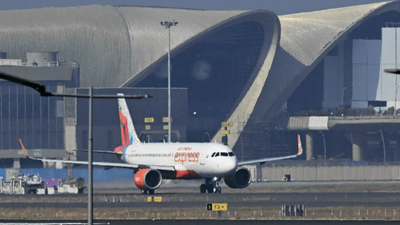
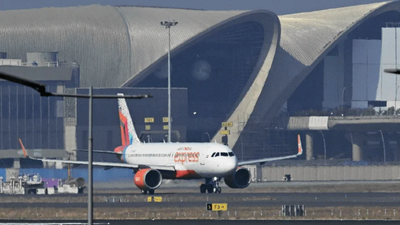
NAVI MUMBAI: Marking a long-awaited milestone for the Mumbai Metropolitan Region (MMR), the Navi Mumbai International Airport (NMIA) formally entered India’s commercial aviation map on Thursday, bringing a new dimension to air travel in the region. Developed and operated by Adani Airports Holdings Limited (AAHL), NMIA is among India’s largest greenfield airport projects and is designed to handle 90 million passengers and 3.2 million tonnes of cargo annually at full build-out. Its inaugural day saw 48 flights connecting nine domestic destinations, serving over 4,000 passengers, with peak traffic between 5 pm and 7 pm. The first arrival, IndiGo flight 6E460 from Bengaluru, touched down at 8 am, greeted by a ceremonial water cannon salute, while the first departure was an IndiGo flight to Hyderabad at 8.40 am.
Chairman Gautam Adani welcomed passengers from the inaugural flight and joined a ceremonial walk through the departure terminal with employees, community representatives, and beneficiaries of the Adani Foundation.
AI-driven passenger experience
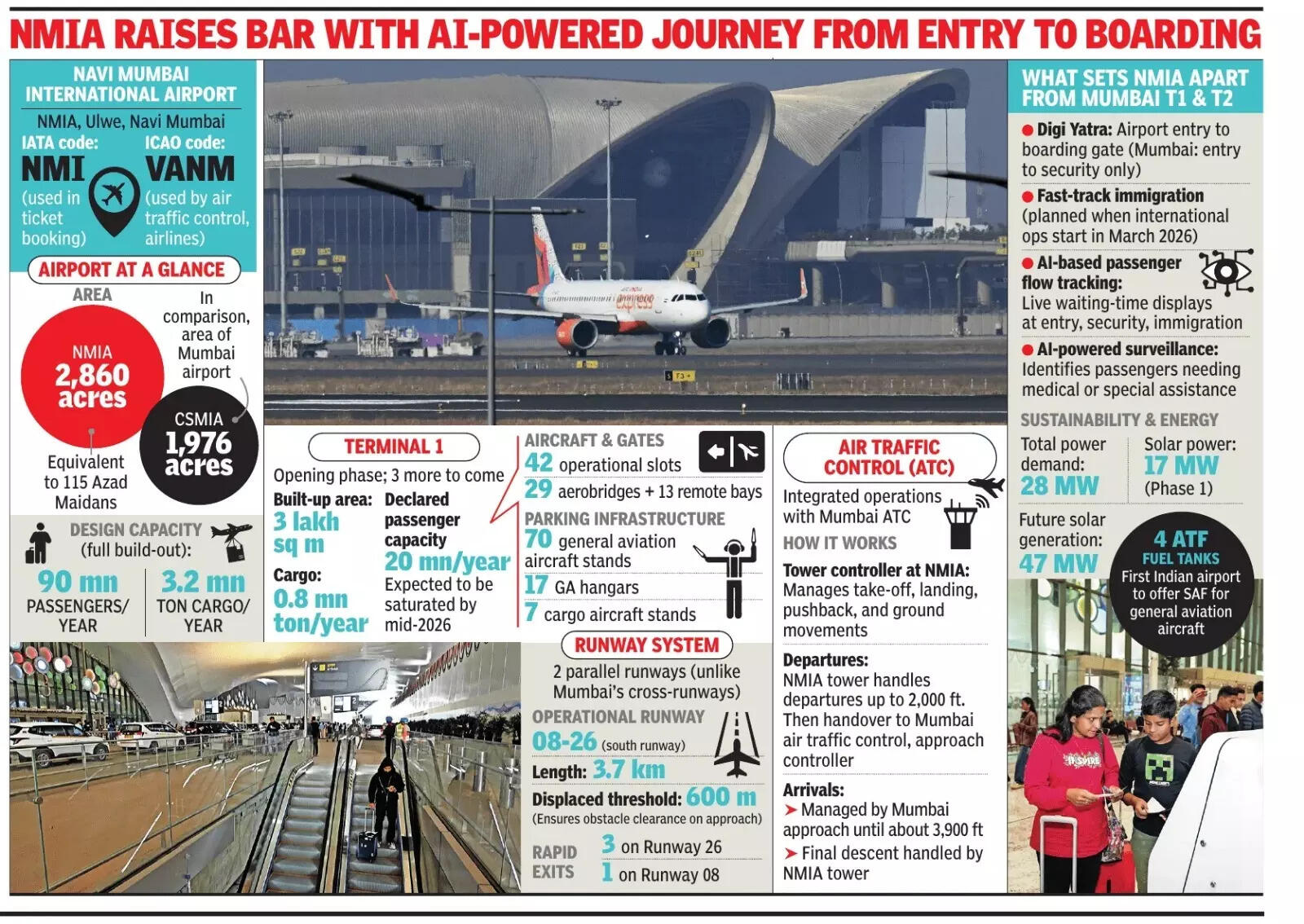
NMIA promises a seamless, AI-powered journey from entry to boarding—a leap ahead of Mumbai’s T1 and T2 terminals. Highlights include:
- Digi Yatra-enabled entry from airport gates to boarding.
- Fast-track immigration when international operations begin in March 2026.
- AI-based passenger flow tracking, showing live waiting times at entry, security, and immigration.
- AI-powered surveillance to identify passengers needing medical or special assistance.
Passengers on Day 1 experienced some teething troubles, with unclear road signages causing delays, and approach roads under repair. Most travelers opted for app-based cabs, though Navi Mumbai Municipal Transport has launched bus services on five routes.
Infrastructure & operations
- Terminal 1: 3 lakh sq m, capacity 20 million passengers/year; cargo 0.8 million tonnes/year; expected saturation by mid-2026.
- Runways: Two parallel (operational 08–26), 3.7 km long, with rapid exit taxiways.
- Aircraft & Gates: 42 slots, 29 aerobridges, 13 remote bays; 70 general aviation stands and 17 GA hangars.
- Fuel & Sustainability: First Indian airport to offer SAF (Sustainable Aviation Fuel) for GA aircraft; 17 MW solar power in Phase 1, rising to 47 MW.
Cultural performances featuring Maharashtrian lezim, dhol, and tutari added a local flavour, while underprivileged families and first-time flyers enjoyed a special aerial tour of Mumbai. “This airport establishes a resilient multi-airport system for MMR, boosting capacity, enhancing passenger experience, and futureproofing the region’s aviation growth,” said Jeet Adani, director, AAHL. Despite the distance—around 35 km from Matunga and Dadar—passengers expressed excitement at finally seeing a second airport for Mumbai after decades of constraints. NMIA’s debut, powered by technology and innovation, promises to redefine air travel for Mumbai, blending efficiency, sustainability, and passenger convenience.