

Delhi private schools must form fee regulation committees by Jan 10: What parents should know before the next proposal lands
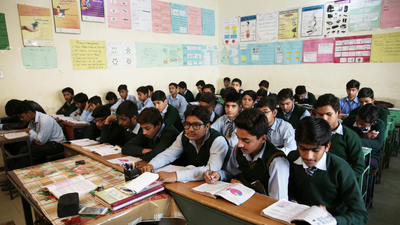
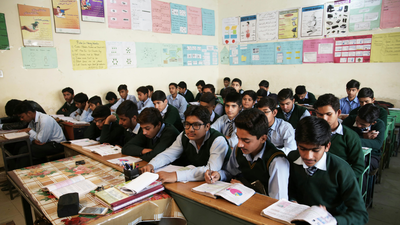
The Directorate of Education (DoE) has quietly reset the school fee calendar in Delhi. An official order issued for the 2025–26 academic session now requires every private school to constitute a School-Level Fee Regulation Committee (SLFRC) by January 10. Not “as early as possible”, not “before finalisation”, but by a fixed date.The same order lays out the sequence that follows. Schools must place their proposed fee structure before this committee by January 25, and the committee must take a decision within 30 days. That decision, the order makes clear, cannot remain internal. It must be displayed on the school notice board and uploaded on the school website.For parents, this is not bureaucratic choreography. It is the point at which fee decisions are meant to shift from announcements to examination.What the SLFRC is meant to doThe School-Level Fee Regulation Committee is now the compulsory forum through which a school’s proposed charges must pass. A school can still propose its fee structure for the coming year, but it must now justify it within a formal process that includes parents and teachers, and that runs on a statutory timeline.For years, fee disputes in Delhi have followed a familiar arc: A circular is issued, parents object, and explanations come later—often selectively. The committee system attempts to reverse that order. The fee proposal is supposed to be scrutinised first, questioned inside a room with multiple stakeholders, and only then formalised.This does not guarantee consensus. But it does guarantee a process.Who will sit on the committee?The DoE order requires schools to constitute the SLFRC and publish the names of its chairperson and members immediately after formation. While the overall composition is defined under the Act and Rules, the order is explicit on two points that matter to parents.First, the committee will include five parent representatives and three teacher representatives, in addition to school management members and the principal. Second, there will be an Observer—the DoE nominee assigned to the school under the Delhi School Education Act and Rules, 1973. If a school does not yet have such a nominee, it must seek one through the district education office within a specified timeframe.In practical terms, this means the committee is not meant to be a closed conversation among management staff. Parents and teachers are not ornamental participants; their presence is built into the structure.How parent members are chosen This is where the order becomes unusually prescriptive. Parent and teacher representatives are not nominated. They are selected through a public draw of lots.Schools cannot quietly pick “their” parent representatives anymore. They have to tell everyone in advance—at least a week ahead—when and where the draw will happen, and put that notice up clearly on the notice board and the school website. The draw is meant to be done in the open, not behind office doors. And the DoE’s message is blunt: if a school tries to steer the outcome or manage the names, it risks facing action. The draw must also produce a waiting list of ten names, to ensure continuity if selected members later step aside.Who can and cannot be a parent representativeThe order also sets boundaries that parents should be aware of. Parents or guardians of students who are exempted from fee payment, including those admitted under EWS, DG or CWSN categories, are not eligible to be selected as parent representatives for the committee. If such a name is drawn inadvertently, it must be replaced from the waiting list.There is also a “one family, one seat” rule. If both parents of the same child, or parents of siblings, are selected in the draw, only the first name drawn is valid. The other selection is cancelled and replaced from the waiting list. The idea is to widen participation rather than concentrate it.What if a selected parent does not want to serve?The order anticipates refusals and regulates them. A selected parent or teacher who does not wish to be part of the committee must submit a written declination within three working days. The vacancy is then filled from the waiting list, in order.Importantly, the DoE Observer is expected to satisfy themselves that the refusal is voluntary and not the result of pressure. This is a small line in the order, but a telling one. It reflects an awareness that committees can be quietly weakened if members are nudged out.What happens once the proposal is submittedOnce the school puts its proposal on the table by January 25, it can’t sit on it indefinitely. The committee then has 30 days to go through the numbers, look at the papers the school is using to justify them, and take a call. And it’s not meant to be a whispered decision. The outcome has to be shared with the school and put up publicly right away.The key word here is “reasoned”. It means the committee can’t just say yes or no. It has to say why.If the committee fails to decide within the stipulated time, the process does not simply fade. The matter can move to the district-level appellate mechanism, ensuring that delay does not become an escape route.What parents should actively look forParents do not need to sit on the committee to track compliance. The order gives them visible checkpoints. Has the school announced the draw properly? Has the committee been constituted by January 10? Has the proposal been placed before it by January 25? Has the final decision been displayed and uploaded?If these steps are missing, it is not a communication lapse. It is a procedural one.Why this matters beyond this yearThis framework does not promise lower fees. Schools will still argue costs, and committees will still debate them. What changes is the method. Fee fixation is being pulled out of opaque decision-making and placed inside a documented, timed process with parent presence built in.For Delhi parents, the real reform is not the committee itself. It is the idea that the next proposal is supposed to arrive through a process they can see, track and question—before it becomes a bill.January 10, then, is not just a date. It is the point at which the fee conversation is meant to begin differently.Find the official order here.