
Pentagon report: China seeks to capitalise on easing LAC tensions; aims to blunt India–US ties | India News
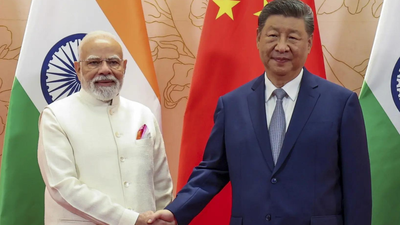
China is likely seeking to leverage the easing of tensions along the Line of Actual Control (LAC) with India to stabilise strained bilateral ties and, more strategically, to prevent a further deepening of New Delhi’s partnership with Washington, according to a new report by the US Department of War.In itsannual report to Congress, “Military and Security Developments Involving the People’s Republic of China 2025”, the Pentagon assesses that Beijing views the recent de-escalation along the India–China border as an opportunity to recalibrate relations with India at a time of sharpening geopolitical competition in the Indo-Pacific.
The report highlights that in October 2024, Indian leaders announced an agreement with China to disengage from the remaining standoff points along the LAC, just two days before a meeting between Chinese President Xi Jinping and Prime Minister Narendra Modi on the sidelines of the BRICS Summit.It states: “Developments along the Line of Actual Control (LAC) with India. In October 2024, Indian leadership announced an agreement with China to disengage from remaining standoff sites along the LAC two days before a meeting between President Xi and Indian Prime Minister Modi on the sidelines of the Brics Summit.”According to the Pentagon, the Xi–Modi interaction marked the start of monthly high-level engagements between the two sides, with discussions extending beyond border management to the “next steps” in the bilateral relationship. These included proposals on resuming direct flights, easing visa restrictions and reviving exchanges of academics and journalists, signalling a cautious effort to restore normalcy after years of tension.The report, however, underlines that Beijing’s motivations are viewed with suspicion in New Delhi. “China probably seeks to capitalize on decreased tension along the LAC to stabilize bilateral relations and prevent the deepening of U.S.-India ties; however, India probably remains skeptical of China’s actions and motives. Continued mutual distrust and other irritants almost certainly limit the bilateral relationship,” it says.Over the past few months, India and China have rolled out a series of people-centric measures following the formal end of the four-year military face-off in eastern Ladakh in October last year. India resumed issuing tourist visas to Chinese nationals in July, while both countries agreed to restart the Kailash Manasarovar Yatra, resume direct flights, facilitate visas and commemorate the 75th anniversary of diplomatic relations. Direct flights resumed in October.The Pentagon situates these moves within China’s long-term national strategy of achieving “the great rejuvenation of the Chinese nation” by 2049, including building a “world-class” military capable of “fight and win”. It reiterates that Beijing treats issues tied to sovereignty — including Taiwan, the South China Sea, the Senkaku Islands and Arunachal Pradesh — as “core interests” that are not open to negotiation.The report also stated that US–China relations are “stronger than they have been in many years” under President Donald Trump, with Washington seeking stability through strength rather than confrontation. “We do not seek to strangle, dominate, or humiliate China,” it says, emphasising that US policy in the Indo-Pacific is aimed at deterring aggression and preserving a balance of power. The Department of War will therefore prioritise bolstering deterrence in the Indo-Pacific through strength, not confrontation.It added that President Trump aims for stable peace, fair trade and respectful ties with China, and that the Department of War would back these goals from a position of military strength, while working to maintain a balance of power in the Indo-Pacific that allows open and fair trade, shared prosperity and respect for all nations’ interests.(With inputs from PTI)