

‘Tariffs are a discipline, not a magic wand’: Top White House aide explains why duties are beneficial in the long run
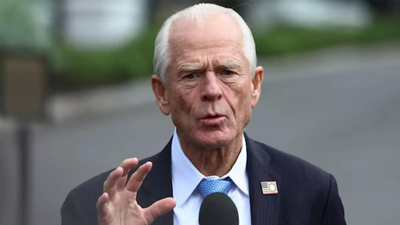
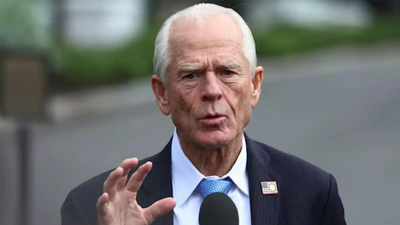
Tariffs are not a tool for headlines but a strategic instrument to rebuild American industry, according to Peter Navarro, White House senior counsellor for trade and manufacturing and one of US President Trump’s top advisor. In an op-ed piece in the Wall Street Journal, Navarro discussed the 2025 trade experience, saying both extremes of the debate have been misleading. “The economy didn’t collapse, but neither did a manufacturing renaissance appear on demand. These outcomes should surprise no one who understands how industrial capacity is built.”
Tariffs as a tool, not a quick fix
Navarro said that tariffs reshape bargaining leverage, influence investment decisions and affect supply-chain locations. “Their success can be measured only using the right metrics and the right timeline. Capital needs time to respond. But when supported by stable policymaking, tariffs can powerfully and positively address trade deficits.”The White House aide said that critics often overlook a key constraint: “You can’t reshore what you no longer have the capacity to produce. After decades of offshoring tooling and the intermediate inputs, supplier networks and skilled trades that go along with it, no policy—tariffs included—can reverse all that damage in a few quarters.” Navarro explained that reindustrialization follows a step-by-step process, beginning with upstream materials and components, followed by subassemblies, and ending with full-scale assembly. He added that progress depends on permitting, labour availability, engineering complexity, and capital investment.
What about inflation?
Navarro claimed that tariffs do not automatically raise prices for American consumers. “In practice, tariffs don’t generate inflation so much as apply pressure in international markets. In most, foreign producers are export-dependent. They operate with excess capacity and compete aggressively for access to the U.S. consumer. Their growth models rely on volume, not pricing power.”He also addressed the question of who bears the tariff burden and how it depends on bargaining power. “In real markets, the burden falls on whoever can’t afford to lose access to the U.S. consumer. For export-driven systems built around subsidised capacity, suppressed domestic consumption and aggressive pricing abroad, that means foreign producers.”
Trade deficits
Navarro said that long-term trade deficits have long-term consequences. “Decades of sustained deficits have coincided with industrial decline and rising dependence on foreign-controlled inputs. By any economic or national-security standard, that outcome isn’t benign.” “Tariffs aren’t a magic wand. They are a discipline—an instrument that forces the true cost of dependency into corporate planning and counters predatory trade behaviour. Measured on the right timeline, tariffs are a tool for rebuilding capacity, not a headline to be graded on a news cycle,” Navarro concluded.


