Overnight unrest in Bangladesh: Anti-India protests erupt; how events unfolded after Sharif Osman Hadi’s death
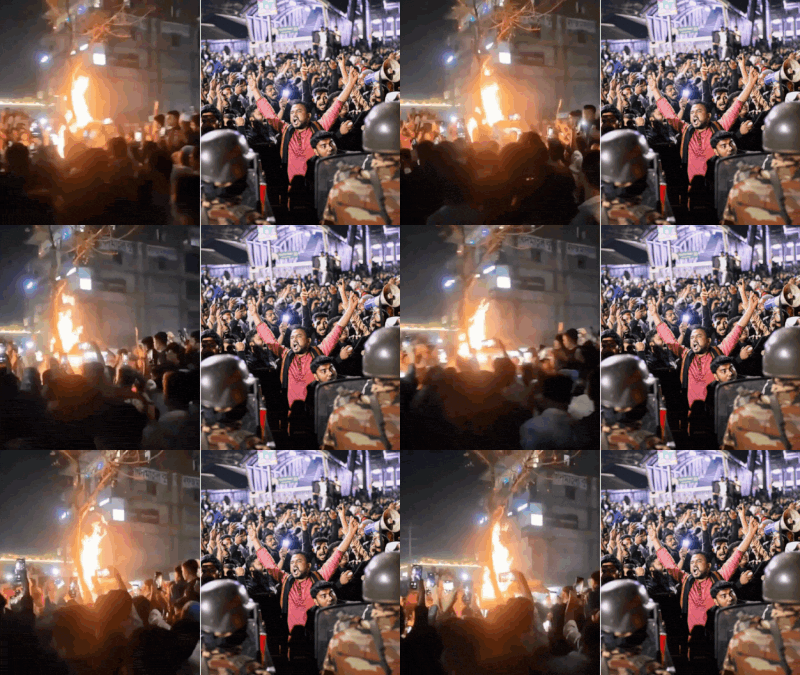
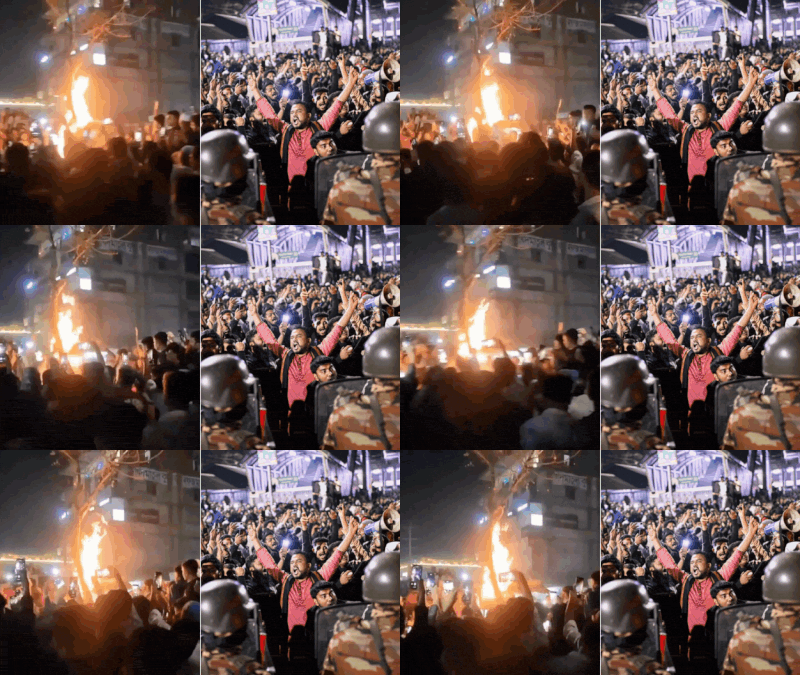
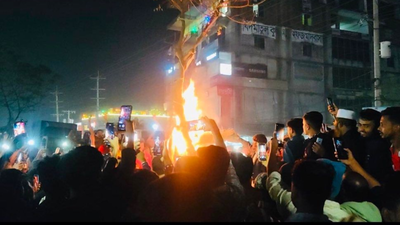
Bangladesh descended into widespread unrest overnight after the death of Sharif Osman Hadi, a prominent youth leader of the country’s 2024 pro-democracy uprising. Thousands of protesters took to the streets of Dhaka late Thursday and early Friday, demanding justice for Hadi, who died in a Singapore hospital after succumbing to gunshot injuries sustained in an assassination attempt last week.
Demonstrations spread from Dhaka to other parts of the country, with protesters attempting to march toward Indian diplomatic premises and attacking properties linked to the former ruling Awami League.
Anti-India slogans, protests rock Bangladesh
Protesters in the southwestern city of Rajshahi tried to march toward the office of a regional Indian diplomat, but police stopped the procession. Several videos on social media showed incident of stone pelting near Indian assistant High Commission office.In Dhaka on Wednesday, hundreds of demonstrators attempted to gather outside Indian diplomatic premises, including the residence of India’s deputy high commissioner, prompting police to use tear gas to disperse the crowd.Members of the National Citizen Party (NCP), a major offshoot of Students Against Discrimination (SAD), which led last year’s protests, joined the demonstrations, chanting anti-India slogans and alleging that Hadi’s assailants had fled to India after the killing. Protest leaders called on the interim government to shut the Indian High Commission until the suspects were returned.“The interim government, until India returns assassins of Hadi Bhai, the Indian High Commission to Bangladesh will remain closed. Now or Never. We are in a war!,” PTI quoted Sarjis Alm, a key leader of NCP, as saying.The protests came hours after a parliamentary committee on external affairs called the current situation in the neighbouring nation “complex and evolving”.“The committee has been informed that the current situation in Bangladesh is complex and evolving. There is uncertainty regarding the schedule of democratic elections. The political events of August 2024 have created significant instability and uncertainty with incidents of violence, attacks and intimidation of minorities, tribal communities, media groups, intellectuals, journalists, academicians, etc., becoming the norm,” it said in its report titled ‘Future of India-Bangladesh Relationship’.
Media houses vandalised
Several buildings in the capital were set ablaze as the protests escalated, including offices housing the country’s two largest newspapers, Prothom Alo and The Daily Star.Fire officials confirmed at least three incidents of arson, with journalists and staff trapped inside the buildings as firefighters battled the flames, according to media reports.“Several hundred demonstrators reached the Prothom Alo office around 11 pm and later surrounded the building,” PTI quoted a witness saying, who added that the protesters then set the Daily Star office on fire.
Awami League office torched
The violence quickly spread beyond the capital. Protesters torched an Awami League office in Rajshahi and vandalised properties linked to former prime minister Sheikh Hasina, who fled to India after being ousted in last year’s uprising. Demonstrators also blocked a key highway connecting Dhaka with Mymensingh and attacked the residence of a former minister in the southeastern city of Chittagong, according to local media footage.
Sharif Osman Hadi’s death fuel outrage
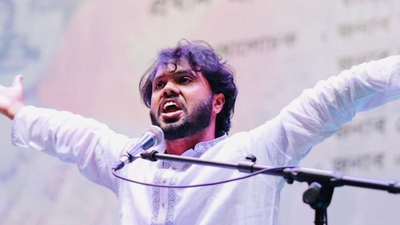
Hadi, 32, was a senior leader of the student-led platform Inqilab Mancha and a vocal critic of both Hasina. He was shot by masked assailants on December 12 while leaving a mosque in central Dhaka and was later airlifted to Singapore for advanced medical treatment, where he succumbed to his injuries on Thursday. Bangladesh’s interim leader Muhammad Yunus described Hadi’s death as an “irreparable loss for the nation,” announced a day of mourning, and ordered special prayers nationwide. Police have launched a nationwide manhunt for the attackers, releasing photographs of two suspects and offering a reward of five million taka for information leading to their arrest, as authorities warned that the violence risked destabilising the fragile political transition.