
Ecologists warn of gaps as Mithi engineering push ramps up | Mumbai News
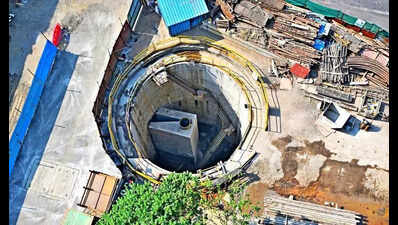
Even as municipal authorities invest thousands of crores to revive the long-polluted Mithi river, the core question continues to be whether these projects finally stop the sewage, flooding and stink that have defined the river for decades. Experts say that while the current works are substantial, smaller localised measures, such as basic screens at outfalls, could also have delivered meaningful improvements.Rakesh Kumar, former director of NEERI and head of the Supreme Court-appointed expert committee on Mithi, welcomed the scale of the sewage-diversion push but warned that “interception, diversion and treatment” projects “are highly complex and rarely silver bullets and take long time to complete”. He said, “Capturing sewage at the source is always more effective than trying to reroute it kilometres away,” echoing IIT-B’s recommendation that treatment and reuse at source could help keep the river perennial. He noted that the 2018 committee report had also suggested multiple nature-based solutions.Kumar said pollution extends far beyond sewage. “A large share of the river’s degradation comes from unmanaged municipal solid waste, plastic, sludge, industrial effluent and debris. Unless these inputs are stopped at the neighbourhood level, engineering solutions alone will not deliver a clean river.” Large tunnelling projects, he said, carry uncertainties: “There’s no guarantee a diversion tunnel of this scale will deliver 100% results. We have seen multiple rejuvenation attempts over the past two decades — channelisation, widening, desilting, flood-mitigation works — yet the core problem persists.”AD Sawant, civil society member of the expert committee and former pro-VC of Mumbai University, said the contrast remains stark between Mumbai’s engineering feats and its inability to clean a 17km river. “We’ve built Coastal Road, an underground metro line, deep tunnels — all projects of enormous complexity. Yet Mithi remains foul. A large portion of Mithi’s pollution is human-driven. If we truly want a cleaner river, the bay must remain a strict no-development zone.“Architect PK Das, who too was on the committee as a civil society member, said restoring the river’s ecology is essential. “The river has been reduced to an impervious RCC-lined channel… destroying the symbiotic relationships in nature,” he said. “Instead of attending to ecological restoration, the focus by the authorities has been only on large engineering budgets. But technology alone cannot save the river; unless we revive its ecology, nothing will change. Global best practices now favour breaking concrete embankments and creating eco-sensitive riverfronts.”Rishi Agarwal, co-founder of Mithi Sansad, warned that large-scale sewage interception could leave the river bone-dry for most of the year. “Once the dry-weather flow is trapped, vast stretches of the river will run dry outside the monsoon.” The real challenge, he said, will be reliable operations: “Unless they are run optimally, 24×7, we won’t see real change on the ground.”