

Year’s 1st space mission on January 12 to launch Military satellite, test on-orbit refuelling & more; 1 satellite for Nepal too | India News
[ad_1]
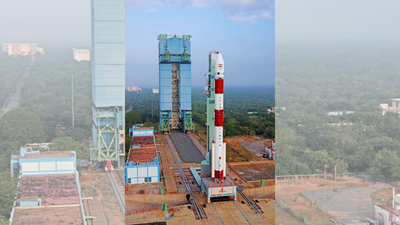
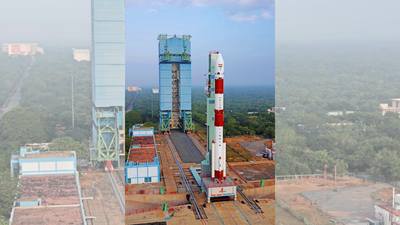
BENGALURU: India’s first space mission for 2026 will launch a defence satellite built by the Defence Research and Development Organisation (DRDO), a satellite for ministry of external affairs (MEA) to be used by Nepal, test on-orbit refuelling technology of a Bengaluru-based startup, aside from 13 other satellites, including foreign ones from UK, France and Brazil.The launch of PSLV-C62 mission, Isro said, is scheduled for January 12 at 10.17 am from the first launch pad (FLP) of the Satish Dhawan Space Centre (SDSC) in Sriharikota. The main satellite the mission will launch is DRDO’s Anvesha, also called EOS-N1.EOS-N1 is designed to provide the Indian military with advanced, unprecedented surveillance advantages over adversaries. The hyperspectral imaging payload can analyse light in hundreds of wavelengths to identify the materials an object is made of, a capability beyond the human eye.While this satellite is expected to bridge the gap in strategic surveillance to some degree, the mission will also launch AyulSAT, built by Bengaluru’s OrbitAID Aerospace, which if successful will be the first step towards India demonstrating the crucial on-orbit refuelling technology which will have far-reaching benefits.OrbitAID founder and CEO Sakthikumar Ramachandran terms AayulSAT more than a mission. “…It’s the foundation of the on-orbit economy,” he says, while the company says: “Years from now, this won’t be remembered as a launch but as the moment India made space serviceable. From India to the world!”A third important satellite will be Munal, built by Nepal’s Antharkshya Pratishtan with help from India’s ministry of external affairs (MEA). It is intended to carry an Earth observation payload to support environmental monitoring and capacity building, marking another step in Nepal’s entry into space-based applications.
13 More Satellites
Aside from these three, the mission will put into orbit 13 more satellites, including five — CGUSAT, DSUSAT, MOI-1, LACHIT and DR-1 — by Indian startup Dhruva Space. They will demonstrate or validate multiple technologies, including indigenous satellite bus capabilities and subsystems, communication and payload subsystems in low Earth orbit, multi-payload integration and operational performance of larger CubeSat platforms, basic satellite operations and communication links, etc.Foreign satellites on the mission include five satellites by Brazil’s AlltoSpace, Theos-2 from SSTL, UK, and KID Capsule by RIDE, France. The five satellites from Brazil are EduSat, Uaisat, Galaxy Explorer, Orbital Temple, and Aldebaran-1. The last is a CubeSat called Sanskarsat by Laxman Gyanpith, India. All satellites have been contracted through Space PSU NewSpace India Limited (Nsil), the commercial arm of the department of space.
[ad_2]
Source link