
US Court rules Trump can impose extra H-1B employer fee under broad INA authority powers law
[ad_1]
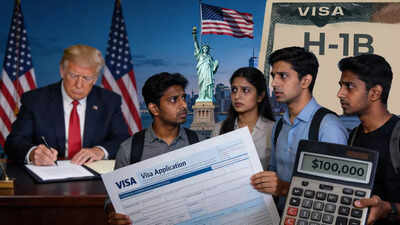
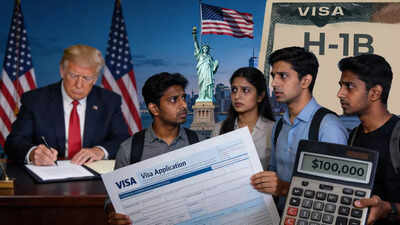
A federal district court has ruled that President Donald Trump acted within his legal authority when he ordered employers to pay an additional $100,000 fee before new H-1B visas can be processed, affirming the administration’s power under immigration law.The decision rejected claims from business and higher education groups that the proclamation exceeded presidential authority, concluding that the Immigration and Nationality Act grants the president wide discretion to restrict the entry of noncitizens when deemed necessary.Court backs broad presidential authorityIn Chamber of Commerce of the United States of America v. US Department of Homeland Security, the judge held that the Immigration and Nationality Act (INA) contains “exceedingly broad language” allowing the president to impose such measures, a phrase quoted by the Higher Ed Dive. The ruling found that Trump legitimately exercised his authority when issuing the proclamation requiring the additional payment from employers seeking new H-1B visas.The judge stated that Trump supported the proclamation with evidence that the H-1B programme was being abused, harming American workers and creating national security concerns, according to the Higher Ed Dive. While acknowledging the economic contributions of H-1B workers, the court said the broader policy debate fell outside its role.Agencies followed binding directiveThe lawsuit was brought by the Association of American Universities and the Chamber of Commerce, a business federation representing around 300,000 members. They argued that the president acted ultra vires under the INA and that the Department of Homeland Security and the State Department implemented the proclamation without proper notice-and-comment rulemaking under the Administrative Procedure Act.The judge rejected both arguments, writing that federal agencies “plainly do not act ‘arbitrarily and capriciously’” when implementing a lawful presidential directive, words quoted by the Higher Ed Dive. She added that the agencies “had no other course of action” and could not disregard a binding order, in conversation with the Higher Ed Dive.Legal challenges continueThe ruling marked the first decision among at least three lawsuits challenging the proclamation. Another case, California v. Noem, was filed by 20 state attorneys general from mainly Democratic states. Following the decision, the Association of American Universities and the Chamber filed a notice of appeal.Reacting to the outcome, Chamber Executive Vice President and Chief Counsel Daryl Joseffer said the $100,000 fee makes H-1B visas cost prohibitive, particularly for small and medium-sized businesses, he told the Higher Ed Dive. He said the Chamber was disappointed and was considering further legal options to ensure the programme operates as Congress intended, allowing businesses to access global talent, Joseffer added to the Higher Ed Dive. The appeal process is now expected to proceed.
[ad_2]
Source link