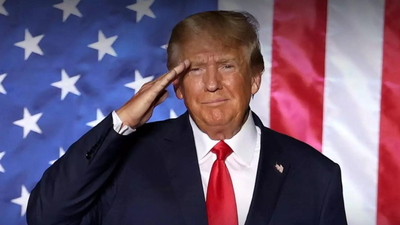

Why Donald Trump’s Greenland threat is a feature, not a bug, of America’s expansionist tendencies
[ad_1]
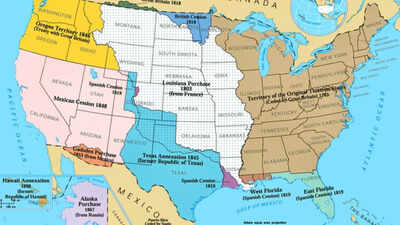
“Americans play to win all of the time. I wouldn’t give a hoot in hell for a man who lost and laughed. That’s why Americans have never lost nor will ever lose a war; for the very idea of losing is hateful to an American,” said former US army general George S Patton to his soldiers, just before the D-day invasion in 1944. No words have rang more true when you search online to learn the history of how America came to be, as the world’s biggest economy, world’s strongest political and military power, world’s tech focal point and more. Even now, the march for more, the war for grandeur, keeps on being fought by the states. Ever since the beginning of Donald Trump‘s second term in January 2025, the country has been even more audacious with its pursuit of global dominance, through both soft and hard powers. So much so that the US President has been outright vocal on why they “need” the Danish island of Greenland for security reasons. While the fate of Greenland remains to be seen, did you know that America wasn’t always this big? America expanded through a mix of colonial inheritance, war, purchases, treaties, forced removals, and ideology. Here’s a step-by-step formation of America as it is today.
Inheritance from the British Empire (1776–1783)
From 1607-1783, America was colonised for 176 years by the British. America fought what came to be known as the American Revolutionary War from 1775-1783 and gained independence from Britain. It inherited British territorial claims up to the Mississippi River, making the 13 colonies a part of the republic overnight.
The Louisiana purchase (1803)
What can’t be fought over, can be bought over and for America’s money has never been the problem. The Louisiana Purchase in 1803 was a land deal between the US and France. The states acquired about 827,000 square miles of land west of the Mississippi River for about $15 million from Napoleon Bonaparte. The addition of Louisiana to America not only doubled the size of the young country but also blocked Spain and France from further colonisation of North America.
Manifest Destiny and Native Removal (1810s–1850s)
Many American Indian tribes lived to the east of the Mississippi River which bordered the white settlements. The land was profitable for economic prosperity with an abundance of cattle, wheat, cotton, timber and minerals. And for white settlers, it was the time of America’s manifest destiny, a belief that the expansion of US was ordained by the divine and was justifiable and inevitable. Thomas Jefferson, one of the founding fathers of the country, first proposed a form for Indian removal. The idea was fully realised by President Andrew Jackson who in 1830 signed the Indian Removal Act, which allowed him to move natives to the area west of the river.
Florida from Spain (1819)
For the unaware, Florida, one of the most popular American cities, was actually a part of Spain. In 1819, Secretary of State John Quincy Adams and Spanish minister Luis de Onís signed the Transcontinental Treaty, giving Florida to the US. This was due to America’s frequent raids into Spanish Florida and General Andrew Jackson’s invasion of West Florida and occupation of Pensacola in 1817-1818.
Texas and the Mexican-American War (1845–1848)
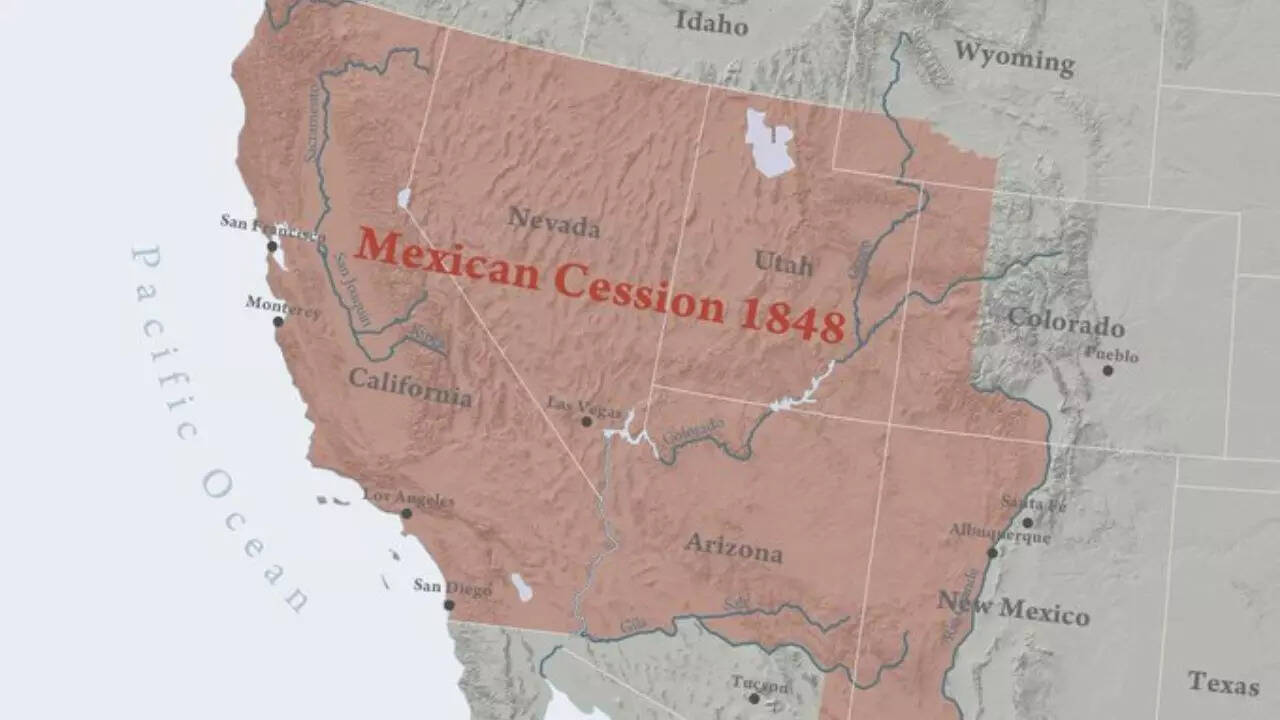
In 1845 the U.S. annexed the Republic of Texas, which had won de facto independence from Mexico in the Texas Revolution (1835–36). This formed a dispute within the countries over the border of Texas, and subsequently resulted in the Mexican-American War from 1846-1848. The US emerged victorious and acquired more than 500,000 square miles of land including California, Nevada, Utah, Arizona, New Mexico, and parts of Colorado and Wyoming. While Mexico lost nearly half of its territory, America gained major land and economically beneficial states.
The Oregon territory (1846)
What is modern-day Oregon, Washington, Idaho and parts of Montana or Wyoming, was once the Oregon Territory entirely. The area stretched from the Pacific coast to the Rocky Mountains and was claimed by Spain, Great Britain, Russia and the US. Due to the Transcontinental Treaty, Spain ceded its claims to the territory to the US. And America promulgated a doctrine which put Russia on notice that it didn’t accept its attempt at a monopoly. For years America and Great Britain put a hold on the division of the area until President James Polk proposed a settlement on the 49th parallel to Great Britain. The decision was formalised by the Oregon Treaty of 1846 giving US the above-mentioned areas and Britain all of Vancouver Island.
Alaska purchase (1867)
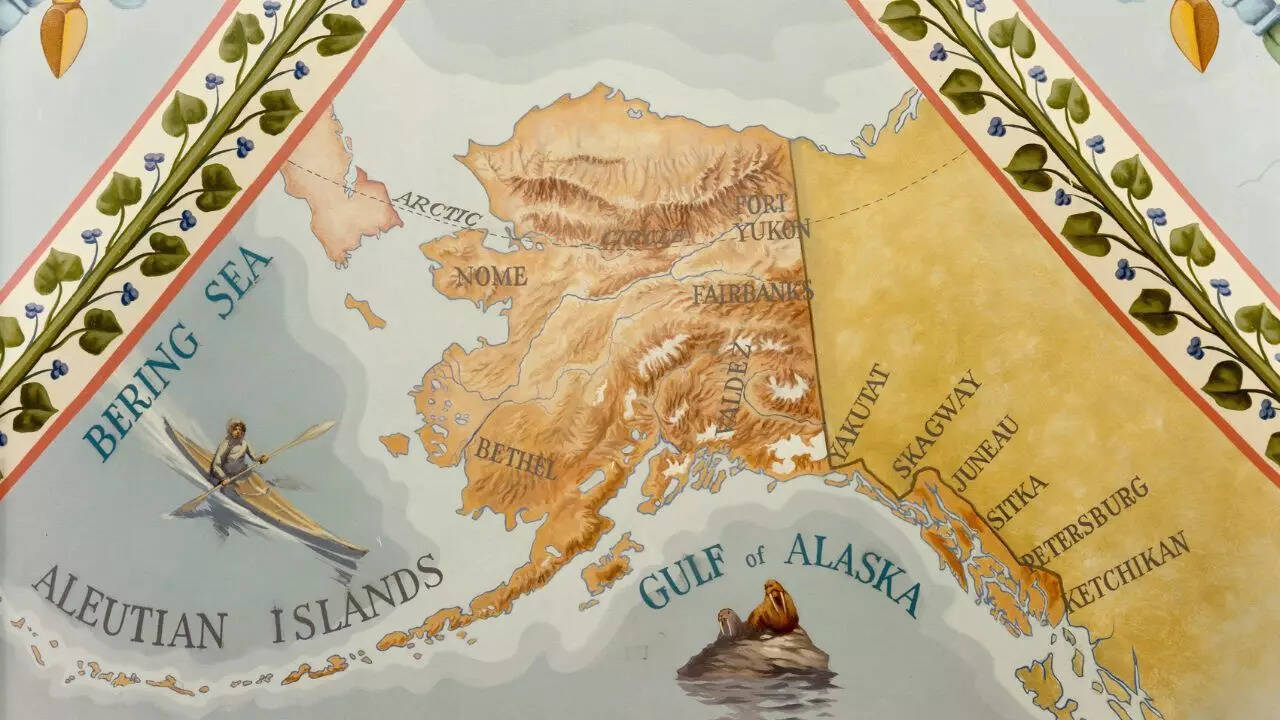
Dollar bills sealed the deal back then, and even now. On October 18, 1867, the US officially took possession of Alaska from Russia. The deal known as the Alaska Purchase or the Treaty of Cession, was concluded at a sum of $7.2 million. It was negotiated by US Secretary of State William H. Seward and Russian Minister to the US, Eduard de Stoeckl. Mocked at the time as Seward’s Folly it later proved to be one of the most profitable additions to the US with the area being rich in natural resources such as gold, timber, fish and more.
Overseas expansion and empire (1898 onwards)
Till now America had been expanding towards the west, but from 1898 onwards, the states began dreaming of a transition from a continental power to a global power. It acquired Puerto Rico, Guam, and the Philippines from Spain at the end of the Spanish-American War in 1898. This established US as a major power in the Caribbean and the Pacific. America’s annexation of Hawaii took a bit more work. From helping overthrow the Hawaiian monarchy in 1893 to setting up a provisional government in the Republic of Hawaii in 1894 and subsequently annexing it with the Newlands Resolution in 1898, the US’s plan to acquire Hawaii due to its strategic position in the Pacific worked out very well.
The underlying pattern of US’s expansion
America did not expand in a singular way, one set in stone. It made use of whatever tool was at its disposal, military capabilities, economic wealth, ideological power and even peaceful discussions. The map of America wasn’t formed overnight, it took years to corroborate and with every addition, the states became more united and stronger than any other country in the rest of the world. America has been great because of its hard-headed leaders. Once they decided upon something, they did everything to make it happen. The United States wasn’t born big. It became big, deliberately, aggressively, and unapologetically.
[ad_2]
Source link