

Trump doctrine, gig workers, and the Manchester United curse
[ad_1]

Dear reader, welcome to the 75th edition of the Vine. Thank you for sticking with us through thick and thin. All 253,874 of you.
Seventy-five is a special number. It’s the number of balls it took Sachin Tendulkar to post 98 runs and demolish the Pakistani bowling attack in the 2003 World Cup. This was a time when Pakistani cricket was more focused on playing than scoring brownie points by hiding trophies, and beating them wasn’t a given.
In this week’s edition, we decipher the Trump doctrine, discuss the gig worker fracas, explain Zohran Mamdani’s maxim of the “warmth of collectivism”, and discuss the Manchester United curse.
The Real Trump Doctrine
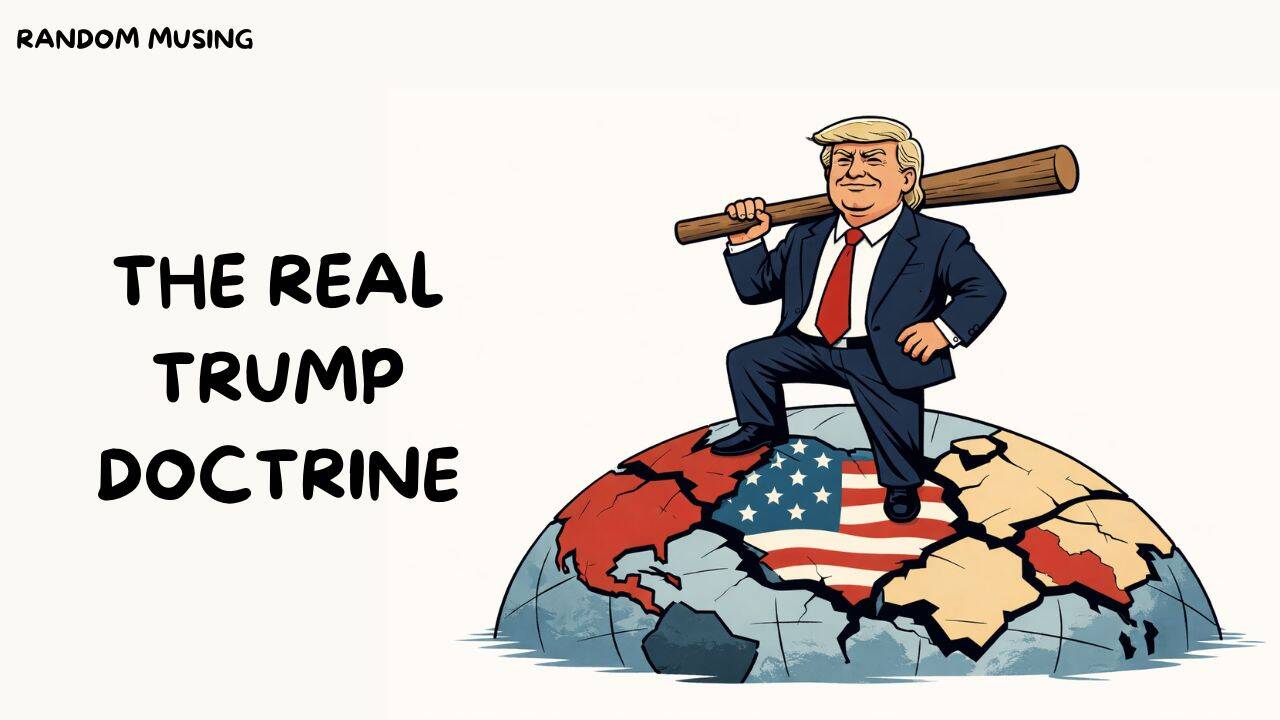

When Trump kidnapped Maduro – ostensibly because Maduro wouldn’t stop mock-dancing and opposition leader Machado didn’t hand over her Nobel Peace Prize – think-tankers and columnists started wondering again: what is the Trump Doctrine? It’s something they are wont to do every two or three months. It’s their substitute for activity.
Since Monroe, every US president has sought a doctrine.
For those who need a small history lesson, the Monroe Doctrine decreed that Europe shouldn’t meddle in the Western Hemisphere. The follow-up Roosevelt Corollary added that the US would also “preserve order, life and property”.
Taft’s Dollar Diplomacy sought to control the Western Hemisphere through money, debt, and banks. FDR aimed to dominate without military occupation. Truman decided to move past Europe and lock horns with communism.
Eisenhower brought the Middle East to the party. Kennedy and Johnson looked to overthrow every left-leaning government. Nixon was fine with giving away weapons but wanted allies to fight their own wars. Reagan aimed to roll back all left-wing governments.
Bush wanted to smoke them out anywhere, unknowns and facts be damned. Obama believed in drones, not troops.
The Trump Doctrine is much simpler. While all US presidents have tried to justify why America can do whatever it wants in the world, Trump’s doctrine can be explained in five simple memes.
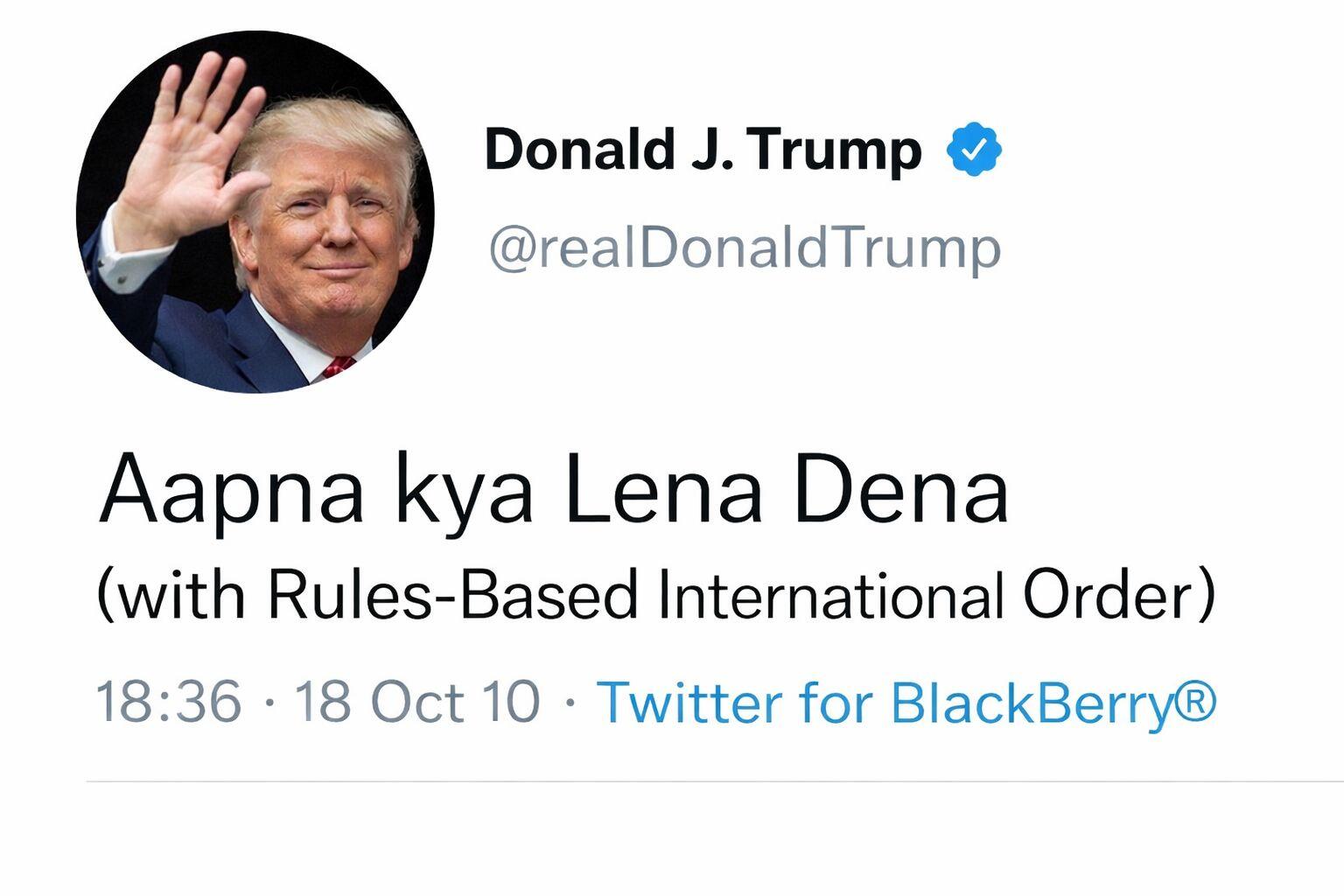
The first is the meme featuring the Indian Donald Trump, the man whose fans also think he’s infallible: Salman Khan. In essence, Trump’s first doctrine is: Apna kya lena dena (with rules-based international order).

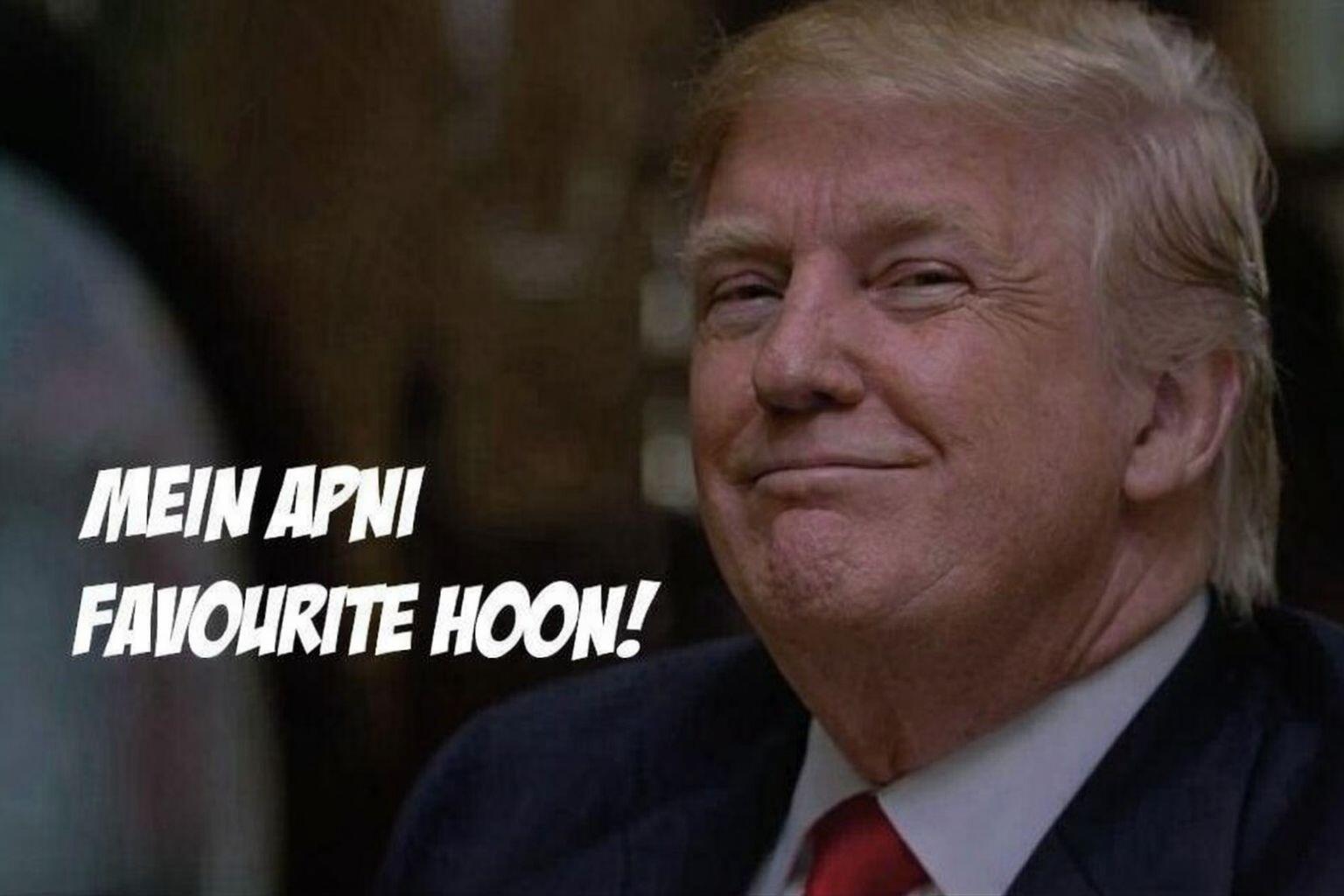
His second tenet comes from Kareena Kapoor’s character Geet’s catchphrase in Jab We Met: Main apni favourite hoon. Trump is also the best. The most beautiful. The most fabulous. The greatest thing to happen to the world.
The third tenet of the doctrine is summed up by Akshay Kumar’s catchphrase from the cult classic Phir Hera Pheri: Paisa laya?

Whoever is willing to cut him a deal is a friend. Everyone else is a foe. Ergo, Trump has no problem breaking bread with nations as diverse as Pakistan, Israel, Saudi Arabia, or Syria, as long as they are willing to improve Trump’s relationship with Mammon.
The fourth is Sardar Khan’s line from Gangs of Wasseypur: “Humra zindagi ka ek hi maqsad hai: badla.”
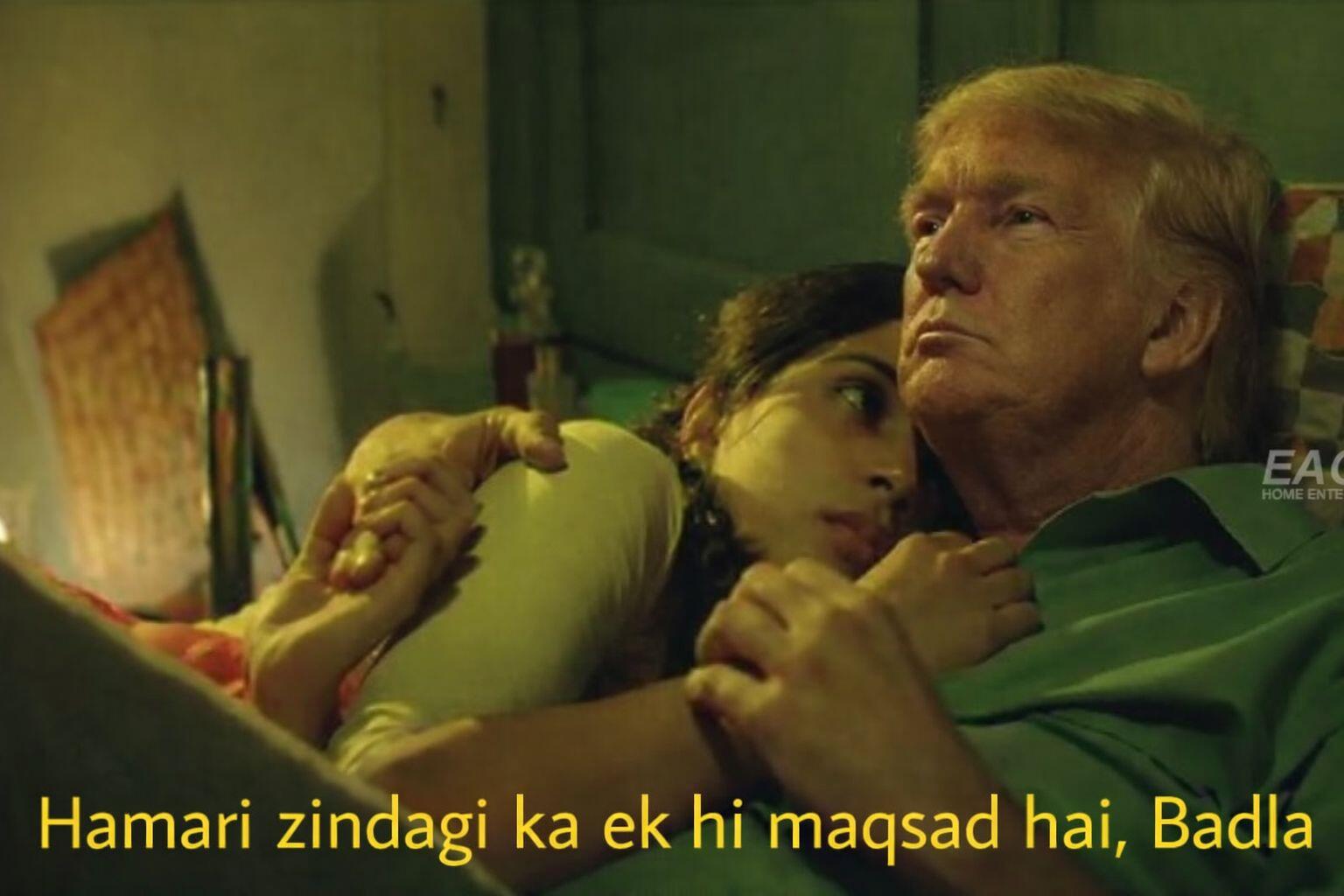
After his first presidency, he was hounded out, deplatformed, impeached, indicted, raided by the FBI, and written off in exile. But unlike Napoleon, Trump managed to return from exile, with the wrath and fury to ensure that anyone who had ever mocked him would pay. And now he has the world at his feet.
And the final doctrine, the one that sums up everything Trump does, is simply: “We are America, b*****.” We do what we want. All of them combined explain the Trump Doctrine better than any international relations paper ever could.

The Gig Worker Conundrum
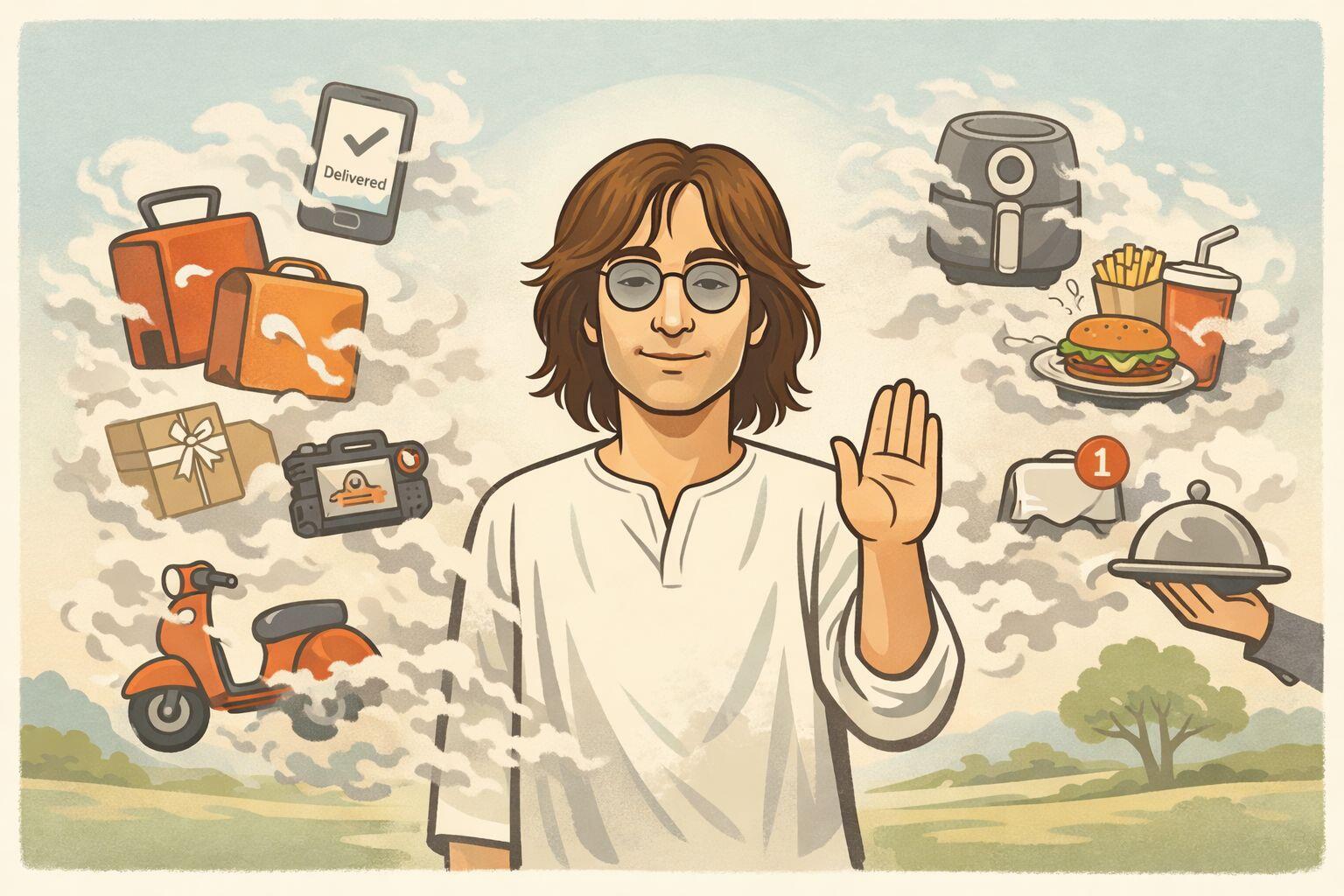
In the last few days, we have read several views on gig workers from everyone, so here are my two cents.
Gig work needs to stop. No one needs things delivered. It’s one of the terrible vices of capitalism that is completely anti-evolution. Earlier, when man needed a sugar fix, he climbed a tree and picked a fruit. That’s why mankind developed opposable thumbs after millennia of evolution – not to use those fat fingers to order things on a tiny device, which is causing all of society’s ills like obesity and diabetes.
We should ban all delivery services, reverting to our caveman phase. So what if some old people cannot go and get their food? It’s nature’s way of telling us that one has been picked for natural elimination.
From here, escalation is not optional. It is the logical endpoint. We must move away from the late-stage capitalism that has become an albatross around mankind’s neck and return to our troglodyte era.
The road ahead is obvious.
First, we abolish choice. Freedom is what we do with what’s been done to us. Choice is a scam. You will eat what is available, at the time it is available, in quantities decided by someone who has never met you and does not care.
Next, we bring back queues. Long, very long queues. Public lines waiting for everything. Queues build character. Look at how much character was built during demonetisation. Queues teach patience, humility, and the most vital truth: you are not special. Just because your daddy earned money doesn’t mean you get to enjoy it. The queue is civilisation’s great equaliser. Billionaire or poet, you will wait. And you will reflect.
The next step is to abolish money and return to a society where it is no longer required. It can go into a museum alongside NFTs and motivational posts. Scratch that. Even museums are too bourgeois to survive. Burn it all.
Everyone instead gets ration cards. Not because resources are scarce, but because desire must be curtailed. All restaurants will become public kitchens. No branding. No ambience. Cooking will be collective labour again, not Instagram content. No one needs food photographs. Anyone who is caught taking a picture will be force-fed Indori poha.
Next, we get rid of cars and bikes. They cause too much pollution and are making everyone fat. You will learn to walk again. Everywhere.
Work will be redistributed randomly. No more writing long op-eds and pretending it’s art. Everyone will do the job they are assigned. Writing, podcasting, or tweeting won’t be any of the jobs.
Entertainment will also be curtailed. No one needs to hear jokes with Faustian choices about one’s parents’ coitus.
We need a society that gets bored again. Boredom needs to be reintroduced. Do you think Isaac Newton could have come up with the laws of motion, or Albert Einstein the theory of relativity, if they had 20,000 Instagram reels on their phone? From boredom comes thought. And from thought comes dissent. And from that dissent will come more boredom.
And when the boredom settles, when desire has been disciplined and equality has finally been made unbearable in its honesty, we will have achieved what every manifesto quietly promises and never delivers.
No markets. No convenience. No illusions. Only collective inconvenience, shared scarcity, and the comforting certainty that everyone is equally miserable.
To paraphrase John Lennon: Imagine no possession. It will happen soon. No need for greed. Only hunger. A brotherhood of mendicants. Imagine all the people, sharing no food. You may say I am a dreamer. But I am the not the only one. And the world will be hungry as one…
Warmth of Collectivism
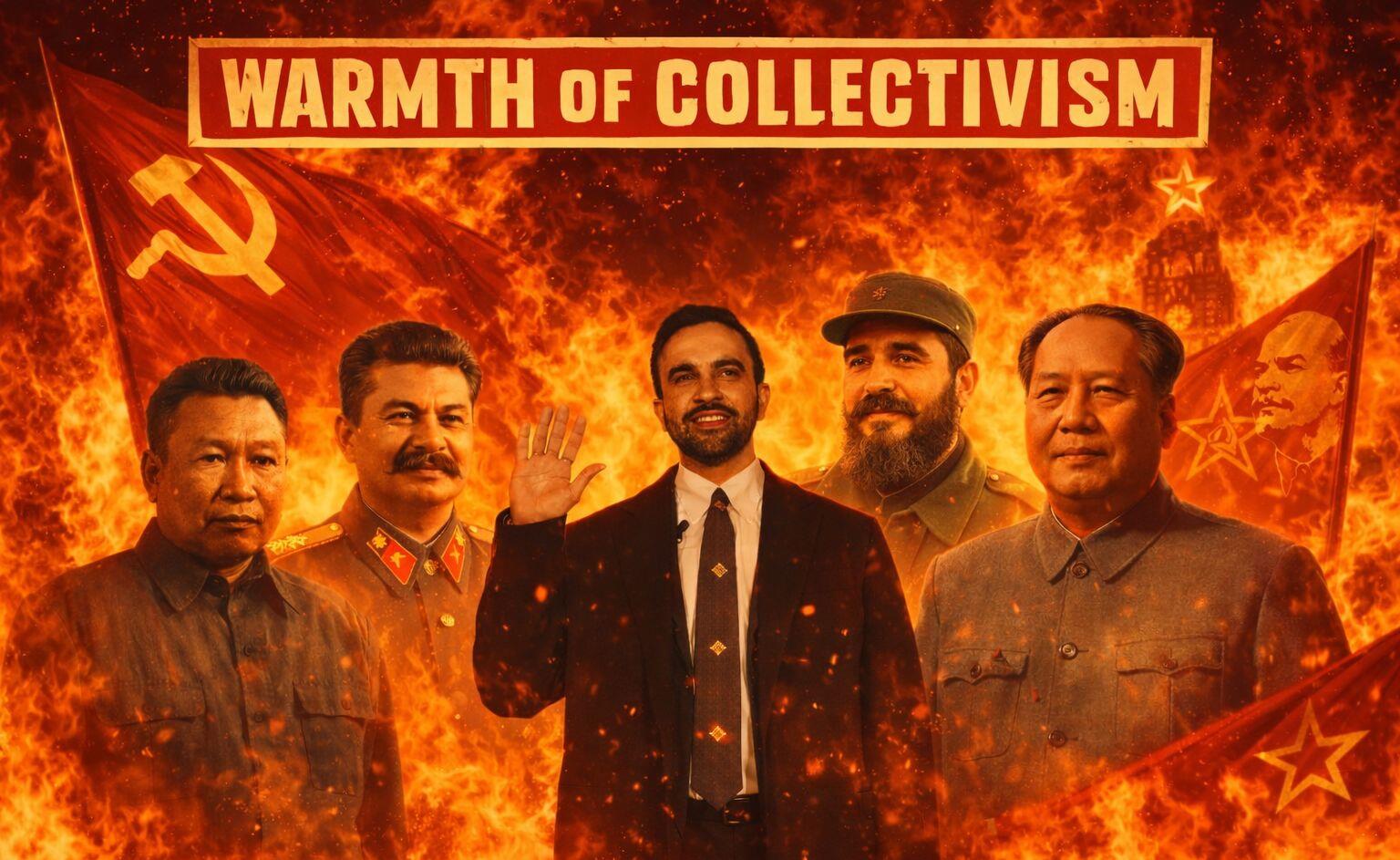

In his own way, Zohran Mamdani is the inheritor of the worst albatross of a post-colonial legacy: elites LARPing as socialists. The phrase that really stuck from his inaugural speech was this line: We will replace the frigidity of rugged individualism with the warmth of collectivism.
For those not familiar with socialism, there’s something deeply seductive about the phrase “warmth of collectivism”. It sounds like a cardigan your grandmother knitted. It paints a vision of soup kitchens, shared burdens, the moral glow that radiates outwards to keep inequality at bay. What it doesn’t evoke is the reality of socialist collectivism: ration cards, the equality of hunger, and long lines waiting for basic necessities.
Zohran might market collectivism as a hug. History, on the other hand, suggests it’s more of a chokehold. The great collectivist experiments of our time are fairly consistent.
Pol Pot believed in resetting society so completely that he razed everything to the ground, and the killing fields became the ultimate form of communal abyss. Stalin collectivised agriculture and produced industrial-scale famine.
Mao’s Great Leap Forward – where he decided backyard steel furnaces and communal farming would propel China into modernity – killed millions, which at least was good for the environment.
From Lenin to Castro, collectivism has always been a museum of frozen promises: universal literacy, free healthcare, and a permanent inability to buy toothpaste without knowing someone who knows someone. Equality was achieved. Everyone was equally poor, except the revolutionaries who explained why this was necessary.
Collectivism, when it works on paper, does so by assuming angels run the system. In practice, it is administered by men with guns, committees, and an allergy to dissent. Once the state decides it embodies “the people”, disagreement becomes betrayal. Bread shortages become counter-revolution.
Failure becomes sabotage. And soon enough, the warmth requires camps, purges, and slogans reminding you how lucky you are.
None of this is to accuse Zohran Mamdani of harbouring Khmer Rouge fantasies or Soviet nostalgia. That would be lazy and dishonest. Zohran is not selling bloodshed.
He is selling belonging. His collectivism is softer, urban, Instagram-friendly. It comes with halal carts, subway poetry, and the assurance that City Hall feels your pain. It is collectivism with a human face and a very good ground game.
But the logic underneath remains familiar. Once the state becomes the primary provider of dignity, it also becomes the primary arbiter of failure.
When free buses overcrowd and underfund transit, the answer is not reassessment but more funding. When rent freezes reduce housing supply, the culprit is not policy but landlords. When municipal grocery stores struggle with margins, logistics, and spoilage, the market is blamed for sabotaging virtue.
Every problem becomes proof that the collectivist project has not gone far enough.
This is the trap Zohranomics flirts with. It is less an economic programme than a moral posture. It treats confrontation as governance and escalation as delivery. The state is not asked to optimise, but to signal. Costs are deferred. Consequences are abstract. The warmth is immediate.
History suggests that warmth imposed from above rarely stays warm. It becomes rigid, defensive, and punitive. Once you build a politics around moral superiority, dissent stops being disagreement and starts being betrayal.
Collectivism does not collapse because people are selfish. It collapses because systems without incentives crack, and when they do, the poorest freeze first.
Zohran’s speech was not wrong to diagnose alienation. Where it erred was in assuming that collectivism automatically cures it. Community cannot be mandated. Solidarity cannot be decreed.
And warmth, when generated by bureaucracy rather than consent, has a habit of turning into something else entirely.
History has seen this movie before. It always starts with a hug. And ends in a fire.
The Manchester United Curse
There’s a school of thought popular among football fans which states that Manchester United fans are paying for the joys of their childhood. For those of us who are old enough to feel our backs when we stand up, watching Manchester United as a youngster was a fairytale.
You had the philosopher Frenchman with a frozen collar who explained the migratory habits of sardines. The folliclly-adventurous Londoner who could bend the ball from anywhere. The angry Irishman who could slag off his own national team manager.
The ginger-headed Englishman who could hit volleys so sweetly that you didn’t need therapy; you just had to watch those shots on loop on YouTube.
The Portuguese who could dance across defences like he was George Best and then score headers like he was Alan Shearer.
The Scouser who could play in virtually every position and look like he was born to play there, despite resembling a recovering alcoholic. And you had a Scottish manager who could snatch victory from the jaws of defeat and bend time to his will.
It was like the team known as the Red Devils had a deal with the devil.
And once the Scottish manager retired, the club kept dropping from one hellish rung to another, ending with a season where they finished 15th in the table.
Now imagine what it’s like for United fans of my vintage, who have had to go from Fergie-time winners to watching Ruben Amorim’s 3-4-3 week in and week out, culminating in a six-man defence against Leeds United – a match that promised the Red Wedding of Game of Thrones but instead resembled a White Divorce.
It seems things came to a head after United’s powers-that-be had enough of the 3-4-3, but Amorim refused to budge. Unlike Galileo, he decided he wouldn’t abjure his philosophy on the altar of results.
Amorim became the sixth full-time manager (technically, head coach) to be sacked post-Fergie, averaging one every two years.
Now there’s talk that United are considering Ole Gunnar Solskjaer returning as caretaker manager until the end of the season, which makes sense.
United fans are nostalgia merchants anyway, and we’d be better off reliving the glory era of Oleball – arguably the best football United played post-Fergie – than hoping there’s light at the end of the tunnel.
Maybe the United job is simply cursed. Maybe Fergie had a deal with the devil, and now that he’s gone, we’re forced to live with the consequences. The glory days are probably not coming back, so we might as well get nostalgic and feel happy about it.

Disclaimer
Views expressed above are the author’s own.
END OF ARTICLE
[ad_2]
Source link