

I had to leave Vrindavan forever and I don’t know if I will ever go back again |
[ad_1]
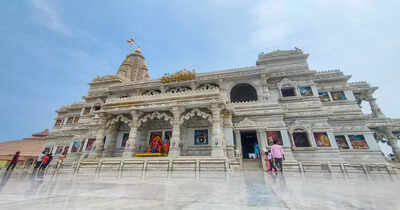
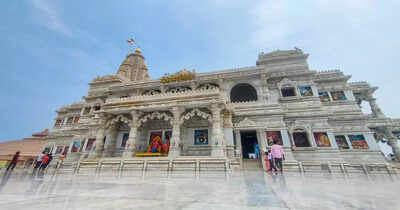
Virndavana is not a pilgrimage but an emotion for many. It is that destination, the thought of which brings peace in the hearts of many. The land of Kanha, the home of Radha and the destination of divine lila, it is a place that conjures up as the ultimate destination for many. Vrindavan is a prominent historical city in Uttar Pradesh that attracts many pilgrims every day. Its past is associated with Hindu culture, and forms a part of the ‘Krishna pilgrimage circuit,’ which also includes Barsana, Mathura, Govardhan , Puri, Kurukshetra, Dwarka, and more. Believers of Krishna, must definitely visit this place at least once in their life, as this place is believed to be the place where Lord Krishna spent most of his childhood in this city. It has around 5,500 temples dedicated to the worship of Lord Krishna and Radha. It is also one of the most sacred places for Vaishnava traditions. But a woman who had gone to seek permanent solace at the place, returned broken hearted. She had gone to seek peace and stay there, but what she got in return was not what she had ever expected. Seema Govind shared her experience on Instagram. Her heartfelt post has sparked an uncomfortable but necessary conversation about the realities of pilgrimage tourism in Vrindavan. Drawing from her personal visit, Seema Govind speaks candidly about what she witnessed, issues that, we think, are no longer isolated to Vrindavan, but can be witnessed across many religious destinations in India.Read more: How to apply for a passport in India (2025–26): Traveller tips on how to get your passport within a week One of the strongest concerns she raises is the growing culture of VIP darshan. What is meant to be an equal spiritual space increasingly feels divided, where access to temples and proximity to deities often depend on how much one can pay. For many devotees, this creates a sense of exclusion and disillusionment, turning faith into a transaction rather than an experience rooted in devotion.Govind also points to what she describes as fake stories used to extract donations, alleging that emotional narratives are sometimes fabricated or exaggerated to solicit money from pilgrims. According to her, this has led to what she calls an environment of ‘loot,’ where unchecked fundraising thrives in the name of religion. The concern is not charity itself, but the absence of transparency and accountability in how money collected in God’s name is actually used. And then there is the physical reality that hits you as soon as you step outside the temple premises. The dirt. The neglect. The chaos. For all the millions being poured into these towns, the ground beneath your feet tells a different story. The Yamuna, especially around Mathura and Vrindavan, is the most heartbreaking symbol of this gap between faith and action. We worship this river, and then we stand on her banks and look at the froth, the sewage, the plastic. It is jarring to watch people fold their hands in reverence before stepping back from water that looks too polluted to even touch.Her critique extends to a broader pattern: money continues to pour in, but visible work on the ground appears limited. It can be said that the scale of footfall these towns receive, the infrastructure, cleanliness, and safety measures isn’t enough to facilitate them.Read more: Inside the ghost town of Dhanushkodi, the broken school walls, the haunting stillness and a deep sense of sadness ruled… Perhaps the most disturbing part of her account involves a 15-year-old girl she encountered during her visit. Without going into graphic detail, Govind recounts how the child had been subjected to troubling experiences, which, when the girl shared with her mother, were dismissed as ‘God’s plan.’This is when the video sheds light to a much more serious issue. It adds that when left unchecked, a religious environment can become a breeding ground for exploitation cloaked in devotion, as blind faith can lead to spaces where exploitation hides behind devotion. Her account isn’t an attack on belief, but calls for our introspection. If every one does their one bit, we all can create a much better space for our future generations. Also when faith becomes a shield for exploitation, it is sad that it’s not just a place that suffers, but the very values religion claims to uphold.
[ad_2]
Source link