

How to identify snake eggs in your garden |

[ad_1]
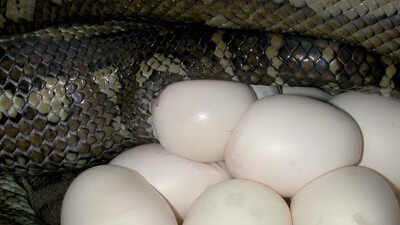
It is easy to assume that an egg found outdoors belongs to a bird. Most people do. Eggs feel familiar, almost ordinary, until you come across one somewhere unexpected. Under a log. In a pile of leaves. Half hidden in soil that looks undisturbed. That is usually when doubt creeps in. Snakes complicate things further because not all of them even lay eggs. Some give birth to live young, especially in colder places. Others produce eggs that never leave the body until hatching. So when eggs do turn up, they raise quiet questions rather than clear answers. Knowing what snake eggs look like and where they tend to appear helps remove some of that uncertainty. It also helps you avoid disturbing something that should be left alone.
These small details help you identify snake eggs in your garden
Whenever you encounter eggs, look for these details:
- Shell is softer and slightly rubbery
Snake eggs do not feel like bird eggs. The shell is softer and slightly rubbery. You can press it gently and it will give a little before springing back. This flexibility helps prevent cracking when eggs are laid close together or pressed against soil and debris. The surface often looks matte rather than glossy. It may also feel damp in humid places. These shells are porous, which allows gases to move in and out. That same porosity makes them vulnerable to flooding, which is why snakes avoid wet ground when laying.
- Snake eggs are generally white
Most snake eggs are pale. White, off white, or light beige are common shades. Some appear slightly translucent, especially when fresh. Dirt and moisture can stain them, making older eggs look darker or blotchy. Colour alone is unreliable, but bright white eggs found in dark, hidden spaces often raise suspicion. Unlike bird eggs, snake eggs rarely have spots or markings.
- Size and shape you should look for
Snake eggs are usually oblong rather than round. They look stretched, though not perfectly even. Sizes vary widely depending on species. Some are very small, barely larger than a grain of rice. Others can be several inches long. A rough guide is between one and five inches. Eggs in the same clutch are not always identical. Some may look slightly larger or more compressed, depending on how they were laid.
- Snakes lay their eggs in these places
Snakes do not build traditional nests. Most look for places that are hidden and stable. Under rocks. Beneath leaf litter. Inside abandoned burrows. Sometimes just tucked into loose soil rather than carefully buried. The goal is protection from predators and weather, not comfort. Finding eggs in a quiet, dark spot that seems undisturbed is often more telling than the eggs themselves.
- Eggs are usually found together
Snake eggs are laid in groups called clutches. The number varies. Small snakes may lay only a few. Larger species can lay dozens. Occasionally over a hundred. Seeing multiple similar eggs clustered together makes a reptile origin more likely. Single eggs are less common, though not impossible.
Is it safe to touch snake eggs
It is best not to. Even brief handling can damage them, especially if they are moved or rotated. There is a method called candling, where an egg is held up to a light to see inside. A visible embryo often confirms a snake egg. This should only be done by experts. Female snakes may abandon eggs, but that does not mean the area is safe.
What should you do if you find snake eggs
Leave them where they are. Do not relocate them. Take note of the surroundings. Shed skins or tracks nearby can offer clues. If you are unsure or concerned, contact local wildlife authorities or a herpetologist. Quiet observation is usually enough. Not everything found in nature needs intervention. Sometimes it only needs space.
[ad_2]
Source link