
Explained: Why NMC shut down the MBBS course at Vaishno Devi medical college in J&K
[ad_1]
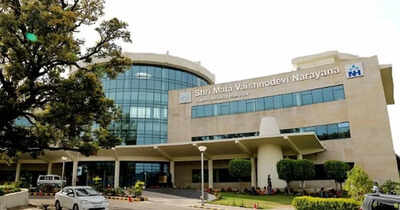
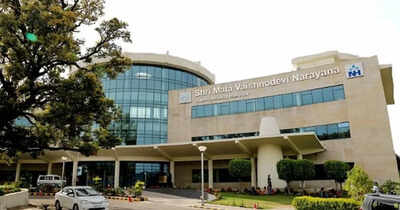
On January 6, 2026, months after granting conditional approval to start an MBBS course, the National Medical Commission (NMC) withdrew permission for the Shri Mata Vaishno Devi Institute of Medical Excellence (SMVDIME) in Jammu and Kashmir’s Reasi district, following a regulatory process punctuated by inspections, complaints and, eventually, political and public unrest.At its core, the NMC decision rests on regulatory non-compliance. The controversy that followed has layered that decision with questions of governance, merit, religion and student protection.
How the college got approval
SMVDIME applied to establish a new medical college with an intake of 50 MBBS seats for the 2025-26 academic year under public notices issued by the NMC on December 5 and December 19, 2024, according to PTI.After processing the application, the Medical Assessment and Rating Board (MARB), an autonomous board under the NMC, granted a Letter of Permission (LoP) on September 8, 2025. The permission allowed the institute to start the MBBS course, subject to strict conditions.These included maintaining minimum standards of infrastructure, faculty and clinical material, permitting surprise inspections, furnishing accurate information and rectifying deficiencies before renewal, the MARB order said. The regulator also reserved the right to withdraw or cancel permission in case of misrepresentation or non-compliance.
Complaints and surprise inspection
Following the issuance of the LoP, the NMC received multiple complaints alleging serious shortcomings at the college. These included inadequate infrastructure, insufficient clinical material, a shortage of qualified full-time teaching faculty and resident doctors, and low inpatient and outpatient numbers, PTI reports.Acting under Section 28(7) of the NMC Act, 2019, which empowers the regulator to conduct surprise inspections without prior notice, a team of assessors visited the institute on January 2, 2026.The inspection formed the basis of the adverse findings that followed.
What the inspection found
According to the MARB assessment report, the deficiencies were extensive and cut across core requirements.Faculty strength was significantly below prescribed norms, with a 39% shortfall in teaching faculty and a 65% deficiency in tutors, demonstrators and senior residents. Clinical services were also found to be far below standards, with outpatient department attendance of 182 at 1 pm against a required 400, and bed occupancy at 45% against the mandated 80%.Intensive care units had around 50% average occupancy, while the number of deliveries averaged about 25 per month, a figure the MARB termed “grossly deficient”. Several practical laboratories and the research laboratory were not available. Lecture theatres did not meet minimum standards, the library had 744 books against a requirement of 1,500 and only two journals against the mandated 15.The report also noted the absence of an antiretroviral therapy centre and facilities for managing multidrug-resistant tuberculosis. Only two operation theatres were functional against a requirement of five, with no minor operation theatre in the outpatient area and inadequate equipment for para-clinical subjects. Some departments lacked separate male and female wards.
The regulatory basis for withdrawal
Citing Chapter V, Regulation 29 of the Establishment of Medical Institutions, Assessment and Rating Regulations, 2023, which treats non-compliance as an offence liable to penalty, the MARB categorised the deficiencies as statutory non-compliance.After considering the assessment report, the commission concluded that the institute had failed to meet the minimum standard requirements specified in the Undergraduate Medical Education Regulations, 2023. With the approval of the NMC chairperson, the MARB decided to withdraw the LOP with immediate effect, PTI said.In addition, the regulator decided to invoke the performance bank guarantee furnished by the college, underscoring the financial consequences of regulatory failure.
What happens to the students
To ensure that students are not academically displaced, the MARB order directed that all students admitted during counselling for the 2025-26 academic year be accommodated in other medical institutions in Jammu and Kashmir as supernumerary seats.“This means no admitted student will lose an MBBS seat due to the withdrawal decision,” PTI reports. The implementation of the relocation will be handled by the Union Territory’s designated health and counselling authorities, who have been formally informed.
Protests and political response
Parallel to the regulatory action, the college became the focus of protests by the BJP-supported Shri Mata Vaishno Devi Sangharsh Samiti, a conglomeration of right-wing organisations. The agitation was triggered by the composition of the inaugural MBBS batch, which included 42 Muslim students, seven Hindu students and one Sikh, admitted through NEET.The Samiti demanded either the expulsion of non-Hindu candidates or the closure of the college, according to IANS.Jammu and Kashmir Chief Minister Omar Abdullah publicly defended the admissions, stating that they were strictly merit-based. “Those children worked hard to get their seats. No one did them any favour,” he said, according to PTI. He added that if the prevailing atmosphere made the institution unsafe for students, they should be adjusted elsewhere.“We do not want to send them to a place where so much politics is being done. Close that medical college. That medical college is not worth opening,” Abdullah said.He also reiterated that SMVDIME is not a minority institution and receives grants from the Jammu and Kashmir government.
Security and administrative response
Following protest calls, security around the Civil Secretariat was tightened, with hundreds of police personnel deployed to prevent any law and order situation. Officials reiterated that admissions had been conducted strictly on merit and in accordance with prescribed norms.Union Minister of State Dr Jitendra Singh said the Lieutenant Governor, who is also the chairman of the Shri Mata Vaishno Devi Shrine Board, was competent to address the issue and expressed hope that steps were being taken to resolve it, according to IANS.
Why the shutdown happened
Despite the political and public fallout, the formal reason for the shutdown remains regulatory. The NMC’s decision was driven by documented deficiencies in faculty, infrastructure and clinical exposure, identified through a surprise inspection and assessed under existing law.The student relocation order has prevented immediate academic loss. What remains unresolved is the future of the institution itself, and whether it can address the deficiencies and seek fresh approval.For now, the episode stands as a case study in how regulatory enforcement, institutional preparedness and local politics can converge, with students placed at the centre of the fallout.
[ad_2]
Source link