
World’s longest hydrogen-powered train moves closer to launch in India |
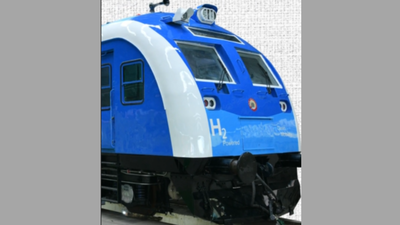
India’s first hydrogen-powered train-set is ready, as its manufacturing has been completed, marking a historic development in the drive toward cleaner and greener rail mobility. The Indian Railways-led pilot project highlights indigenous design, development, and manufacture, supporting the government’s Atmanirbhar Bharat (Self-Reliant India) drive while also placing India among a group of few nations trying hydrogen traction technology.The initiative covered the entire development cycle, beginning with initial design, moving through prototype fabrication, and culminating in the first-ever creation of hydrogen traction technology within Indian Railways. As both the hydrogen train-set and its supporting infrastructure have been implemented as a pilot project, comparing the costs of hydrogen-powered trains with conventional traction systems at this stage would not provide a meaningful or accurate assessment, as per the PIB press release.The Research, Design & Standards Organisation (RDSO), which sets technical standards for Indian Railways, framed the specifications for the train-set.World’s longest and most powerful hydrogen train on broad gauge
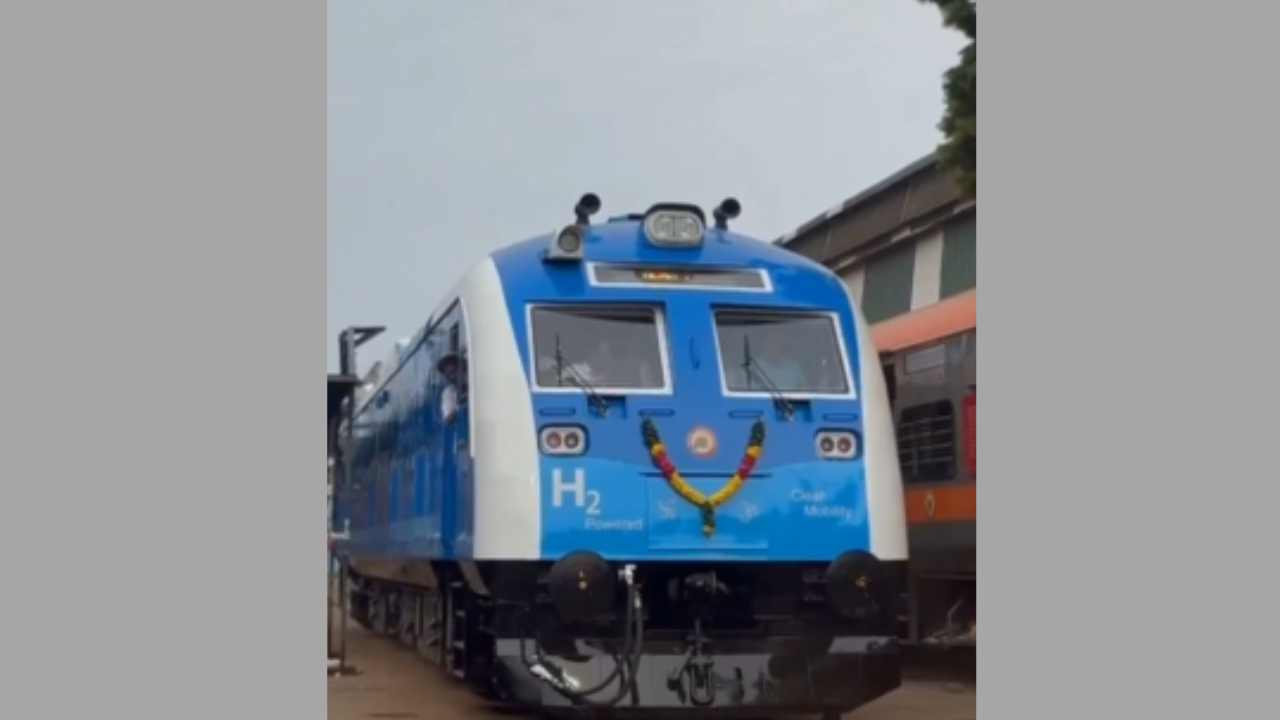
The newly built hydrogen train-set stands out not only for its fuel technology, but also for its scale and power. It is now recognized as the world’s longest hydrogen-powered train running on broad gauge, with a total of 10 coaches. The train comprises two Driving Power Cars (DPCs) rated at 1,200 kW each, together delivering 2,400 kW of power, along with eight passenger coaches.Designed and developed entirely in India, this project marks a major milestone in India’s shift to alternative rail fuels. Its key environmental advantage is that it emits no carbon dioxide—only water vapor. Officials have described it as a vital step in developing next-generation fuel technologies for trains.Read more: India issues travel advisory for Venezuela after recent developments; shares emergency nos and other detailsGreen hydrogen plant in the making at JindTo support train operations, a green hydrogen facility is being built at Jind. The plant uses electrolysis, a process where electricity is passed through water to split hydrogen and oxygen, making it a central method for green hydrogen production when powered by renewable energy.The hydrogen plant at Jind, which has a storage capacity of 3,000 kg, is in its final commissioning stage. It has been equipped with a steady 11 kV power supply for both train commissioning and daily operation.The hydrogen-powered train is expected to operate on the Jind–Sonipat section under Northern Railway, and preparations are in their final phase. The Haryana government is closely monitoring progress, viewing it as a first-of-its-kind initiative in the country.Haryana Chief Secretary Anurag Rastogi recently reviewed the project’s readiness in a meeting with officials from Dakshin Haryana Bijli Vitran Nigam (DHBVN). He instructed them to conduct periodic reviews of the power supply network, ensure strong backup systems, and maintain quick response mechanisms, PTI reported.Railway Minister Ashwini Vaishnaw stated in a written reply in the Lok Sabha that the hydrogen train project is being executed on a pilot basis. He confirmed that it involved end-to-end design, prototype production, and the first-time creation of hydrogen traction technology within Indian Railways.One small step towards a greener rail networkSince this is a pilot project, officials clarified that direct cost comparisons between hydrogen and existing traction systems are premature. The focus is on demonstrating technical feasibility and building expertise in alternative energy systems.The completion of Indian Railways’ first hydrogen train-set and the establishment of the green hydrogen plant at Jind underscore the railways’ ongoing commitment to decarbonisation and sustainable technology. As the project nears operational rollout, it represents a defining stride toward a greener and more energy-efficient transportation future for India.