

Ugly duckling sign for melanoma: Symptoms, studies, and self-check tips
[ad_1]
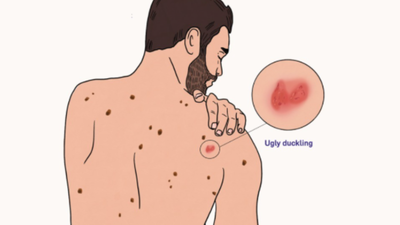
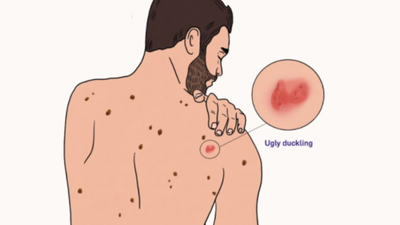
Ever noticed a mole that stands out like a sore thumb among your others? That’s the “ugly duckling” sign, a straightforward clue dermatologists use to flag potential melanoma early. Coined by Jean-Jacques Grob–and Remy Bonerandi in their 1998 research, it highlights the one lesion that looks different from its neighbors in size, shape, color, or texture. Catching it quickly can shift outcomes dramatically, with studies showing it helps spot deadly skin cancers before they spread.
How the odd mole gives itself away
Normal moles on your body often share family resemblances. They match in shade, from light tan to deep brown, stay under 6mm across, boast smooth borders, and evolve slowly if at all. The ugly duckling shatters that harmony. It could dwarf the rest at over a centimeter, bleach white while siblings darken, bleed or crust unexpectedly, or sprout bumpy textures amid flat friends. Even a lone ranger without nearby mole mates deserves scrutiny–as melanomas love to play loner.
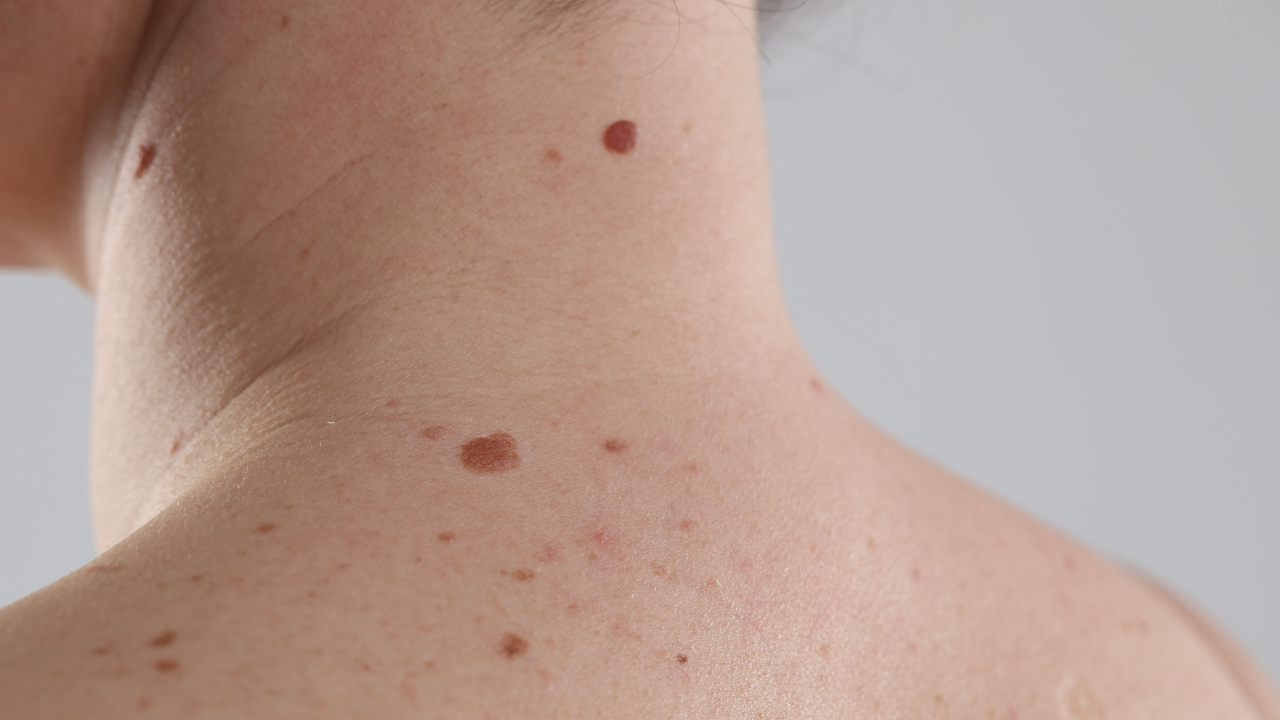
This approach thrives on pattern recognition, not perfection. Someone with 50 moles might overlook a slightly irregular one under ABCDE rules alone, but the duckling screams mismatch against the crowd. Grob and Bonerandi’s original work in Archives of Dermatology stressed comparing lesions within personal skin patterns, a trick benign spots rarely fool. Tools like dermoscopy amplify it, revealing hidden quirks under magnification.
Solid science backs the simple check
Researchers put it to the test rigorously. In a 2008 JAMA Dermatology study, Alon Scope, Stephen W. Dusza, Allan C. Halpern, and team examined back photographs from 12 high-risk patients. Five had confirmed melanomas. Among 34 observers, from lesion experts to clinic staff, every melanoma flagged as the ugly duckling to over two-thirds, while just 2.1% of 140 benign moles drew false alarms. Sensitivity ranged 90 to 100%, proving even novices nailed it.

A stronger validation came in 2017 from Caroline Gaudy-Marqueste, Jean-Jacques Grob, and colleagues in the Journal of the American Academy of Dermatology. They reviewed 2,089 clinical photos and 766 dermoscopic images across 80 patients. Nine dermatologists identified all melanomas as ugly ducklings, boosting specificity to 96% for clinical views and cutting unnecessary biopsies nearly sevenfold when paired with standalone exams. False positives dropped sharply, making it a powerhouse for busy clinics.Earlier, a 2015 NIH-backed paper by Thomas et al. combined it with ABCDE, showing 88% sensitivity in detecting early melanomas among atypical nevi. These papers underline why guidelines from the Skin Cancer Foundation now tout it alongside classics.
Real stakes for your health
Melanoma claims lives because it spreads fast if ignored, but stage 1 detection boasts 99% five-year survival. The ugly duckling democratizes vigilance. Primary care doctors spot 85% correctly per Scope’s data, slashing referrals to benign spots. For patients with dense moles, sun-damaged skin, or family history, it personalizes risk without fancy gear.High-risk folks, like fair-skinned sun worshippers or transplant patients, gain most. Apps now train users on it, mimicking study protocols for monthly self-scans. Missing it delays biopsy; heeding it prompts swift excision, often outpatient simple.
Practical steps to guard your skin
Build a habit: strip down monthly in good light, snap smartphone grids of arms, legs, back, and scalp via mirror or partner. Note patterns, bookmark ducklings with dates. Any change in weeks? Book a derm. Slather SPF 30+ daily, seek shade 10am-4pm, cover up. Tanning beds? Skip them; they double odds.Grob’s team found patients self-detecting via this sign presented thinner cancers. Scope’s observers, untrained yet accurate, show anyone can learn. Pair with ABCDE: asymmetry, irregular borders, varied colors, diameter over pencil eraser, evolving traits. Ugly duckling adds the crowd wisdom your skin holds.
[ad_2]
Source link