Runs, wickets, and World Cup: Kapil Dev turns 67 – the all-rounder Indian cricket never replaced | Cricket News
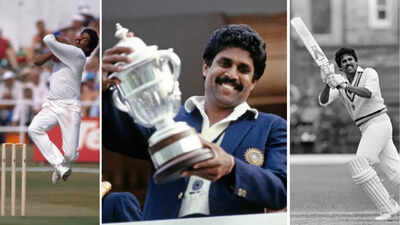
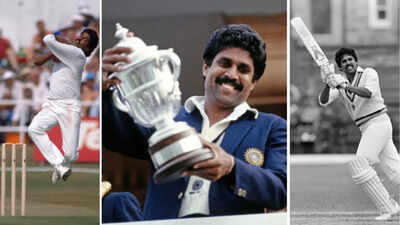
January 6 holds a distinct place in cricket’s calendar. It was on this day that Steve Waugh played his final Test, at his home ground, the Sydney Cricket Ground. It was also the day when three Australian greats — Greg Chappell, Dennis Lillee and Rod Marsh — played their last Test in 1984, bowing out together at the end of the Sydney Test against Pakistan.From an Indian cricket perspective, however, January 6 carries a different weight. It was on this day in 1959 that Kapil Dev was born. More than six decades on, it remains difficult to argue against the idea that Indian cricket’s most complete cricketer arrived that day.On Kapil Dev’s birthday, it is hard not to recall a tweet posted by cricket writer Abhishek Mukherjee in 2020. It was not written in praise-heavy prose or sweeping claims. Instead, it listed what Indian cricket’s greats had achieved — and what each of them had not. World Cups, series wins, hat-tricks, five-wicket hauls, centuries in specific countries, records with bat or ball — every name, every achievement, had a missing piece. Until Kapil Dev. Mukherjee ended his list with a simple conclusion: only one Indian had done all of it. And more.Kapil Dev’s numbers still stand apart in Indian cricket. He remains the only player to score 4,000 runs and take 400 wickets in Test cricket. He finished his Test career with over 5,000 runs, including eight centuries, and 434 wickets — a world record at the time, achieved by overtaking Richard Hadlee. His career stretched across 131 Tests, a mark of durability in an era when fast bowlers rarely lasted that long. If not for being dropped for one Test against England in 1984-85 as a disciplinary measure, his career would have read 132 consecutive Tests.Kapil was not the fastest, nor did he possess the most unplayable delivery among his contemporaries. Playing at the same time as Imran Khan, Ian Botham and Hadlee, comparisons were inevitable. His strike rate — fewer than four wickets per Test — did not scream dominance. What did stand out was accuracy, stamina and movement, particularly his ability to swing the ball away from right-handers. He bowled long spells, returned for more, and did so across conditions without complaint.With the bat, Kapil was uncomplicated and direct. He did not wait for permission to attack. His Test record includes innings that continue to define moments in Indian cricket history. The 129 at Port Elizabeth against South Africa came when the rest of the Indian team managed only 86 runs combined. Against Pakistan in Madras in 1980, he struck a brisk 84 and took 11 wickets to seal the series. During the 1981-82 series against England, Kapil amassed 318 runs and claimed 22 wickets against an attack and batting line-up that included Botham, Graham Gooch, David Gower, Mike Gatting and Bob Willis.In Australia in 1991-92, well into his career, Kapil still took 25 wickets across the series. Against England, he averaged over 40 with the bat. Against Australia, he averaged 25 with the ball. These are not isolated spikes but sustained contributions across opponents and continents.Then there was the Lord’s Test of 1990. Facing England’s off-spinner Eddie Hemmings, Kapil struck four sixes in four balls when India needed 23 runs to avoid the follow-on. It made him the first player in Test cricket to hit four consecutive sixes in an over, a feat only three players have managed till date.In one-day internationals, Kapil again sits alone in Indian cricket history. He remains the only Indian with more than 2,500 runs and 250 wickets in the format, finishing with 3,783 runs and 253 wickets. These numbers came while he also captained India to its first World Cup title.The 1983 World Cup remains central to Kapil Dev’s legacy. India entered the tournament with little expectation, having won only one match — against East Africa — in the previous two editions. They had even lost to Sri Lanka, then not a Test-playing nation. Kapil, 24 at the time, had been made captain only four months earlier, after India lost a Test series to Pakistan and Sunil Gavaskar was removed.Questions surrounded Kapil’s leadership and temperament. It was his bat that first answered them. Against Zimbabwe at Tunbridge Wells, with India reduced to 9 for 4 and then 17 for 5, Kapil produced an unbeaten 175. It came on a pitch offering assistance to bowlers and against a team making its World Cup debut, but the context did not dilute the impact. His 175 came off 138 balls. He reached his hundred only in the 49th over, before scoring 75 runs in the next 11 overs. India recovered, won the match, and stayed alive in the tournament.That innings is now spoken of as a turning point. Not because it was against the strongest opposition, but because it held India together when collapse looked certain.Kapil Dev’s career does not rest on a single trophy or a single innings. It rests on accumulation — of runs, wickets, matches, moments and responsibilities. He captained India to a World Cup, held the world record for Test wickets, and remains unmatched in Indian cricket for all-round output across formats.On January 6, Indian cricket does not just mark a birthday. It marks the arrival of a player whose career still resists neat comparison and whose replacement in Indian cricket still has not been found.