
Royal ‘marriage’ exposed: Indonesian model Manohara Odelia Pinot claims she was abused by Malaysian prince
[ad_1]
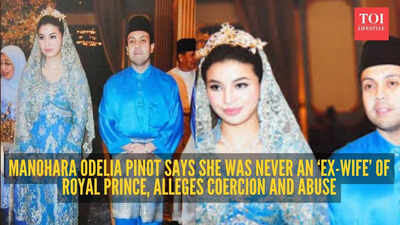
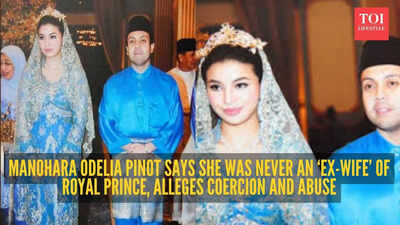
In 2008, what was presented to the world as a fairytale royal marriage was, in reality, something far more troubling.Malaysian prince Tengku Muhammad Fakhry Petra married Manohara Odelia Pinot, an Indonesian-American model who was just 16 years old at the time. Within a year, Manohara fled Malaysia, later alleging that the relationship involved repeated sexual abuse, physical punishment, and extreme control.Now 33, Manohara has spoken out again, not to reopen old wounds, she says, but to correct how her story continues to be framed. According to her, what happened to her was never a consensual relationship, and the so-called marriage was never legal.For years, headlines have referred to her as the prince’s “ex-wife”. It’s a label she strongly rejects.

In a statement shared on Instagram on January 5, 2026, Manohara said the term deeply misrepresents her experience. “Ex-wife,” she explained, implies choice, adulthood, and consent – none of which applied to her situation.She has been clear: she was a minor, trapped in a power imbalance she could not escape.The prince, son of the Sultan of Malaysia’s Kelantan state, brought Manohara to live in Kelantan after the marriage. What followed, she later alleged, was a life of isolation. She says she wasn’t allowed to move freely, had little to no contact with her family, and lived under constant surveillance within the palace.In earlier interviews, Manohara described the abuse in stark terms. She said sexual violence and harassment were routine, and refusal was met with punishment. The relationship, she maintains, was built on fear, not consent.Her escape in 2009 was dramatic. During a royal family trip to Singapore, Manohara fled from a hotel and returned to Indonesia with the help of her mother, local authorities, and officials from the US embassy. The moment marked the end of her captivity, but not the end of the public narrative surrounding her.More than 15 years later, Manohara says that narrative still gets it wrong.“What happened during my teenage years was not a romantic relationship,” she wrote. “It was not consensual. And it was not a legal marriage.”By continuing to describe her as an “ex-wife”, she argues, the media unintentionally sanitises what was actually a case of coercion involving a minor. Language, she says, matters because it shapes how abuse is understood, minimised, or dismissed.She has asked journalists, editors, and digital platforms, including search engines and encyclopaedias, to stop using the term altogether. Her request, she clarified, is not about reliving the past, but about accuracy and responsibility.This is not just her story, she implies. It’s about how society talks about relationships where power, age, and consent are deeply unequal, and how easily abuse can be hidden behind titles like “marriage”.For Manohara, the correction is simple but necessary: what happened to her was not a failed relationship. It was something she never chose in the first place.
[ad_2]
Source link