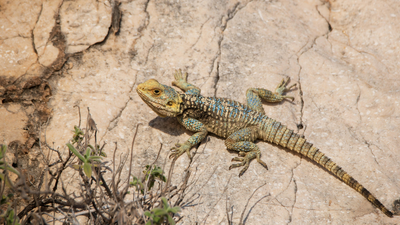
Optical illusion: Can you spot the sneaky snake in this image in under 10 seconds? |

[ad_1]

Optical illusions are a great tool, as they get our brain to exercise, and can be the perfect test of our observational skills and keen eye. People who want to use their free time effectively can solve puzzles, which provide both entertainment and problem-solving solutions. The brain creates visual illusions through its incorrect processing of what the eyes detect during visual perception. It occurs when the information sent by the eyes conflicts with how the brain processes, and understands what it sees. Our brains create false perceptions through these illusions, which make us see things that do not exist while they distort the actual appearance of objects. The human eye perceives motion through visual processing which makes stationary pictures seem to move, and two identical objects appear to have different dimensions.Can you find the snake?A user named KRothbauer first shared this optical illusion on Reddit, and soon, it captured attention from all over. At first glance, the image appears as a simple garden scene: a white birdbath sits surrounded by plants and dark mulch, with green foliage growing near a tree trunk in the center and a fence visible in the background. The entire yard looks neatly maintained and ordinary. However, hidden amidst all the foliage is a sneaky snake that you need to find in 10 seconds. Ready, Steady, Go! The revealGive up? Focus on the middle of the image amid the green plants, and the snake reveals itself coiled naturally in plain sight.Types of optical illusionsThe human brain experiences three main categories of optical illusions.Literal Illusions: The brain creates non-existent images through its process of uniting different elements from an image. The way we view an image, can make it appear as either two faces or a vase.Physiological Illusions: The visual system becomes overactive because of excessive light exposure, excessive movement and color stimulation. The visual effects they produce include both afterimage appearances and moving objects, that seem to move.Cognitive Illusions: These rely on how the brain subconsciously interprets information. The Müller-Lyer illusion represents one example of an illusion which makes lines appear longer or shorter based on surrounding shapes.
[ad_2]
Source link