
Govt bets on young doctors, women scientists to widen India’s health research base | India News
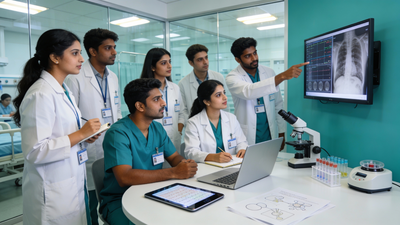
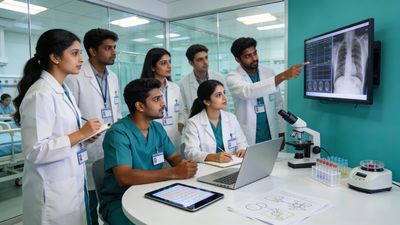
NEW DELHI: The Centre has amended its Human Resource Development (HRD) Scheme for health research to expand India’s medical research base beyond a handful of leading institutes, enabling many more medical colleges to undertake quality health research. The overhaul focuses on inclusion—supporting medical students, young doctors, faculty members and women scientists—so that research capacity grows nationwide alongside established centres such as AIIMS, PGI and NIMHANS.Issued by the department of health research, the revised guidelines aim to address a long-standing weakness in India’s health system: the lack of trained research capacity in most medical colleges, by nurturing clinician-researchers from the earliest stages of their careers.Under the scheme, undergraduate MBBS and BDS students will continue to receive short-term research support, exposing them to how medical evidence is generated alongside clinical training. Postgraduate students pursuing MD, MS and DNB degrees will be eligible for funded thesis work, addressing the common problem of research being conducted without financial backing.Explaining the intent, Dr Govind K. Makharia, associate dean (research), AIIMS, said the scheme is designed to introduce students and young doctors to research early, helping them learn scientific methods, data analysis and academic writing alongside patient care. “Most medical colleges lack funds even for thesis work. Small support at this stage can significantly improve research quality and build skills that last a lifetime,” he said.For doctors keen to remain in academics, the revamped framework offers medical PhD fellowships and research grants for young faculty, helping them stay in teaching and research rather than being edged out by limited institutional support.A key public-interest focus is targeted support for women scientists. Dedicated fellowships aim to help women who took career breaks due to family responsibilities re-enter active research, preventing loss of trained talent.The scheme also supports short- and long-term training in India and abroad, allowing young researchers to learn advanced techniques and bring that expertise back. According to Dr Makharia, these fellowships and small “seed grants” are meant to build a nationwide pool of trained researchers, especially in state medical colleges and non-metro institutions—not just apex centres.Officials said the revised scheme aligns research training with national priorities such as communicable and non-communicable diseases, mental health, geriatrics, genomics and health systems research, ensuring studies emerge from real-world public health needs.The broader aim, they said, is to decentralise health research so evidence shaping treatment protocols and health policy comes from across the country—not only from a few institutions.