

Rs 79,000 crore defence push: How India is rearming to counter China and Pakistan | India News


NEW DELHI: Amid a tightening security environment shaped by a militarily assertive China and a volatile Pakistan, the defence ministry has cleared military modernisation projects worth nearly Rs 79,000 crore, marking one of the most consequential procurement approvals in recent years. The clearances were accorded by the Defence Acquisition Council (DAC) chaired by defence minister Rajnath Singh, which approved a wide range of systems spanning air defence missiles, combat drones, long-range rockets, air-to-air weapons, aerial refuellers and counter-drone technologies.Senior military officials have repeatedly stressed that future conflicts will be defined by speed, precision and the ability to fight across domains. “Timely induction of critical capabilities is essential to maintain operational readiness in a rapidly evolving threat environment,” the Chief of the Air Staff, Air Chief Marshal AP Singh, said recently, underscoring the urgency behind such decisions. While Acceptance of Necessity (AoN) is only the first step in the procurement process, it formally establishes the armed forces’ requirements and allows detailed tenders, trials and negotiations to begin.
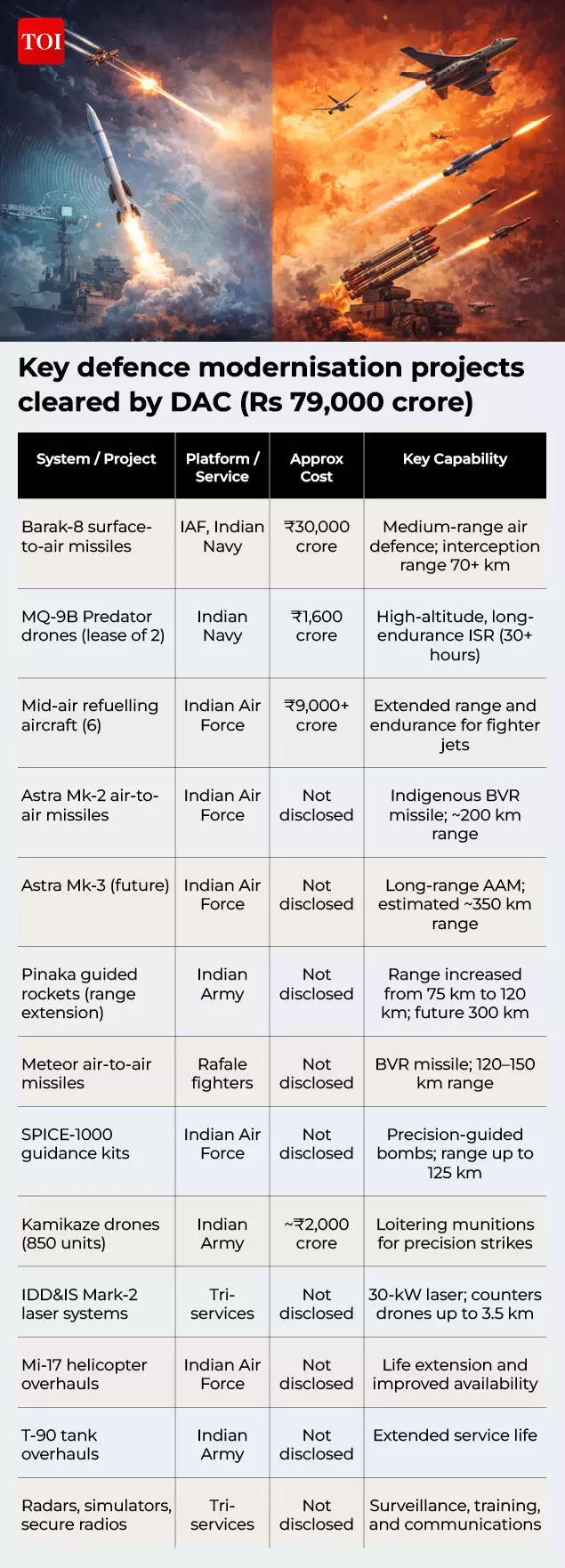
Taken together, the latest approvals offer a revealing snapshot of how India’s armed forces are recalibrating for wars that may unfold under the shadow of drone swarms, long-range missiles, electronic warfare and sustained precision strikes. Many of the systems cleared have been shaped by operational lessons from recent crises, assessed against the growing missile and air power capabilities of China and Pakistan, and aligned with a more pragmatic “Make in India with partners” approach rather than doctrinaire import substitution. What follows is not merely a list of acquisitions, but an emerging blueprint for how India plans to deter, and if necessary fight, high-intensity conflicts across its borders in the coming decade.Barak-8 missiles: Backbone of India’s layered air defenceThe single largest approval under the latest DAC meeting is the Rs 30,000 crore procurement of a large number of Barak-8 medium-range surface-to-air missiles for the Indian Air Force and Navy. Jointly developed by India and Israel, Barak-8 has become the backbone of India’s medium-tier air defence architecture.
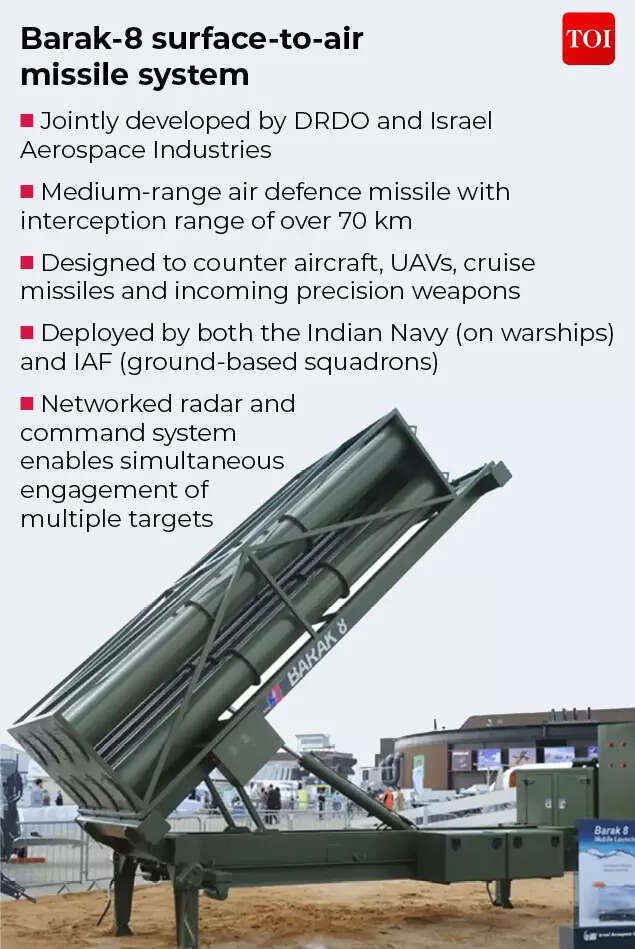
With an interception range of over 70 km, Barak-8 is designed to neutralise a wide spectrum of aerial threats, including fighter aircraft, helicopters, cruise missiles and unmanned aerial vehicles. Its advanced active radar seeker and ability to engage multiple targets simultaneously make it critical in countering saturation attacks.The missile system proved its operational value during the cross-border hostilities in May, when Pakistan launched multiple waves of Turkish-origin drones and Chinese missiles. Barak-8 was part of India’s multi-layered air defence network that successfully intercepted incoming threats, preventing damage to key military installations.For the Navy, Barak-8 is deployed aboard frontline destroyers, frigates and aircraft carriers, providing area air defence against anti-ship missiles and hostile aircraft. For the IAF, ground-based Barak-8 squadrons protect air bases and strategic assets. The new procurement aims to significantly bolster missile stocks, addressing concerns over wartime depletion and sustained engagements.MQ-9B Predator drones: Bridging the surveillance gap till 2030The DAC also approved the Rs 1,600-crore lease of two additional MQ-9B Predator drones for a period of three years. These high-altitude, long-endurance unmanned aerial vehicles will supplement the two Predators currently operated by the Navy.MQ-9Bs are capable of flying for over 30 hours at altitudes exceeding 40,000 feet, providing persistent intelligence, surveillance and reconnaissance across vast areas. They are particularly valuable for maritime domain awareness in the Indian Ocean Region, tracking hostile naval movements and monitoring choke points.
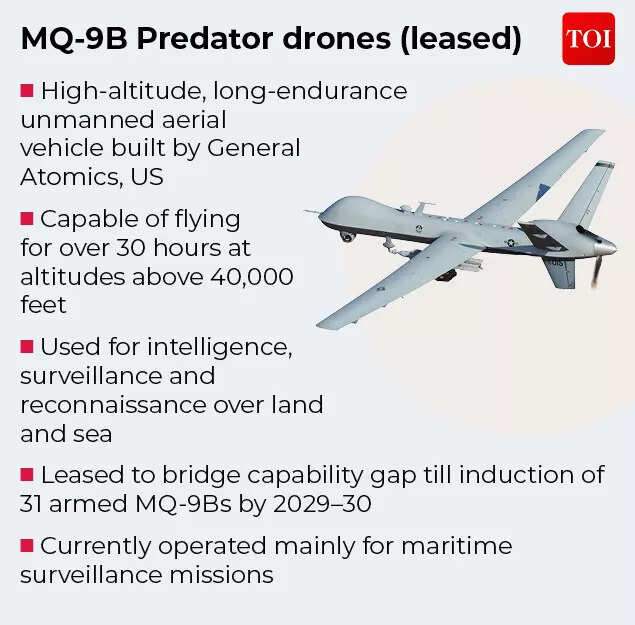
The leased drones are meant to bridge a critical capability gap until India receives 31 armed MQ-9B remotely piloted aircraft systems under the $3.8 billion deal signed with the US in October last year. Deliveries under that deal are expected only in 2029–30.By opting for a lease rather than outright purchase, the military avoids a capability vacuum during a period of heightened regional tensions, particularly in the Indo-Pacific and along the Line of Actual Control with China.Mid-air refuelling aircraft: Extending IAF’s combat reachAnother major clearance is the long-pending acquisition of six mid-air refuelling aircraft for the Indian Air Force at a cost exceeding Rs 9,000 crore. The lack of adequate aerial refuellers has long constrained the IAF’s ability to sustain long-range air operations.Under the approved plan, Israel Aerospace Industries will convert six second-hand Boeing 767 commercial aircraft into aerial tankers. The conversion involves structural reinforcement, installation of refuelling booms, fuel tanks and mission systems.
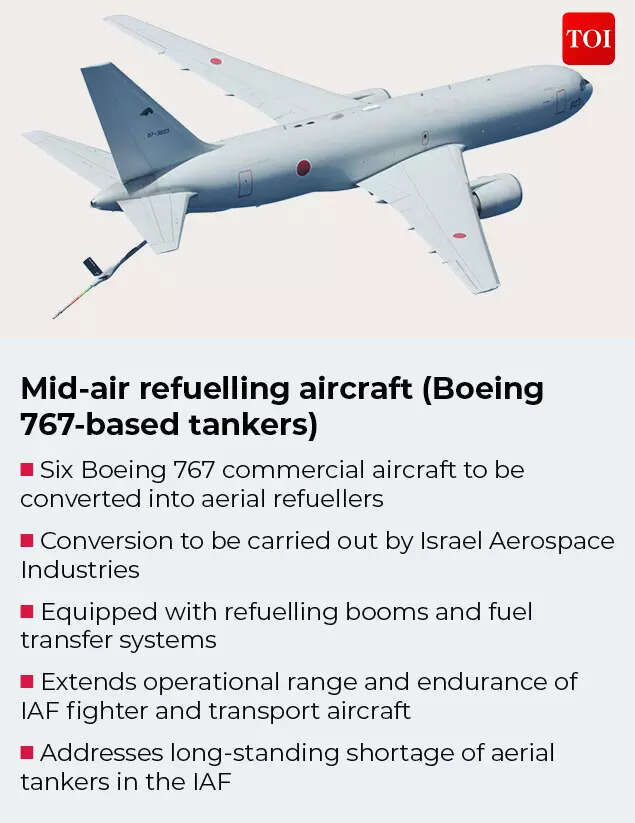
A fresh AoN was required because the tender resulted in a single-vendor situation. Despite that, the urgency of the requirement has pushed the government to move ahead.Mid-air refuellers dramatically extend the operational reach and endurance of fighter jets, transport aircraft and surveillance platforms. They are especially critical for deep-penetration strikes, rapid force mobilisation, and sustained air patrols over contested areas. With China operating a growing fleet of refuellers and Pakistan steadily upgrading its air force, the IAF’s refuelling gap had become increasingly stark.Astra Mk-2 and Mk-3: India’s push for long-range air dominanceTwo crucial indigenous missile projects cleared by the DAC focus on extending India’s air-to-air combat envelope. The first is the Astra Mark-2 air-to-air missile, whose range is being enhanced from the current 100 km to around 200 km.Developed by the Defence Research and Development Organisation (DRDO), Astra is India’s first indigenous beyond-visual-range air-to-air missile. It is already integrated with Su-30MKI fighters and is slated for deployment on Tejas and other platforms.
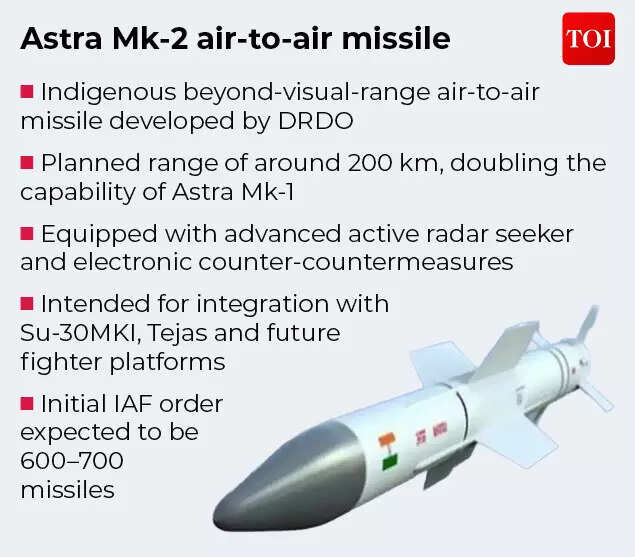
The IAF is expected to place an initial order for 600–700 Astra Mk-2 missiles. In parallel, work is underway on Astra Mark-3, which will have an estimated range of around 350 km, placing it firmly in the long-range interception category.
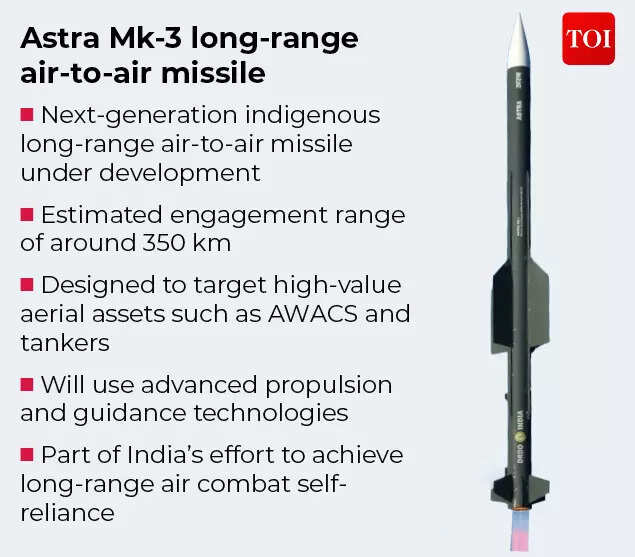
Indigenous long-range air-to-air missiles are increasingly important as aerial combat shifts from close dogfights to stand-off engagements, where detection, tracking and first-shot capability determine outcomes.Pinaka rockets: From 75 km to deep-strike artillery at 300 kmThe DAC’s nod for extending the range of Pinaka guided rocket ammunition marks a major leap in India’s artillery firepower. Pinaka multiple launch rocket systems currently fire rockets up to a range of 75 km, already giving them an edge over older systems.
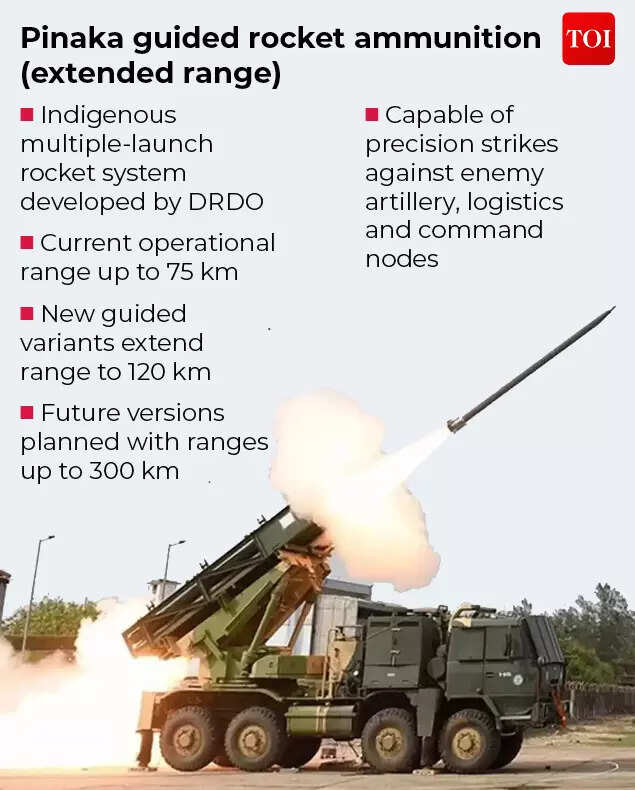
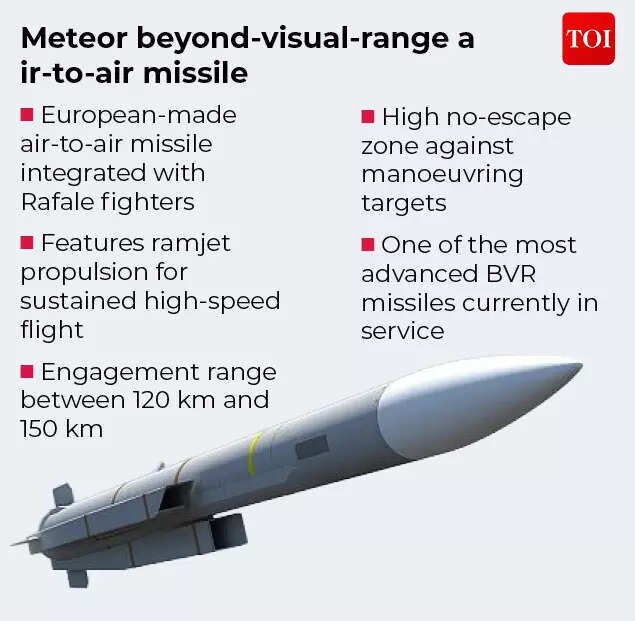
The new guided variants aim to extend that range to 120 km, with future plans to reach up to 300 km. According to officials, the 120-km version was successfully tested on Sunday, demonstrating improved accuracy and lethality.A 300-km Pinaka would fundamentally alter battlefield dynamics, allowing the Army to strike deep into enemy territory without relying on air power. Such capability is particularly relevant along mountainous borders, where terrain and weather often limit air operations.Pinaka’s modular design and compatibility with different warheads make it a versatile system for counter-battery fire, suppression of enemy air defences and destruction of logistics hubs.Meteor missiles and SPICE-1000 kits: Enhancing Rafale’s punchWhile indigenous systems form the core of the modernisation drive, the DAC also approved additional procurements of select foreign munitions to plug immediate gaps. This includes more Meteor beyond-visual-range air-to-air missiles for Rafale fighters.With a range of 120–150 km, Meteor is considered one of the most lethal air-to-air missiles in service today, featuring a ramjet propulsion system that maintains high energy throughout its flight.
The council also cleared the acquisition of Israeli guidance kits for SPICE-1000 precision-guided bombs. These kits transform conventional bombs into long-range, highly accurate weapons capable of striking targets from up to 125 km away.
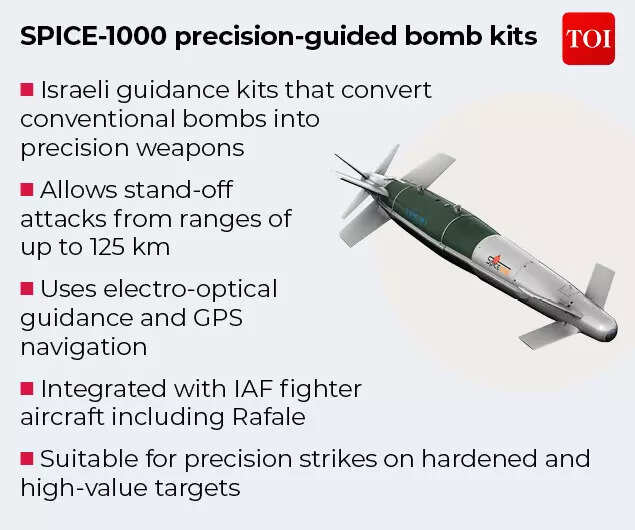
Together, these munitions significantly enhance the Rafale’s stand-off strike and air dominance capabilities, allowing it to engage high-value targets without entering heavily defended airspace.Kamikaze drones for the Army: Precision strikes and battlefield autonomyAmong the most telling approvals is the procurement of 850 kamikaze drones, or loitering munitions, for the Army’s new ‘Shaktibaan’ and ‘Divyastra’ artillery batteries at a cost of around Rs 2,000 crore.
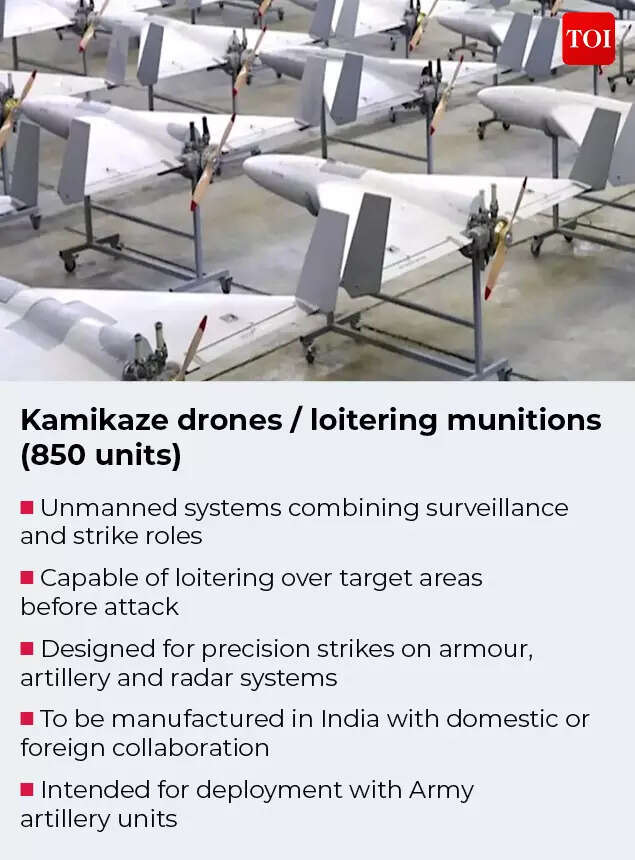
Loitering munitions combine surveillance and strike capabilities in a single platform. They can hover over a target area, identify enemy assets and then dive onto the target with an explosive payload.The drones approved under this programme will be manufactured in India, either by domestic firms or through foreign collaboration. Their induction reflects lessons drawn from conflicts such as Ukraine, where loitering munitions have been used extensively for precision strikes against armour, artillery and air defence systems.For the Indian Army, these drones provide a flexible, cost-effective tool for real-time battlefield engagement without risking pilots or high-value aircraft.Counter-drone laser systems: Preparing for swarm warfareThe DAC also cleared the indigenous Integrated Drone Detection and Interdiction System Mark-2. Equipped with 30-kilowatt lasers, the system can disable, degrade or destroy small remotely piloted aircraft and swarm drones at ranges of up to 3.5 km.
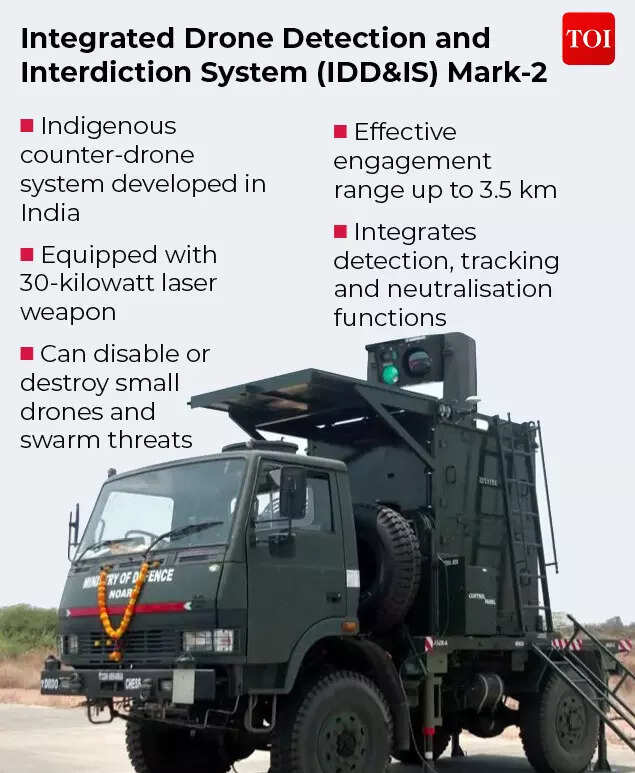
Drone swarms are increasingly viewed as a major threat, capable of overwhelming traditional air defence systems through sheer numbers. Laser-based systems offer a relatively low-cost, rapid-response solution to such threats.The IDD&IS integrates detection, tracking and neutralisation into a single platform, making it suitable for protecting air bases, ammunition depots and critical infrastructure. Its approval signals a recognition that future conflicts will involve contested airspace even at very low altitudes.Upgrades and overhauls: Mi-17 helicopters and T-90 tanksBeyond new acquisitions, the DAC approved overhauls of Mi-17 helicopters in Russia and T-90S main battle tanks in India. These overhauls aim to extend the service life and operational readiness of existing platforms.

Mi-17 helicopters form the backbone of the IAF’s medium-lift fleet, supporting transport, casualty evacuation and special operations. T-90 tanks remain central to the Army’s armoured formations, particularly along the western front.

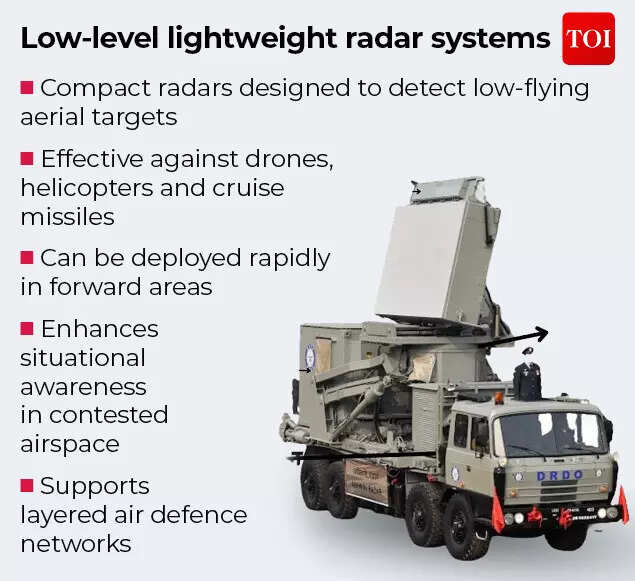
Sustaining these platforms is critical even as newer systems are inducted, ensuring there are no capability gaps during the transition phase.Beyond missiles: Radars, simulators and secure communicationsSeveral smaller but vital projects were also cleared. These include low-level lightweight radars for detecting aerial threats, bollard-pull naval tugs for harbour operations, full mission simulators for Tejas fighter jets, and automatic take-off and landing recording systems for the IAF.

The DAC also approved the acquisition of high-frequency software-defined radios to enable secure long-range communications across services. Such systems are essential for network-centric warfare, allowing forces to share data in real time.While less visible than missiles or drones, these enablers are critical for operational effectiveness, training and safety.
Taken together, the Rs 79,000 crore modernisation push offers a clear snapshot of how India expects future wars to be fought. The focus is on layered air defence, long-range precision strikes, persistent surveillance, unmanned systems and electronic resilience.Rather than betting on a single platform or technology, the approvals reflect a systems-based approach, integrating missiles, drones, aircraft and sensors into a cohesive combat network. The blend of indigenous development and selective imports suggests a more mature procurement philosophy, driven by operational need rather than ideology.