
GCL 2025: Coaching three Candidates in one team; GM Thipsay’s masterclass behind SG Pipers’ title | Top Stories News
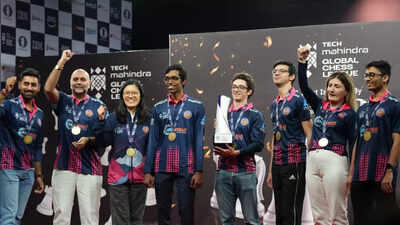
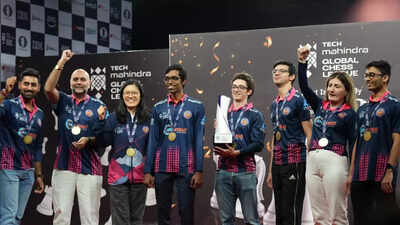
NEW DELHI: Praggnanandhaa Rameshbabu, Anish Giri and Fabiano Caruana — wait, this isn’t a fun exercise in randomly listing chess stars, but the trio that helped SG Pipers break the stranglehold of two-time defending champions Continental Kings and lift the Global Chess League (GCL) Season 3 title a few weeks ago.But why mention only these three when it was a six-member team? The reason is simple: the Pipers were the only side to field three Grandmasters who have already qualified for the Candidates 2026.
It seemed as if SG Pipers, with three Candidates players on the top boards, were built to dominate GCL 2025 on paper.But ask Pravin Thipsay, the coach of Pipers, and he would tell a different story.“We were the only team with three Candidates, top three boards,” Thipsay told TimesofIndia.com during an exclusive interaction.“So naturally, there was this feeling that it should be quite easy to win the tournament. That confidence, at times, turned into overconfidence.”“There was a psychological imbalance on the top three boards,” he added.“It was a mixture of self-confidence and not getting the kind of position they wanted. When they didn’t get a good position, they panicked a little and then tried to win.”Instead of dominating, the top boards often struggled with expectation.“The most dangerous moment was when even a draw would do. At that time, the players felt they were anyway going to go through,” Thipsay explained. “Some games were lost only because they were searching for a win, even in equal positions, even with White.”“Normally, you expect the top boards to score more,” Thipsay added. “That is why they are the top boards. Our last three boards really scored most of the points. The top three were not clicking, so that responsibility had to be taken by the lower boards.”As a result, when the tournament drew its curtains, Nino Batsiashvili, Hou Yifan, and Leon Mendonca became the most effective performers with 22, 21, and 18 points, respectively.
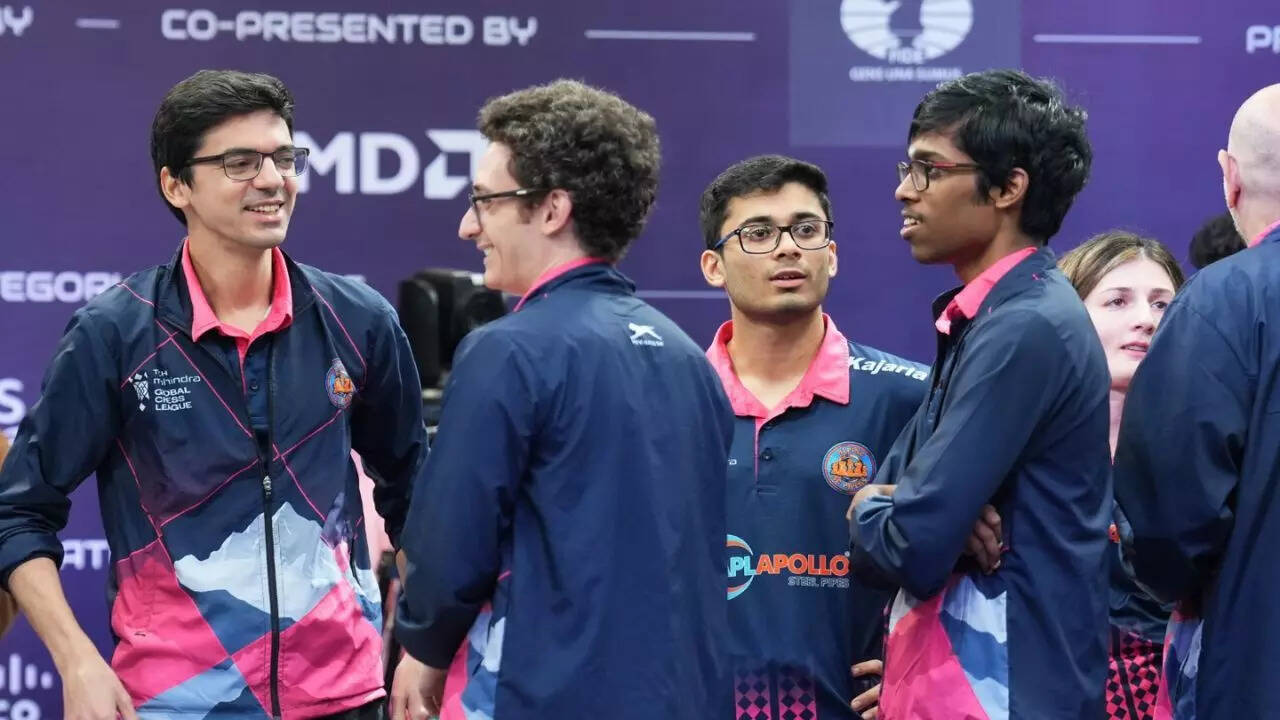
Among the top trio, though, the best was Fabiano Caruana with 11 points, followed by Praggnanandhaa (10.5) and Anish Giri (10).Thipsay identifies a crucial moment during the group stage.Adding some intrigue to the tale, Pipers went down 6–11 to Alaskan Knights in their final league match but still booked a place in the final.Both Pipers and Ganges Grandmasters finished with 15 match points, but Pipers edged through on game points, 84 to 83. With the Pipers needing at least six points to stay ahead, the Knights pushed hard for a playoff spot and managed to win the match. But as Pipers were able to garner the six points, they made the final.“We calculated that we needed only six points to qualify. Someone joked, ‘We can make six draws.’ That kind of thinking is very dangerous. They didn’t really take it as a call where something could actually go wrong,” Thipsay recalled.For a coach, handling three Candidates in one team could be difficult.“Whenever a player did badly, we never discussed it in a group,” Thipsay added. “If there was a strategically wrong game, we discussed it one-to-one, not in front of everyone.”Handling three Candidates required a careful, individual approach. Serious losses were treated privately. “If there was a strategically wrong game, we discussed it one-to-one, not in front of everyone,” he said.“The problem today is that players depend too much on engine preparation. The computer gives you the best move, but it doesn’t really tell you why. When the engine stops, now you have to think, ‘How am I going to play this position?’ That is where the problem comes.”After qualification, Thipsay decided to reset everything.“I told them very clearly that whatever happened in the preliminaries is over,” he recounted. “Tomorrow, we start with 0–0. I told them, you are playing Candidates players, so treat it like a match. One game with White, one game with Black.”That message worked.“At that point, I think it clicked,” Thipsay remarked. “They could connect it with how they prepare for Candidates.”
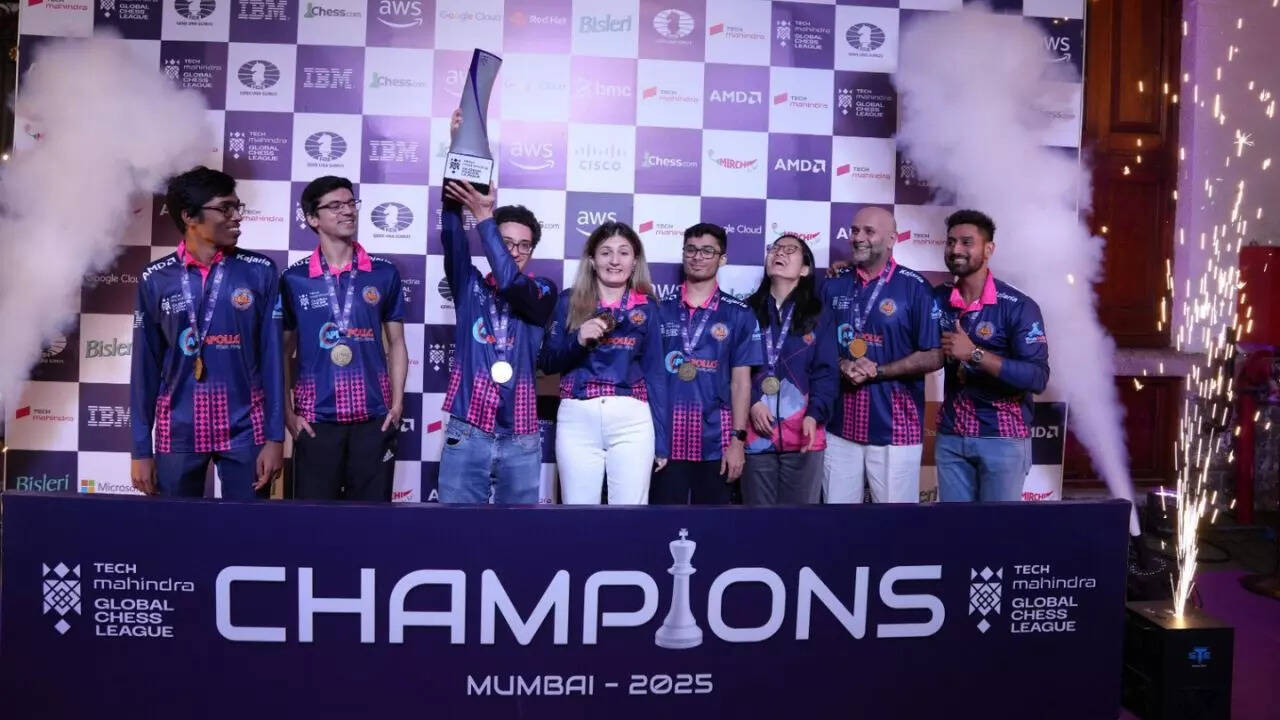
And the results followed immediately.“With Black, we fared 2–4, and with White, we had 4.5–1.5 score. Everybody was comfortable.”The 66-year-old Grandmaster also changed the way the top boards were thinking about chess itself: “I told them, ‘You are better players — why should you have problems? Earlier, the problems came because you depended too much on preparation. Now you play concept-wise.’ Even if you play second-best or third-best moves, you can still beat your opponent.’”The top players listened to him carefully, as there, Thipsay confirms, were no clashes of egos.“Honestly, I was lucky,” he added. “They were great players and very humble. Some players are criticised for ego, but here they were very down to earth.”“They knew that I had studied their games. They knew I understood their chess. That made communication easier. They were happy that somebody had actually spent time looking at their games, their problems.”Sometimes, the smallest details mattered most, as Thipsay noticed something others missed.“They were playing late games without eating properly,” he recalled. “Lunch at two o’clock and a game until eight in the evening. I told them that we will eat before the game. And we won both games that day.”By the finals, the three Candidates had found balance.“My advice was very simple: be yourself. Don’t try to put your foot in somebody else’s shoes,” the coach concluded.