

A pivotal year beyond Earth: Scientific missions set to redefine space exploration in 2026 | India News
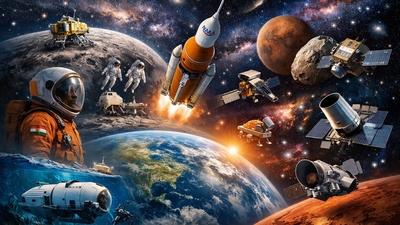
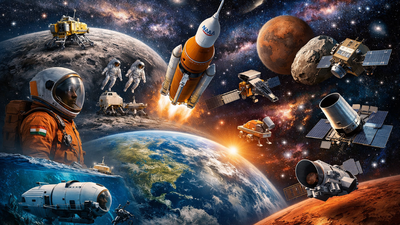
One may easily regard oneself as no more than a speck compared to the universe. Thirteen and eight-tenths billion years after the Big Bang, the universe has expanded to such an extent that light, moving at its absolute speed, requires billions of years to traverse it. There are hundreds of billions of galaxies that shine in our telescopes, and they are all full of stars, planets, and uncountable potentialities. Interestingly, this vastness will no longer find itself being viewed from afar and through imagination. The year 2026 holds great promise for humanity, which will be on the cusp of this great transitional year.The driving force behind this juncture in space exploration is a call to explore and observe space in a way that revisits the best traditions of the 20th century and presses forward into the future.
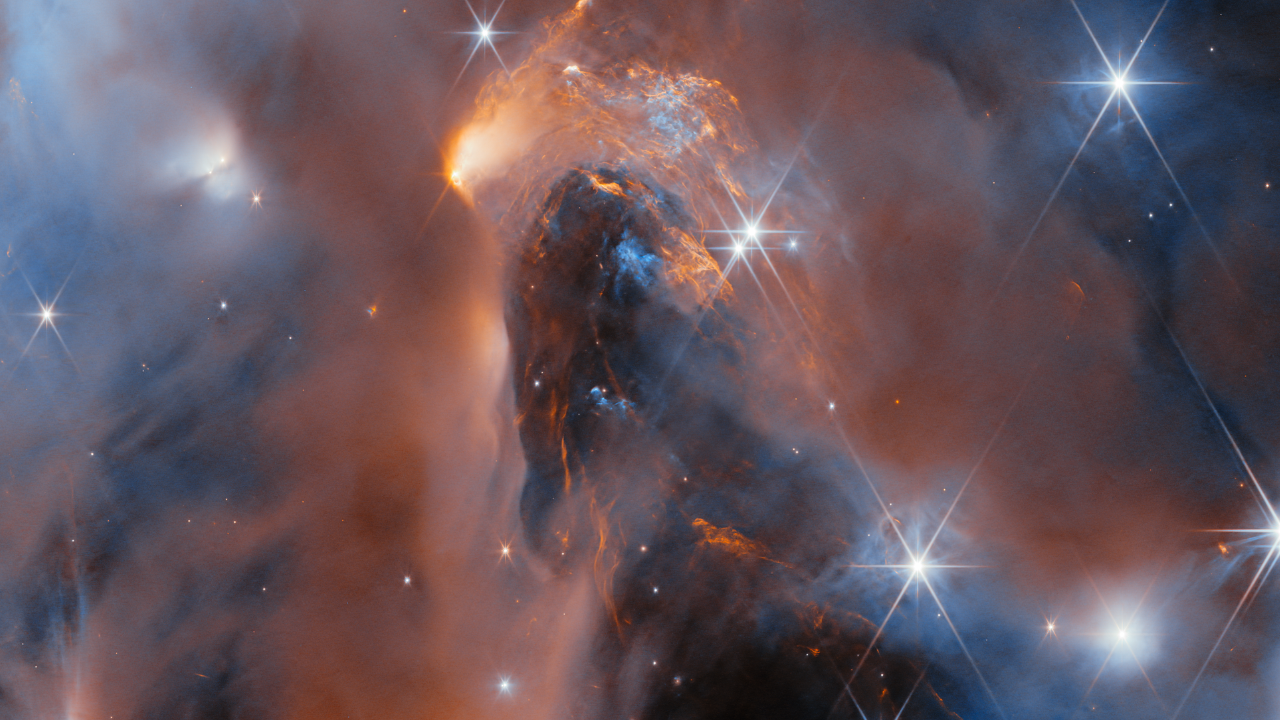
Image: NASA
India is pushing on many frontiers all at once. The Gaganyaan program is getting ready for its first test mission of astronauts into low Earth orbit, joining an elite club of countries that can undertake independent human spaceflight. Meanwhile, India’s Samudrayaan mission brings into relief a more holistic approach to exploration-that which reaches not only upwards into space but deep inside the Earth’s oceans.NASA’s Artemis II mission will make history early to mid-2026 as the first time humans will have traveled to the Moon since the Apollo era. Meant to be a 10-day journey, four astronauts will cruise around the Moon and back, testing life-support systems, navigation, and hardware that will be critical for future lunar landings. Artemis II won’t touch down on the Moon’s surface, but the symbolic weight of it is immense: it means humanity goes back to deep space with the dream of staying longer and going farther.Other countries are embarking on equally ambitious missions. China’s mission, Chang’e-7, which is set to launch in August, has set its sights on the mysterious south pole of the Moon, which has a cratered surface and permanent shadows where water ice is believed to be frozen. The ambitious mission to the lunar south pole will consist of an orbiter, a soft-lander, a rover, and a mini-prober. The mission answers one of the most vital questions related to lunar missions.However, after the Moon, focus is shifting towards Mars, with all the secrets it holds. The Martian Moons eXploration (MMX) mission by Japan aims to travel to Phobos, which is one of the irregular moons of Mars that is quite small. The aim of the mission is to retrieve samples from Phobos and bring them back to Earth. If accomplished, it will be the first successful sample return from a Martian moon, which will unlock answers regarding the history of the Red Planet.
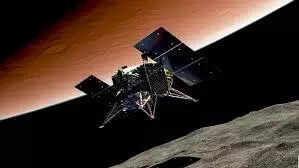
Image: NASA
To the many missions underway are being joined by powerful new telescopic visions of our universe. The PLATO space telescope, being planned by the European Space Agency for the end of 2026, will hunt for Earth-like planets and will concentrate on planets that could potentially support life on their surfaces. The Xuntian space telescope, being planned for orbit around the Tiangong space station, will survey the universe in broad fields of interest such as galaxies and dark matter.Closer home, the solar observatory Aditya-1 L1, launched by India, is expected to offer a unique perspective on the sun, especially when it is at its peak, thereby assisting scientists in gaining a holistic understanding of the solar storm, which may impact life on Earth.Collectively, these missions make the year 2026 far more than a crowded space calendar. It represents a point in time where humanity is reaching out to the stars, back to our own star, and forward to a place in time where exploration, whether it be space or the ocean, is integral in understanding our place within this huge universe we call home.
G1 Mission: India’s acid test for human spaceflight
With the G1 mission, an uncrewed orbital test under the Gaganyaan programme tentatively scheduled for March 2026, India is hoping to take a serious leap forward in human spaceflight. As a full dress rehearsal for crewed missions, G1 will be used to determine whether the systems of India’s spacecraft can safely support astronauts in orbit and bring them back to Earth.This mission is scheduled to be launched aboard ISRO’s human-rated LVM3 rocket, carrying a humanoid robot called Vyommitra. This is intended to simulate astronaut responses and monitor crew-centric systems. Operating on a Low Earth Orbit of around 300-400 kilometres, the spacecraft will put critical technologies through real-flight conditions, including life support functions, communication links, and onboard safety systems.
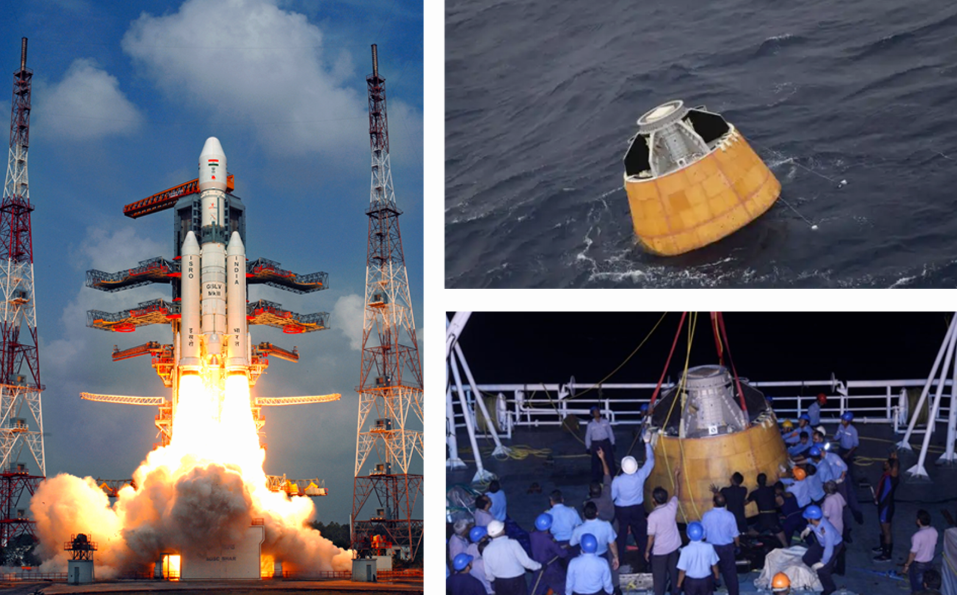
Image: ISRO
One of the areas of emphasis of the new spacecraft will be the return to Earth’s atmosphere and the recovery phase, which includes surviving high temperatures in the atmosphere, parachute deployment, and landing in the ocean on schedule. This is one of the most challenging and high-risk areas of human space travel.If successful, the G1 mission would put India on the brink of its maiden manned spaceflight and put the country in a select league of nations with the ability to send humans on their own space vehicles. Notably, the maiden human spaceflight by India represents a crucial point in the country’s space program.
Artemis II: Humanity’s first crewed return to deep space in half a century
NASA’s Artemis project, originally announced as far back as 2017, with the goal of landing men on the lunar surface and ultimately establishing a presence there, has at last reached a crucial moment in its development: its maiden human mission. Scheduled now as potentially happening as early as February, Artemis II cements mankind’s long-overdue presence in deep space.When Artemis II blasted off, it marked the first time that astronauts would journey outside the Low Earth Orbit since Apollo 17 in 1972. More than five decades have passed since humans flew beyond their territorial zone, visiting space via space shuttles and the International Space Station. However, Artemis II marked a turning point as it headed towards the Moon again.
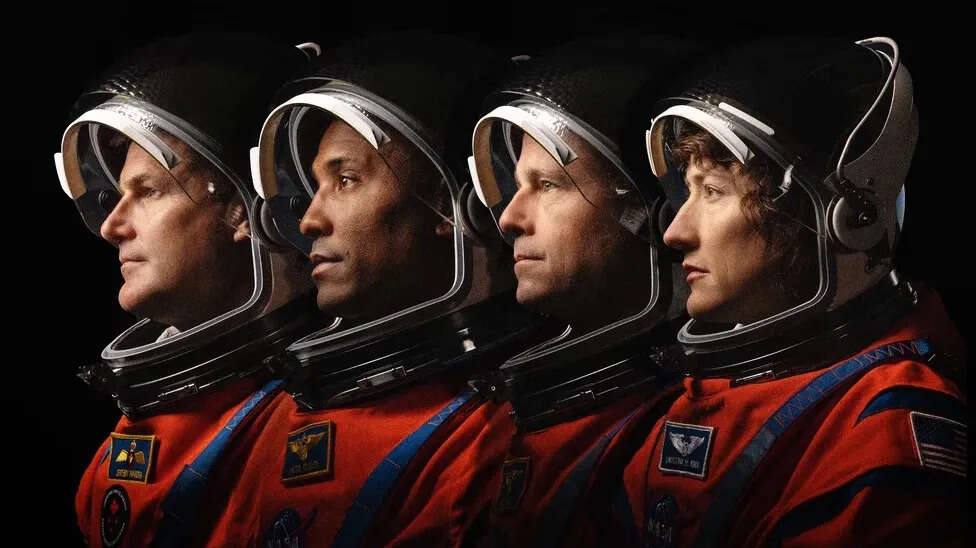
Image: NASA
Four astronauts will also make the journey as part of the mission, consisting of NASA’s Reid Wiseman, Victor Glover, and Christina Koch, as well as the Canadian Space Agency’s Jeremy Hansen. Together, they will undertake a journey around the Moon, taking a path that is inspired by the adventurous spirit of the historic Apollos, yet also driven by the challenges of the current age. Though they will not go to the surface, the path they are taking is a crucial one for those who will follow.However, returning to deep space after a longer period comes with a lot of challenges. Although NASA has relied on what was learned during the Apollo missions, Artemis is not a repeat program. The objectives are bigger, and the technology is more complex. The Artemis II is not a repeat program but rather a systems-scale test. The mission aims to prove the capability to transport humans far away from Earth.Orion’s orbital profile plays a crucial part in this mission. Instead of flying an orbital profile like the Apollo missions, which took it into a small orbit around the Moon, the Orion spacecraft for Artemis II has a long-sweeping orbit around the Moon. This type of “free return” orbital profile has been designed in such a way that it helps the spacecraft fall back into the orbit of the Earth even in the case of a significant propulsion system failure.When slingshotting back towards the Earth, the crew of the Orion spacecraft will have a historic opportunity to view the Earth’s closest neighbour. This is an opportunity most people have not had. More importantly, the Artemis II mission is not meant to plant a flag or leave a physical mark but pave the way for a mission to not only visit the moon but stay there. Artemis II is not about leaving footprints on the moon, but it’s about preparing for the next step.
Chang’e-7: China targets the water-rich south pole of the moon
The Chang’e-7, finally approved in September of last year, denotes the latest chapter in a continually expanding lunar program, as the Chinese are scheduled to send an orbiting and landing expedition in 2026. The Chang’e-7, based on an extensive series of advances spanning a dozen years, is not a standalone mission but rather an intricate, multi-element expedition specifically focused on the scientifically most fascinating region of the Moon, namely the lunar south pole.
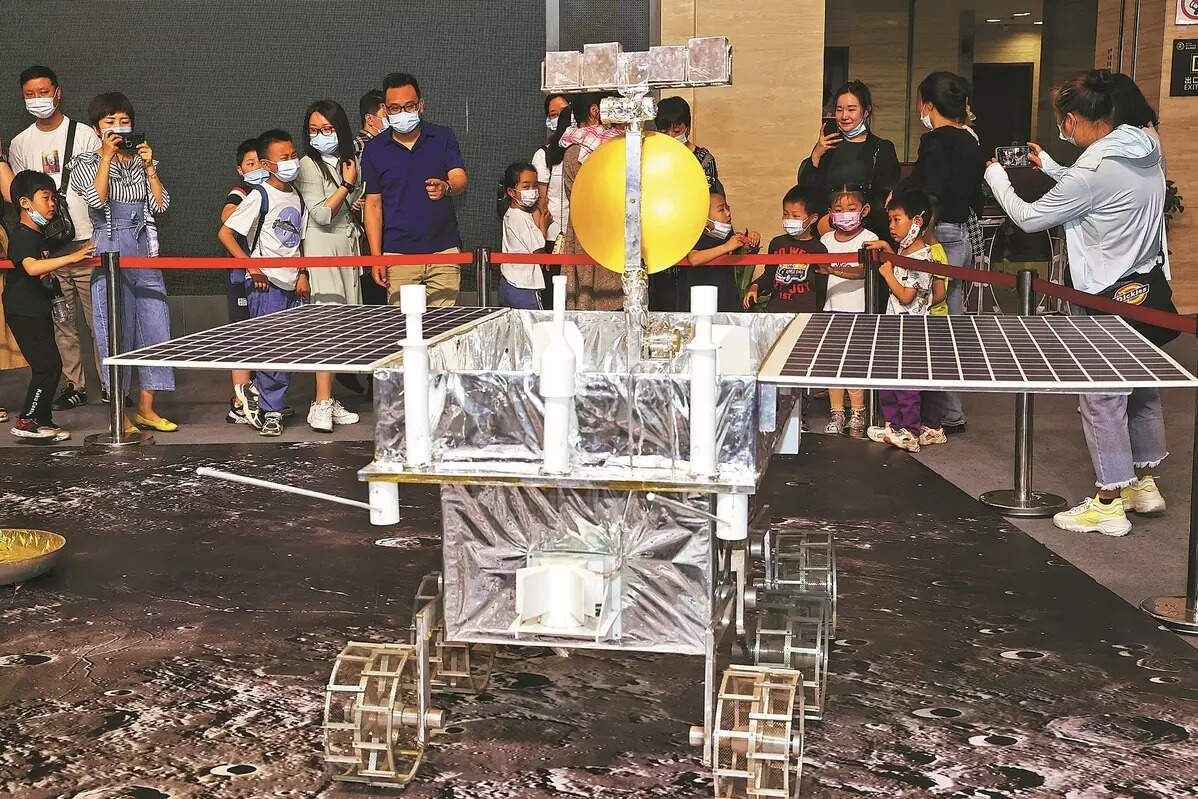
Image: CNSA
Weighing around 8,200 kilograms, this spacecraft symbolises the growing maturity of China’s Chang’e series. While previous missions like Chang’e-3 and Chang’e-4 concentrated on precise landings and lunar surface exploration, other missions like Chang’e-5 and Chang’e-6 were equipped with orbiters and ascent vehicles to facilitate return missions from lunar surface samples. For Chang’e-7, it has been decided that the lunar ascending and return to Earth spacecraft would not be included, and this reduction has been utilised to enhance lunar surface exploration.The launch is expected to take place with a Long March-5 heavy-lift rocket, with the spacecraft named Chang’e-7, from Launch Complex 101 at Wenchang Space Launch Site, located on Hainan Island. Currently, the target launch window, as indicated by officials, is August 2026, although this is to be confirmed by readiness in several areas of the launch.
Aditya-L1 and the Sun’s most violent phase
For India’s first space-based solar observatory, Aditya-L1, 2026 promises to be a remarkable year. Although the mission was placed into its operational orbit earlier, it is only now approaching the phase scientists have been waiting for most keenly: observing the Sun at the peak of its activity cycle. This period, known as the “solar maximum”, offers a rare and powerful window into the most violent processes unfolding on our nearest star.The solar maximum occurs roughly every 11 years, when the Sun’s magnetic field undergoes a dramatic reversal—its north and south magnetic poles effectively swap places. During this phase, the Sun shifts from a relatively calm state to one marked by turbulence and instability. Sunspots multiply, solar flares intensify, and the frequency of coronal mass ejections (CMEs) rises sharply. These vast eruptions, which hurl enormous bubbles of superheated plasma from the Sun’s outer atmosphere or corona, can appear like colossal fireballs racing through space.
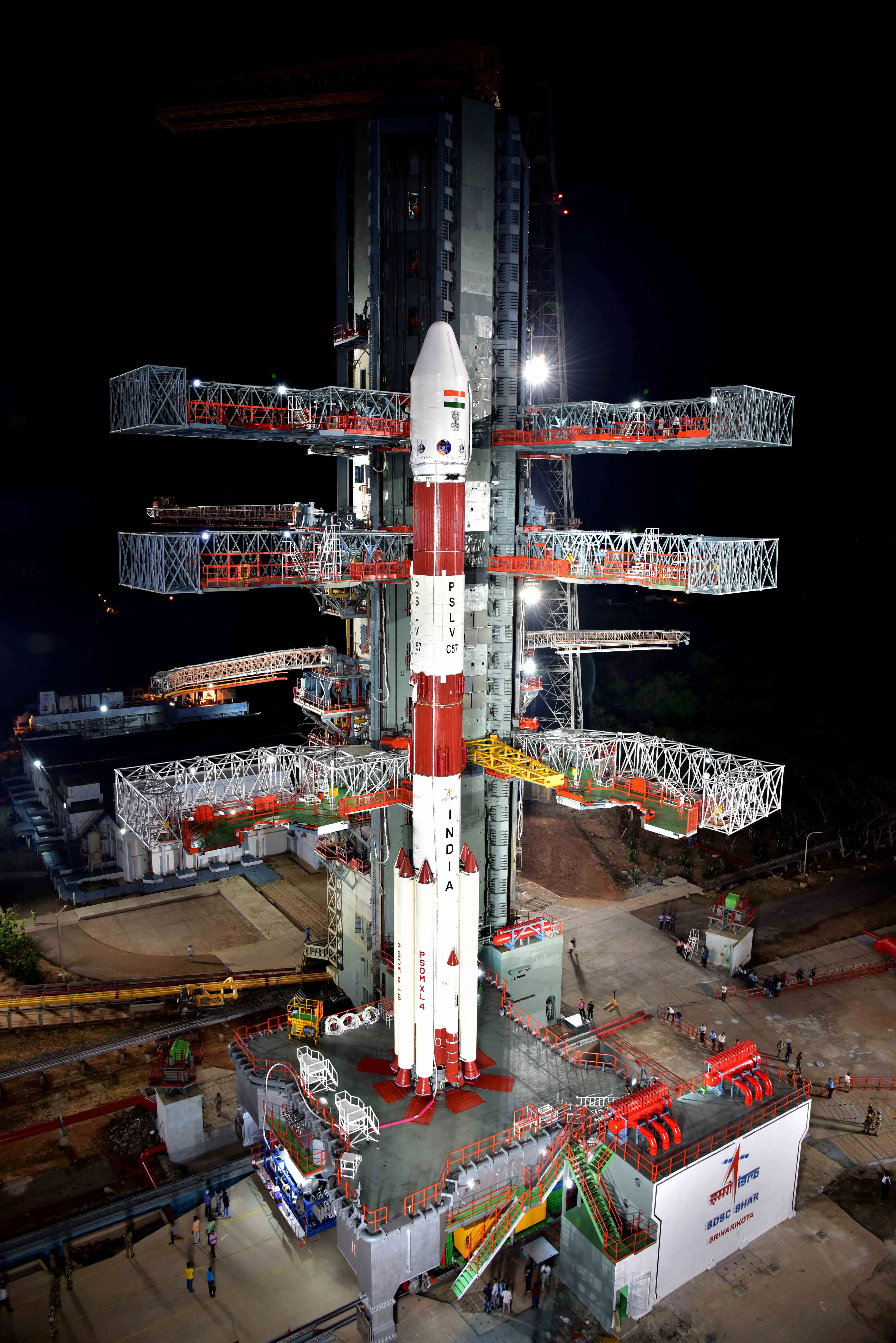
Image: ISRO
Understanding CMEs lies at the heart of Aditya-L1’s scientific mission. While CMEs rarely pose a direct threat to human life, their interaction with Earth’s magnetic field can trigger geomagnetic storms that disrupt satellite operations, navigation systems, radio communications, and power grids.The stakes are growing as Earth’s near-space environment becomes increasingly crowded. Nearly 11,000 satellites currently operate in orbit, including more than 130 from India. Disturbances caused by intense solar activity can alter satellite trajectories, degrade electronics, and increase atmospheric drag, shortening mission lifetimes. Reliable data on solar eruptions is therefore not just a scientific pursuit but a practical necessity.What sets Aditya-L1 apart is its unique ability to study solar eruptions in visible light. Its coronagraph can directly observe CMEs close to the Sun and measure their temperature and thermal energy, key indicators of how powerful an eruption might be if it were to travel toward Earth. These observations can help scientists assess the potential impact of solar storms with greater accuracy than before.As the Sun enters its most active phase, Aditya-L1 is poised to deliver insights that could reshape our understanding of solar behaviour while strengthening space weather forecasting. In doing so, the mission places India at the forefront of a field that is becoming ever more critical in an increasingly space-dependent world.
PLATO: Europe’s new eye in search for other Earths
Scheduled to begin operations in late 2026, the European Space Agency’s PLATO mission aims to revolutionise the search for Earth-like planets beyond the solar system. Using an arrangement of 26 cameras, PLATO will monitor around 200,000 stars in the Milky Way, focusing on Sun-like stars that may host rocky planets with conditions suitable for life.The mission will rely on the transit method, detecting tiny dips in starlight as planets pass in front of their host stars. Its overlapping fields of view will allow for long, precise observations, helping scientists identify and characterise extrasolar planets while also studying properties such as age and structure.
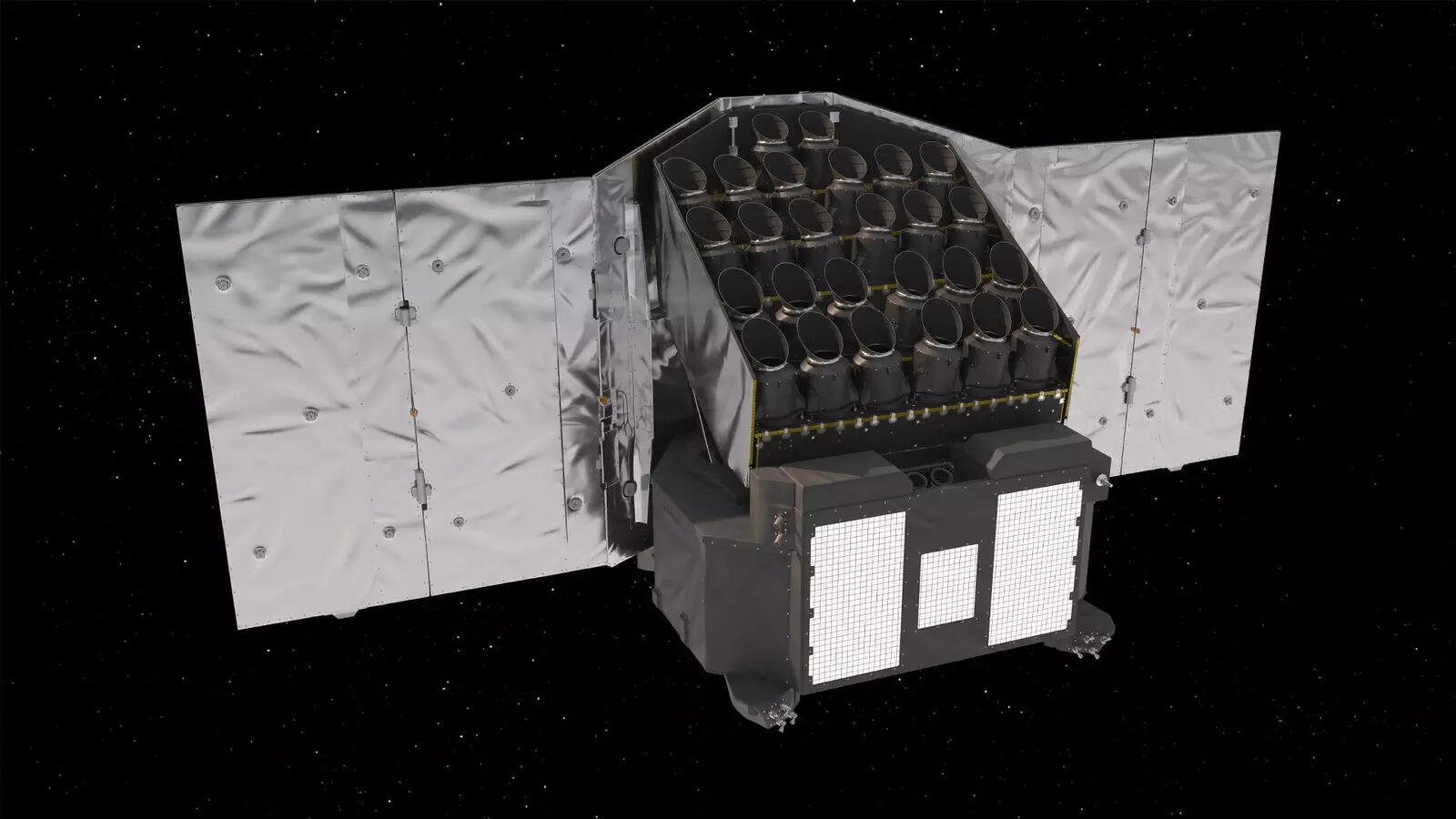
Image: ESA
PLATO will be the first scientific mission launched aboard Europe’s new Ariane 6 heavy-lift rocket from Kourou. After launch, it will be sent to the Sun–Earth Lagrange point 2, about 1.5 million kilometres from Earth, the same stable region used by the James Webb Space Telescope. Led by Germany’s DLR, the mission is expected to mark a major step forward in Europe’s quest to find worlds beyond our own.