Push for ultra-pure recycled water in Peenya Industrial Area in Bengaluru draws mixed response | Bengaluru News
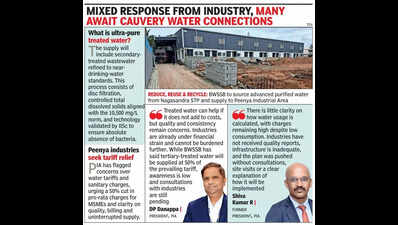
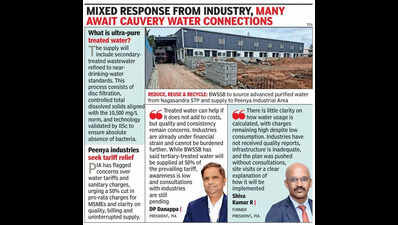
Bengaluru: In an effort to reduce dependence on Cauvery water and promote the reuse of wastewater, Bengaluru Water Supply and Sewerage Board (BWSSB) has issued a tender to supply 4 million litres of ultra-pure treated water per day to Peenya Industrial Area (PIA). Advanced purified water will be sourced from Nagasandra Sewage Treatment Plant and transported through a dedicated 27-km pipeline to Peenya. Officials have stated that the initiative aims to meet non-production industrial water needs, such as flushing and cleaning, thereby conserving fresh Cauvery water for domestic use in the city.The estimated cost of the project is around Rs 20 crore, which will include the construction of a sump-cum-pump house, the installation of pumping equipment, and a 5 lakh-litre overhead tank. BWSSB officials indicated that pipeline work would focus on areas with higher demand and a concentration of users. With tenders already issued, construction is expected to begin next month and be completed within four months.BWSSB chairman Ram Prasath Manohar noted that relying on fresh water for industrial use is neither cost-effective nor sustainable. He emphasised that the project would benefit both industries and households by prioritising the use of Cauvery water for drinking purposes.Peenya is one of the largest industrial estates in India, housing approximately 3,500 industries and employing over 8 lakh people. Developed in phases between 1970 and 1974 after Karnataka Industrial Areas Development Board (KIADB) acquired the land in 1969, the area has long experienced water shortages.Responses from the industry have been mixed. Some industrialists are still waiting for the promised Cauvery water connections. Bijju Gopinath, who manages a manufacturing unit in Peenya Stage III, expressed concern that industries have already paid for Cauvery pipelines and questioned the push for treated water amid a drinking water shortage. He highlighted the additional cost of a separate pipeline and pointed out that access to basic tap water has remained elusive even after decades.On the other hand, some welcomed the proposal in principle. Jacob Crasta, an eco-friendly packaging manufacturer in Peenya Stage II, acknowledged that treated water could alleviate pressure on scarce supplies if quality is assured. He noted that even partial substitution would help meet daily requirements for units with multiple washrooms and a large workforce.BWSSB officials informed industries that they would provide tertiary-treated water suitable for industrial use at 50% of the prevailing tariff. They recognised the need for improved awareness and promised to conduct outreach programs before a wider rollout of the initiative.