Power check 2026: Top politicians in focus this year | India News
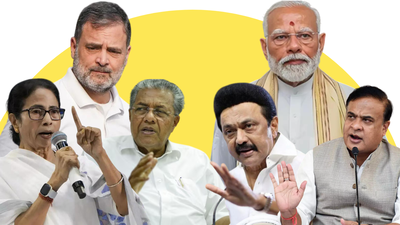

The year 2026 is finally here and we know it will not be a routine stop on the electoral calendar. This year’s calendar is filled with elections, starting with the long-overdue Mumbai-Pune civic polls. Later, with high-stakes assembly elections due in West Bengal, Tamil Nadu, Kerala, Assam and Puducherry, it will place some of the most influential politicians under rare and sustained scrutiny. For many leaders, the results will define not just the fate of their governments and party, but also their relevance heading into the 2029 Lok Sabha elections.Across these five states and a Union Territory, regional parties are strong and national parties are testing the outer limits of their expansion. What unfolds in 2026 will reshape the party’s existence, recalibrate the opposition’s cohesion and test the BJP’s claim of being a truly pan-Indian force. At the centre of it all are a dozen leaders whose careers may pivot decisively over the year.West Bengal: Mamata Banerjee vs Dilip GhoshWest Bengal remains one of the most politically charged battlegrounds of 2026. The pre-campaign has already started with high-voltage remarks amid the Election Commission’s Special Intensive Revision (SIR) exercise. For Mamata Banerjee, this election comes after a decade in uninterrupted power. Having crushed the Left and successfully repelled the BJP’s surge in the 2021 assembly elections, she now faces her toughest test yet. BJP’s momentum stalled in the 2024 Lok Sabha elections after it managed to win only 12 out of 40 seats. In the 2021 assembly election, it won 77 seats while TMC won the election by winning 213 seats.
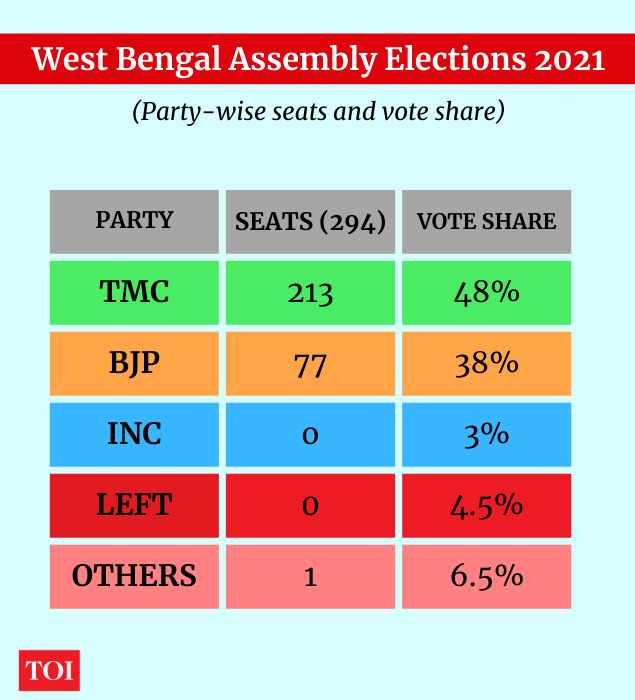
A fourth consecutive term would cement Mamata’s status as Bengal’s long-term chief minister and one of the last regional leaders capable of stopping the BJP’s advance. But the margins matter. A slip below 200 seats from the 213 she won in 2021, or a BJP surge past the 100-seat mark, would signal vulnerability and weaken her leverage in national opposition politics ahead of 2029.Meanwhile, on the last day of 2025, Union home minister Amit Shah outlined an action plan for the party’s West Bengal unit while reviewing its preparedness for the assembly polls due early next year. Addressing the party’s public representatives, both past and present, Shah sought to project a unified front, while indicating former state president Dilip Ghosh as one of the main faces of the saffron camp for the elections.For Ghosh, the stakes are existential. The BJP firebrand and a former TMC heavyweight, he was central to the party’s rise to 77 seats in 2021. If the BJP crosses 120 seats in 2026, Ghosh emerges as Mamata’s undisputed challenger and Bengal’s principal alternative. Failure to capitalise on anti-incumbency, however, would raise uncomfortable questions about his influence and the BJP’s long-term strategy in the state.Tamil Nadu: Stalin vs Palaniswami — and the Vijay factorTamil Nadu’s contest is shaping up as a three-cornered test of endurance, revival and disruption.Chief minister MK Stalin is seeking a second term after the DMK’s comfortable victory in 2021. Retaining a tally above 130–140 seats would keep the DMK firmly dominant and reinforce Tamil Nadu’s role as a firewall against the BJP’s national narrative. But anti-incumbency pressures, over floods, employment, law and order, and urban governance, could open space for a revival of the opposition.
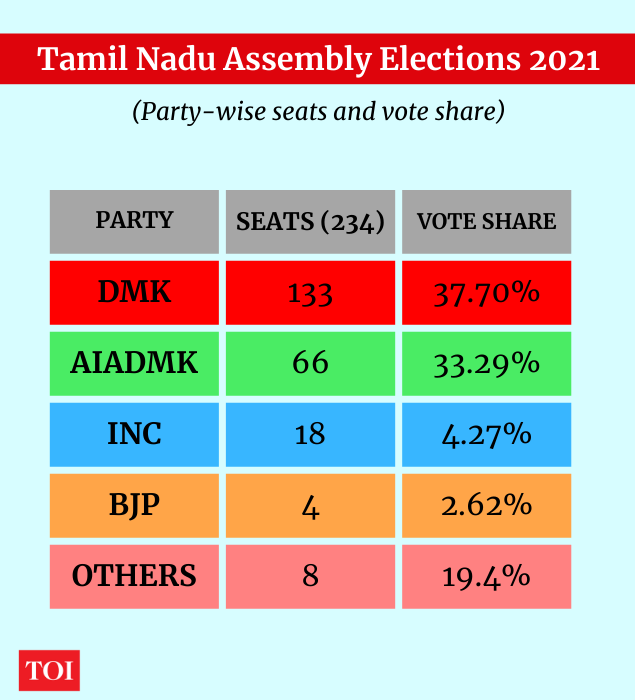
That revival hinges on Edappadi K Palaniswami, the former AIADMK chief minister and leader of the main opposition. A strong showing of 100-plus seats would restore the AIADMK as the DMK’s equal and slow the BJP’s attempt to subsume it. Another weak performance, however, could accelerate AIADMK’s marginalisation and strengthen the BJP’s influence within opposition politics in the state.Hovering over both is Joseph Vijay, the actor-turned-politician whose Tamilaga Vettri Kazhagam is eyeing its electoral debut. Even a victory in 10–20 seats could make him a kingmaker. A failure to break through, however, would mean another failed debut and would reinforce the DMK–AIADMK duopoly.In the 2021 assembly election, DMK won 133 seats, AIADMK got 66 seats and BJP got 4 seats.Kerala: Vijayan vs SatheesanKerala’s 2026 election carries unusually high stakes for both the Left and the Congress.For Pinarayi Vijayan, the CPI(M) stalwart and chief minister, the contest is about legacy. He is aiming for a historic third consecutive term—something rarely achieved in Kerala’s alternating political culture. Retaining a clear majority would keep the LDF dominant in the state and cement Vijayan’s stature as the Left’s most powerful surviving leader. But dipping below the 70-seat mark would likely end his era, especially amid criticism over governance, SFI-linked violence, and fatigue after two terms.
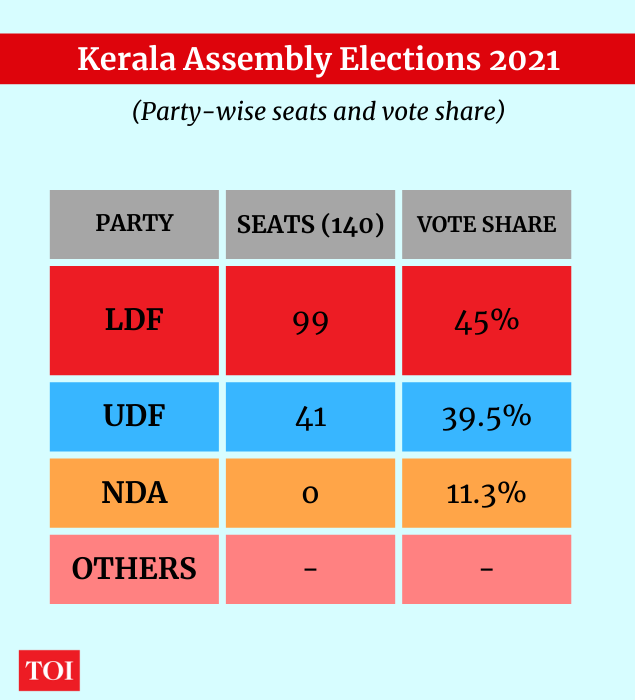
On the other side stands VD Satheesan, the Congress-led UDF’s leader of opposition. A crossing of the 80-seat mark would flip the House and revive Congress’s credibility in the South. Another narrow loss, however, would reinforce the perception that while Congress fights hard in Kerala, BJP’s slow creep, not the UDF, is the more consequential long-term challenger.In the 2021 assembly election, the LDF won 99 seats and the UDF got 41 seats, while the NDA was unable to open its tally. Assam: Himanta Biswa Sarma vs Gaurav GogoiAssam will test the durability of strongman politics versus generational transition.Chief minister Himanta Biswa Sarma is targeting a third straight NDA victory, with ambitious claims of winning over 104 of the state’s 126 seats.
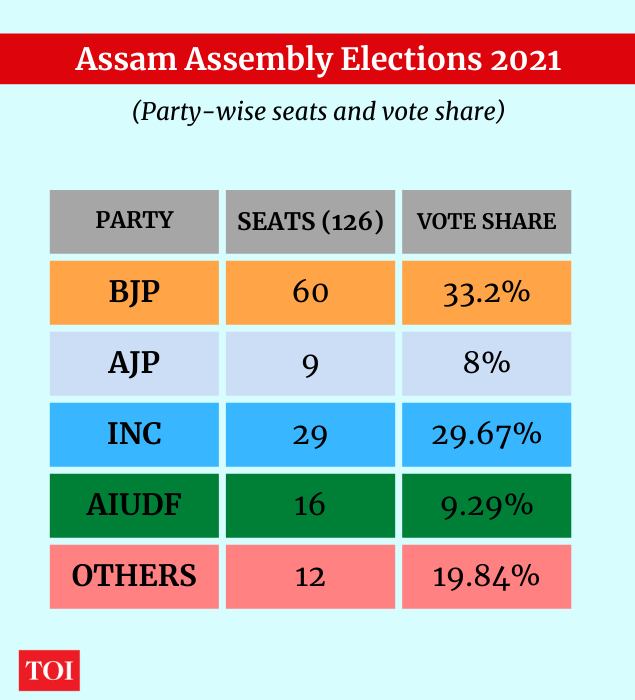
In 2021, Sarma delivered a decisive mandate as the BJP-led alliance won 75 seats in the 126-member assembly.Success would burnish his national ambitions and strengthen his standing as the BJP’s most assertive regional leader. But even a significant drop from the BJP’s 60 seats in 2021 would expose cracks beneath his muscular governance style, particularly amid CAA and NRC.Facing him is Gaurav Gogoi, Congress leader and son of former CM Tarun Gogoi. For Gogoi, 2026 is about emergence. A credible fight, around 40 seats for the INDIA bloc, would position him as Assam’s foremost Congress face and a potential future chief minister. A rout would risk pushing the Congress further into irrelevance in the state.Puducherry: N Rangasamy vs V VaithilingamSmall in size but large in symbolism, Puducherry could deliver one of 2026’s most telling verdicts.Incumbent CM N Rangasamy is leading a fragile AINRC-BJP coalition and currently governing with a narrow majority secured in 2021. Retaining power would validate his long-standing role as a political kingmaker and reinforce the BJP’s power of managing complex coalition politics.For V Vaithilingam, the Congress stalwart, 2026 is a chance at revival. A UDF victory with 15 or more seats would mark a dramatic comeback for a party that once ruled Puducherry. Failure would further cement the BJP’s foothold and underline Congress’s shrinking influence in smaller southern units.The bigger pictureBeyond state leaders, two national figures will shape the outcomes across all five battlegrounds.For PM Narendra Modi, 2026 is less about immediate electoral survival and more about narrative control. With high-stakes assembly elections this year, the Prime Minister’s role will be that of a campaign anchor and message-setter across multiple states, particularly West Bengal, Assam and the southern battlegrounds where the BJP remains an outsider.
A strong BJP showing in Bengal or incremental gains in Tamil Nadu and Kerala would reinforce PM Modi’s claim of leading a truly pan-Indian party heading into 2029. Conversely, stagnation or reverses in these regions would embolden the opposition’s argument that the BJP’s expansion has peaked outside its core Hindi belt. The margins, not just victories, will matter in shaping how invincible PM Modi appears in the run-up to his third Lok Sabha contest.While not a mass leader, Nitin Nabin will be one of the BJP’s most closely watched backroom strategists in 2026. As a key organisational figure tasked with strengthening party units beyond the Hindi heartland, the outcomes in West Bengal, Assam and the South will directly reflect on his effectiveness.If the BJP improves booth-level performance, vote share and cadre depth in traditionally resistant states, Nabin’s stature within the party will rise sharply. But failure to translate central leadership popularity into durable state-level structures would revive internal questions about the BJP’s organisational limits and succession planning within its second rung of leadership.For Amit Shah, 2026 is the culmination of “Mission 2026”. As Union home minister and the BJP’s chief electoral architect, he is overseeing campaigns across Assam, Puducherry, Bengal, Tamil Nadu and Kerala. Clean sweeps in states the BJP already governs, combined with breakthroughs in the South, would further solidify his authority.For Rahul Gandhi, 2026 is a make-or-break year. After setbacks in Bihar and Delhi, strong UDF performances in Kerala or Puducherry, or credible INDIA bloc gains elsewhere, would validate his approach to coalition politics. Continued erosion would deepen doubts about his leadership at a time when Congress’s room for error is shrinking fast.
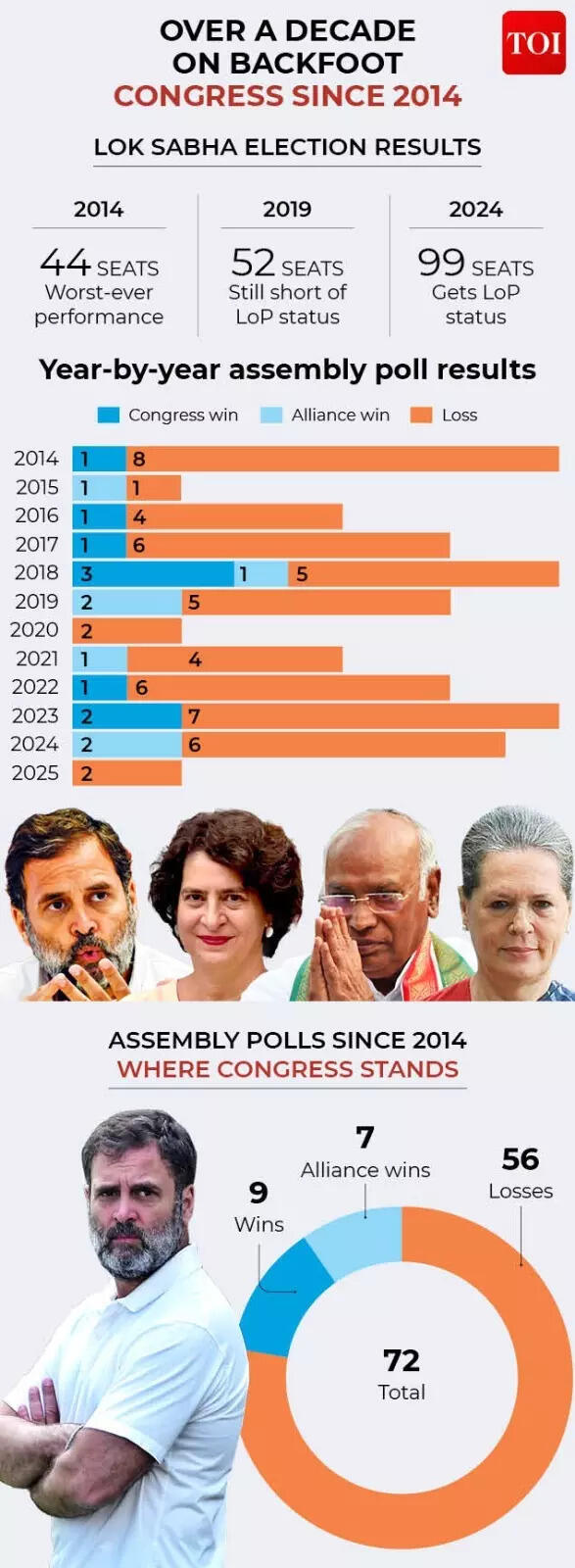
For Priyanka Gandhi, this year will decide if she is ready to take charge of the party, as demanded by several disgruntled party leaders in the past. As Congress’s most recognisable campaigner after Rahul Gandhi, her effectiveness will be judged by how far she can convert charisma and street connect into electoral dividends, particularly in states where the party is fighting to arrest decline rather than expand. Strong UDF performances in Kerala or a credible revival in smaller battlegrounds would bolster her standing as the party’s chief mobiliser. Meanwhile, in BMC elections, the Pawar senior and junior have united for the Pimpri-Chinchwad Municipal Corporation (PCMC) and the Thackeray cousins have joined hands for the Brihanmumbai Municipal Corporation (BMC) polls. If these reunions frutify, it could change the dynamics of mega Maharashtra alliances (MVA and Mahayuti).In 2026, people will look at Shashi Tharoor with the ‘will he, won’t he’ question. With his constant tug of war with his own party, it will be interesting to see if Congress finally makes him fall in line with the party lines or if he calls it quits. Tharoor’s influence will also be tested by outcomes closer to home in Kerala.A Congress-led UDF victory would strengthen Tharoor’s hand within the party, renewing speculation about a larger leadership role nationally or in the state. A loss, however, would blunt his political momentum. How Tharoor positions himself during the campaign, whether as a team player or a distinct voice, will be closely parsed by both supporters and critics.Stage is all for a year of back-to-back elections that matter. In the end, 2026 will not just choose governments, it will quietly decide who still matters when the long road to 2029 truly begins.