
10 best places to see the Milky Way in the world for stargazing and night sky adventures |
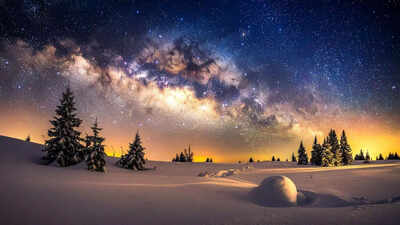
Among life’s most profound experiences is being able to witness the Milky Way stretching across the dark canvas of the sky. In fact, the stars, nebulae, and interstellar matter of our own Milky Way galaxy create a spectacle in space that fascinates both professional astronomers and amateur ‘star watchers’ in equal measure. For such viewing to be truly appreciated, it is essential to locate sites as far away from city lights as possible, preferably in mountainous regions whose night sky clarity has no equal in the world. Across deserts or mountains in remote corners of the world exist sites for the most immersive Milky Way experience.
List of 10 global destinations for stargazing
This is a list of the most appropriate locations in the world for viewing the Milky Way, as well as the corresponding highlights for each location:
Milky Way hotspots : 10 best places for night sky adventures
Arches National Park, USA
Arches National Park in Utah is one of the most famous places in the United States to go stargazing. The high desert plateau, which sits above 5,000 feet, provides a clean atmosphere and the light conditions are free from city light pollution. Landmarks in the park such as Delicate Arch, Turret Arch, and Balanced Rock make perfect backgrounds in astrophotography. Geological formations in the park make the Milky Way more alien, offering photographers a once-in-a-lifetime experience to take photos of the Milky Way and the beauty of the Earth in one shot.
Banff National Park, located in Canada
Located in Alberta, Banff National Park is a part of the Canadian Rockies. It is known for some of the best views of the Milky Way in all of North America. Secondly, the Icefields Parkway provides high spots where there is very little light pollution. Visitors interested in taking photos of the Milky Way can do so from spots above 6,000 feet, in some spots with mountain peaks and glaciers surrounding them. This makes the location both remote and ideal for taking shots of the Milky Way.
Canary Islands, Spain
La Palma is an international destination for astrophotography. The mountains, such as Roque de los Muchachos, which stands at almost 8,000 feet, lie above the level of the cloud cover, making it an excellent location from which to view the Milky Way. In addition, lighting controls are strict, so there is little light pollution. There is a prominent astronomical observatory on this island as well.
The Dolomites, Italy
Europe is badly affected by light pollution, but the Dolomites offer an oasis for those interested in astronomy. Remote villages and mountains above 10,000 feet ensure exceptionally dark skies, and observers can view both the Milky Way and the galactic center. Points of interest include Tre Cime di Lavaredo, Cinque Torri, and Monte Pelmo, where alpine scenery and celestial wonders coexist.
The Sahara Desert, Tunisia
The Sahara Desert is home to endless areas of nothingness and the darkest darkness. The areas that are far from population, such as in Tunisia, enable sky gazers to view the Milky Way uninterruptedly. The topography of the Sahara Desert, characterized by sandy ground, is ideal for background photography during astronomy picture-taking, with endless skies above.
Mount Bromo, Indonesia
The first destination is Mount Bromo in Java Island. It is a famous spot for taking pictures of the night sky in Asia. The mountain is 7,500 feet high and has a volcano. It is an added attraction for taking photographs of the Milky Way. The rising clouds of ashes create a contrast for a different look altogether. It is far away from any light emission, making it an apt spot for taking pictures of the night sky.
Namib Desert,Namibia
The Namib Desert in Namibia is a great spot for observing the Milky Way. The ancient desert has one of the cleanest skies in the Southern Hemisphere. Sand dunes reaching skyward like giants, centennial dead trees found in isolated areas, create conditions for observing and photographing the stars. The spot has been gaining fame among international photographers because of its long observing season and favorable conditions.
Atacama Desert, Chile
The Atacama Desert is known as the best spot in the Southern Hemisphere for viewing the Milky Way. At an elevation of close to 8,000 feet with 330 clear nights in the year, this is the optimum spot. There are several observatories in the region such as the ALMA or Cerro Tololo Observatories. The arid conditions and elevation of this plateau ensure that the Milky Way is viewed in precise detail.
Wollemi National Park, Australia
The Wollemi National Park in Australia’s New South Wales features very little light pollution and sheer expanses of wilderness. Located in the Blue Mountain section, a UNESCO World Heritage site, it boasts dark skies optimal for viewing the Milky Way galaxy. Inaccessible locations combined with beautiful scenery make it a very popular destination among Australian stargazers.
Tasman Glacier, Tasman
The South Island in New Zealand is very sparsely populated; thus, it offers excellent star gazing sites. The area surrounding the Tasman Glacier, with its high altitude and glacial landscape, offers excellent models for a photograph of the Milky Way. Although this glacier is retreating rapidly, the site is very accessible.
Tips for finding the Milky Way near you
The travel distance might be an issue for you. In such cases, you can find dark sky locations
- Use maps of light pollution: Colour-coded maps show the brightness of the night sky. Black/blue areas are ideal for viewing, green is moderate, yellow/orange is poor, and red indicates the Milky Way is invisible.
- Consider elevation: Higher locations experience less atmospheric interference, providing clearer views of the Milky Way.
- Avoid artificial lights: The best viewing is outside city limits or away from streetlights to prevent light pollution from dimming the stars.
By combining these strategies, checking maps, choosing higher ground, and avoiding artificial lights, astronomers and stargazers can safely enjoy and photograph the Milky Way even at local dark-sky sites.