
‘Unaffected by strike calls’: Zomato, Swiggy log record orders on New Year’s Eve; Goyal explains 10-min delivery model amid uproar
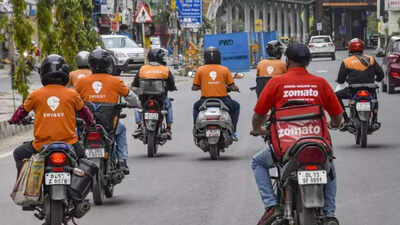
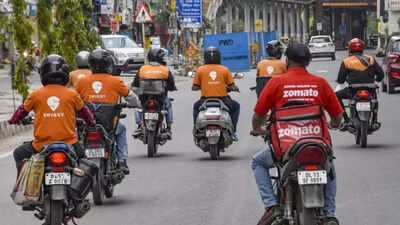
NEW DELHI: Food delivery giants Zomato, Swiggy and magicpin reported a massive surge in orders on New Year’s Eve, saying operations remained largely unaffected despite a nationwide strike call by a section of gig workers demanding better pay and working conditions.Sharing a post on X, Eternal founder Deepinder Goyal said, “Zomato and Blinkit delivered at a record pace yesterday, unaffected by calls for strikes that many of us heard over the past few days.”
“Support from local law enforcement helped keep the small number of miscreants in check, enabling over 4.5 lakh delivery partners across both platforms to deliver more than 75 lakh orders (all-time high) to over 63 lakh customers during the day,” he added.Magicpin founder and CEO Anshoo Sharma also said the platform saw “no impact” from the strike, adding that New Year’s Eve once again showed how central food delivery has become to celebrations in India. He noted that lakhs of orders poured in every hour across metro cities.
Biryani, pizzas, butter chicken dominate orders
Magicpin said pizza emerged as the early favourite, while desserts such as gajar ka halwa and ice cream saw a three-fold jump in orders compared with last year, PTI reported.Dinner orders peaked around 9.30 pm, with butter chicken topping the charts in Delhi-NCR, followed by biryani and dal makhni.Swiggy and magicpin data showed Indians feasting on biryani, pizzas, butter chicken and traditional desserts. On Swiggy alone, biryani crossed 2.19 lakh orders before 7.30 pm.“Meanwhile, the age-old battle between pizzas and burgers continued. By 8.30 pm, over 2.18 lakh pizzas had been dispatched, while burgers put up a fight with over 2.16 lakh orders, proving that India’s palate is as diverse as its celebrations,” Swiggy said.Dining out also saw strong traction. Swiggy Dineout bookings were led by Bengaluru and Hyderabad, while Ahmedabad recorded the fastest growth with a 1.6x jump, followed by Lucknow (1.3x) and Jaipur (1.2x), PT reported.Goyal thanked delivery partners who worked through the day, saying, “delivery partners who showed up despite intimidation, stood their ground, and chose honest work and progress”.He cautioned people against being influenced by “narratives pushed by vested interests,” saying that a system would not continue to attract and retain large numbers of workers if it were fundamentally unfair.“The gig economy is one of India’s largest organised job creation engines, and its real impact will compound over time, when delivery partners’ children, supported by stable incomes and education, enter the workforce and help transform our country at scale,” he added.
Goyal explains 10-minute delivery model
In a separate post, Goyal sought to clarify concerns around quick-commerce deliveries, especially the 10-minute promise.“One more thing. Our 10-minute delivery promise is enabled by the density of stores around your homes. It’s not enabled by asking delivery partners to drive fast,” he said, adding that delivery partners do not even see a countdown timer on their apps showing the promised delivery time.He explained that after an order is placed on Blinkit, it is typically picked and packed within 2.5 minutes, after which the rider travels an average distance of under 2 km in about eight minutes, translating to an average speed of around 15 kmph.“I understand why everybody thinks why 10 minutes must be risking lives, because it is indeed hard to imagine the sheer complexity of the system design which enables quick deliveries,” Goyal said.“If you’ve ever wanted to know why millions of Indians voluntarily take up platform work and sometimes even prefer it to regular jobs, JUST ASK any rider partner when you get your next food or grocery order. You will be humbled by how rational and honest they will be with you,” he said.Goyal acknowledged that “no system is perfect, and we are all for making it better than today. However, it is far from what it is being portrayed on social media by people who don’t understand how our system works and why,” he said. “If I were outside the system, I would also believe that gig workers are being exploited, but that’s not true,” he added.
‘1 lakh workers participated in strike’
The Gig & Platform Services Workers Union (GIPSWU), which called the December 31 strike, claimed over one lakh workers across 22 cities participated, including around 14,000 members from major metros. The union reiterated demands such as minimum per-kilometre pay, workplace safety for women, maternity and emergency leave, and legal recognition of platform workers under labour laws.However, estimates suggest India has over 12.7 million gig workers, a number that government think tank NITI Aayog expects to grow to 23.5 million by 2029–30. Meanwhile, India’s third-largest food delivery platform, magicpin, said lakhs of orders were received every hour across metro cities on New Year’s Eve.