
Optical illusion: Only someone with hawk eyes can spot all the hidden tortoises in this picture in under 20 seconds!
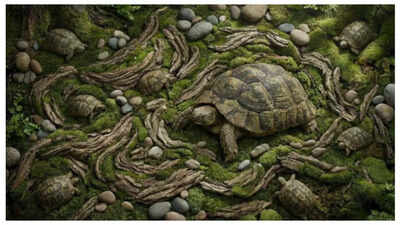
Optical illusions have gained a lot of popularity recently, as they get our brain to exercise, and can be the perfect test of our observational skills and keen eye. People who want to use their free time effectively can solve puzzles, which provide both entertainment and problem-solving solutions. The brain creates visual illusions through its incorrect processing of what the eyes detect during visual perception. It occurs when the information sent by the eyes conflicts with how the brain processes, and understands what it sees. Our brains create false perceptions through these illusions, which make us see things that do not exist while they distort the actual appearance of objects. The human eye perceives motion through visual processing which makes stationary pictures seem to move, and two identical objects appear to have different dimensions.Can you identify all the hidden tortoisesLook closely at this picture. At first glance, you can see a big tortoise in the centre of the image. But look closer, and you will see multiple small tortoises camouflaged in the surroundings. Your task? Find all the hidden tortoises. But remember you just have 20 seconds to do so! So, get, set go. Did you manage to find all? Let us know in the comments section…Types of optical illusionsThe human brain experiences three main categories of optical illusions.Literal Illusions: The brain creates non-existent images through its process of uniting different elements from an image. The way we view an image, can make it appear as either two faces or a vase.Physiological Illusions: The visual system becomes overactive because of excessive light exposure, excessive movement and color stimulation. The visual effects they produce include both afterimage appearances and moving objects, that seem to move.Cognitive Illusions: These rely on how the brain subconsciously interprets information. The Müller-Lyer illusion represents one example of an illusion which makes lines appear longer or shorter based on surrounding shapes.