
India’s future XI: Meet the young talents eyeing Olympic glory | More sports News
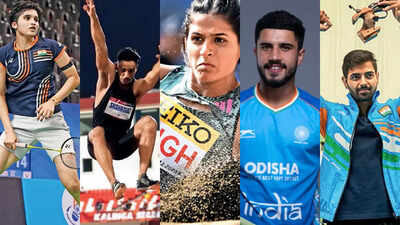
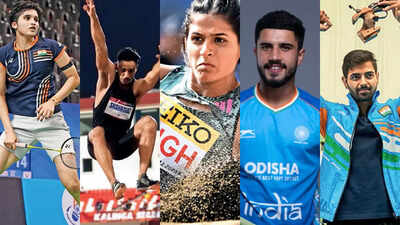
With an eye on Los Angeles three years from now, a crucial Olympic cycle unfolds for India from the New Year onwards. Keeping in mind a busy, demanding 2026 for Indian sportspersons across major disciplines — culminating in the Asian Games in Aichi and Nagoya in Sept-Oct — TOI draws up a line-up of young, hungry aspirants who could be forces to reckon with this year. Remember their names…
THE EMERGENCE OF HITESH GULIAHitesh Gulia is increasingly being viewed as the standard-bearer for Indian men’s boxing heading into a crucial Olympic cycle, with the Asian Games headlining the events next year. The 20-year-old 70kg boxer from Haryana emerged as India’s brightest male prospect on the international stage in 2025, delivering a season that combined consistency, composure and an unmistakable sense of arrival. Gulia stamped his authority across the World Boxing Cup circuit, with the defining moment coming at the seasonending Finals, where he clinched gold in front of the home crowd. Navigating a field stacked with experienced campaigners from Europe and Central Asia, he showcased tactical maturity beyond his years, blending sharp counter-punching with disciplined defence — reinforcing his ability to deliver under pressure.
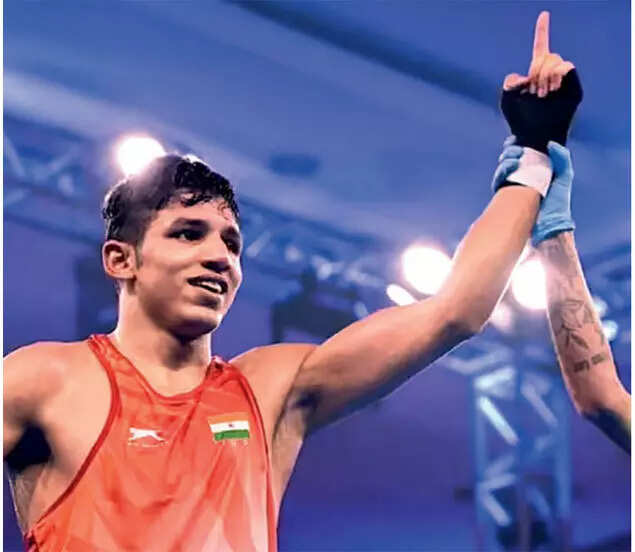
Earlier in the season, Gulia served notice of his international credentials by winning gold at the World Boxing Cup Stage I in Foz do Iguaçu, Brazil. That triumph, achieved in unfamiliar conditions and against physically imposing opponents, was widely seen as a breakthrough moment. At Stage II of the World Boxing Cup in Astana, Kazakhstan, Gulia added a silver medal to his tally, narrowly missing out on a second consecutive title. As 2026 approaches, with the Commonwealth Games and Asian Games looming large, Gulia’s upward trajectory places him firmly at the centre of India’s medal ambitions. If 2025 was about validation, the year ahead offers him a platform to translate promise into sustained excellence on the biggest stages. (By Hindol Basu)TIME TO CONSOLIDATE FOR SHAILI SINGHIn 2025, Indian long jumper Shaili Singh staged a notable comeback. After setbacks that included missing qualification for the Paris Olympics and a careerthreatening injury, the 21-year-old from Jhansi returned to top form. Her comeback gained momentum at the Federation Cup in Ernakulam in April, where she produced a standout performance and drew widespread attention as she broke the meet record held by her mentor, Anju Bobby George, leaping 6.64m to better Anju’s 2002 mark of 6.59m. (By Rayson Tennyson)
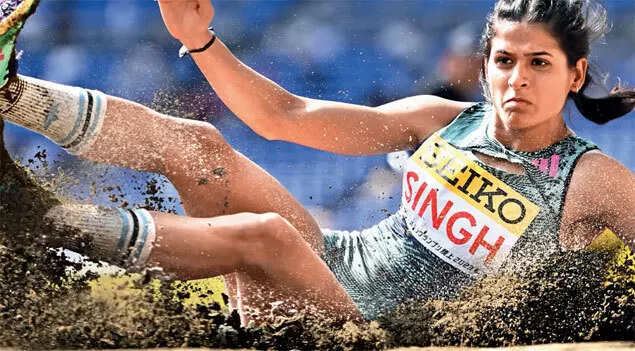
Ranked among the world’s top 20 under-21 long jumpers, Shaili is viewed as one of India’s strongest medal prospects for the Asian Games in 2026. Her next major goal is the national record of 6.83m set by Anju, and to qualify for the 2028 Olympics. “I’ll be looking to qualify for Los Angeles, which will be my main focus. I don’t want to make any mistakes,” she said.THE JAISMINE BLOOM IS HERE TO STAYIf 2025 belonged to any Indian boxer, it was unquestionably Jaismine Lamboria. The 57kg featherweight, competing in one of the toughest Olympic divisions, turned the year into a catalogue of triumphs and consistency that underlined her rise as India’s most distinguished female pugilist on the international stage. The 24-year-old’s crowning achievement came at the World Boxing Championships in Liverpool, where she claimed gold with a series of authoritative performances. Against a field packed with Olympic medallists and world champions, Jaismine displayed remarkable ring intelligence, controlling distance with her footwork and punishing openings with precise combinations. The title not only marked a personal milestone but also signalled India’s growing depth in women’s boxing at the elite level.
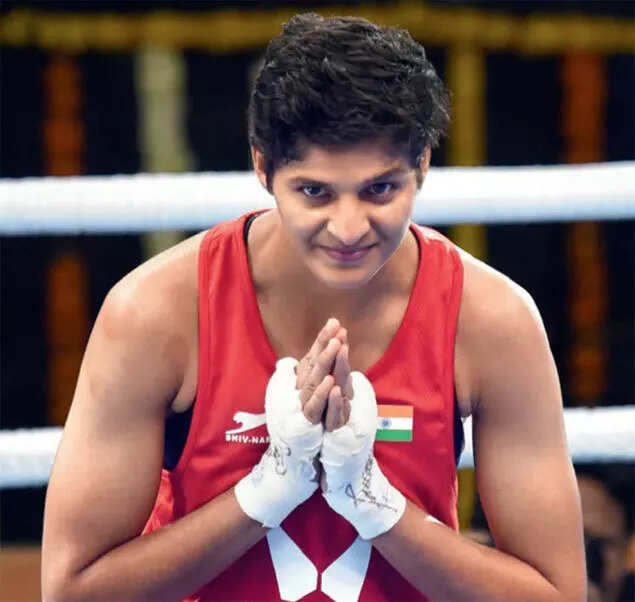
Jaismine’s dominance extended to the World Boxing Cup circuit. At Astana’s Stage II, she showcased adaptability and endurance to clinch gold, thriving in a demanding environment against physically strong opponents. She capped off a stellar year by winning another gold at the World Boxing Cup Finals in Greater Noida, delivering under the pressure of expectations on home soil. What made her success even more remarkable was the category she ruled. The 57kg class, steeped in international depth, has long demanded exceptional all-round skill and adaptability. Jaismine met that challenge with a maturity that reflected her evolution. As India looks ahead to the Commonwealth Games and Asian Games in 2026, Jaismine emerges as the fulcrum of the women’s boxing programme. If 2025 was about establishing supremacy, the year ahead offers her the opportunity to convert dominance into multi-sport Games glory. (By Hindol Basu)SHAHNAWAZ LOOKS TO CROSS BARRIERSShahnawaz Khan became the 12th Indian man to clear the eight-metre barrier in long jump when he leapt 8.04m at the Indian Open, a World Athletics Bronze-level meet in Bhubaneswar in August. The effort also made him the youngest Indian to achieve the mark. With his career gaining momentum, Khan is now targeting the Asian Games and aiming to raise his level on the international stage. Known for his agility and sound technique, he has mapped out an intensive 2026 training plan to add distance, sharpen consistency, and improve competitiveness against elite fields.
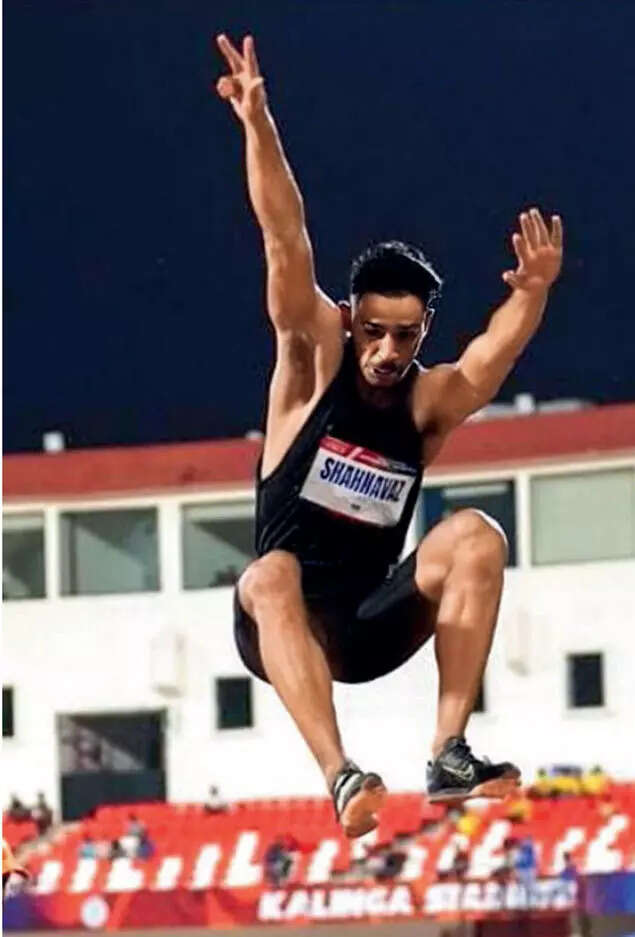
“At the world level, 8m doesn’t mean much. Maybe it’s a big deal because I’m a junior. But my aim is to cross the 8.50 mark. I don’t know whether I’ll be able to achieve it this year, but it is one of my main targets in the future,” said the 17-year-old boy from Madhaipur village in Uttar Pradesh’s Pratapgarh district. Progress has been steady. He won gold at the 38th National Games in February with 7.70m, then claimed another at the Junior Federation Cup in June. His tall, muscular frame gives him explosive take-off power, helping him stand out among many leaner rivals. Shahnawaz draws inspiration from his uncle Mohammad Hadees, a former national-level javelin thrower. After Shahnawaz lost his father to cancer at age 10 in 2018, Hadees became a key support. In a key move, in 2020, he helped the nephew secure admission to Panvel’s SAI centre.(By Rayson Tennyson)PRINCEDEEP WHO COULD BE KINGWith stalwart PR Sreejesh calling time on his illustrious career after the Paris Olympics, the No. 16 jersey in India’s senior men’s hockey team has been retired. In the junior ranks, however, Princedeep Singh, another No. 16, has emerged as a goalkeeper who is showing promise of stepping into those giant shoes. The Pathankot-born custodian has impressed over the past year with performances that suggest he is prepared for the next step. Pushing senior goalkeepers Kishan Pathak and Suraj Karkera, Prince has shown composure and maturity beyond his years.
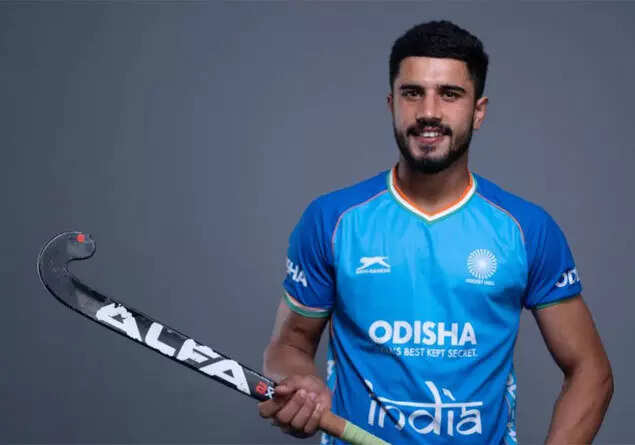
Trained under the watchful eyes of Sreejesh — now the junior team’s chief coach — his game reflects the hallmarks of his mentor: sharp communication, sound judgment of angles, and an ability to thrive under pressure. The traits were on display at Chennai’s Junior World Cup, where Prince played a pivotal role, particularly in the penalty shootout win over Belgium that took India into the semifinals. With the senior setup in transition, 2026 could mark Princedeep’s arrival on the bigger stage. (By Manuja Veerappa)UNNATI, HER NAME IS PROGRESSBy beating PV Sindhu in the prequarterfinals of the China Open in July this year, Unnati Hooda gave indications of a change of guard in Indian badminton. It was the first time in six years that the peerless Sindhu had lost to an Indian shuttler. Of course, everyone sat up to take notice. The 18-year-old Unnati finished her maiden year on the senior Badminton World Federation circuit with a ranking of 23, five spots below Sindhu.Unnati started playing badminton at the age of eight at Rohtak’s Chhotu Ram Stadium, an arena known more for producing wrestlers. Today, she trains at the Hooda Academy in her hometown, which was established by her father, Upkar Hooda. An aggressive shuttler who likes to dictate points against her rival, Unnati played a crucial role in India’s bronzemedal finish at the World Junior Team Championships in Oct and bagged the Odisha Masters Super 100 title. She will have to shore up her net play to get the better of the best as the badminton circuit gets more demanding.
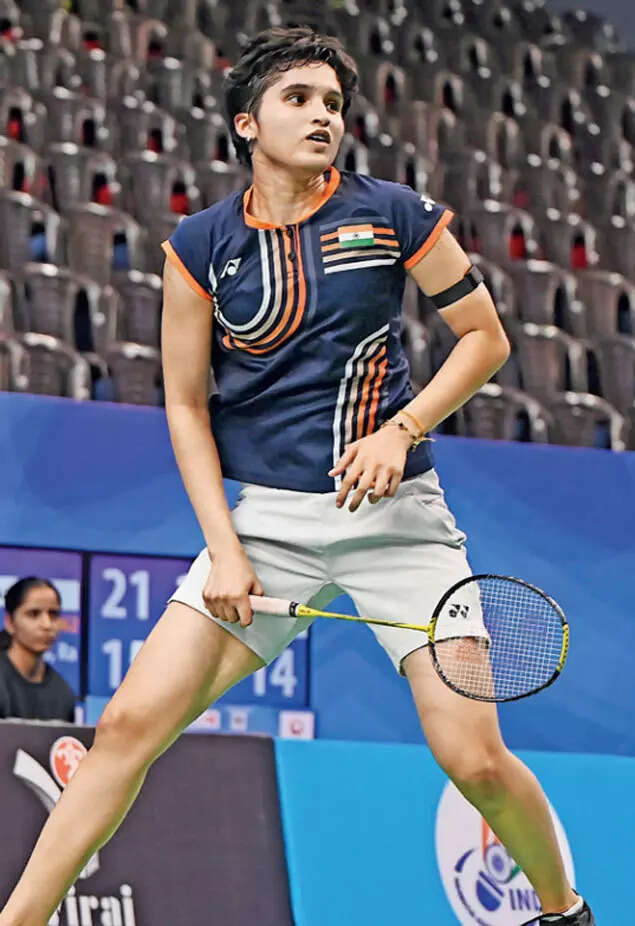
“I think there should be a mix of both attacking and patient play. But I have to think when to attack and when to play patiently,” she had said. Her performances in next year’s Asian Games in Japan and the World Championships in Delhi next year will define her future career, but how busy things will get from now on for the youngster can be seen up close with the Indian Open in the capital from early January onwards. (By Prasanth Menon) TANVI, BABY-FACED GIANT-KILLERWhen they began saying that Indian badminton, after over a decade of being among India’s top sports, was headed for a long slump, they had not accounted for the likes of Unnati Hooda, Charishma Tamiri, and Tanvi Sharma. The first Indian to win two medals in a single edition of the World Junior Championship, the baby-faced Tanvi has emerged as India’s most promising shuttler on the junior circuit, having risen to a world ranking of 42.But 2026 will be a different kettle of fish for the 17-year-old, her prime challenge being to translate those performances to the senior circuit. Trained by renowned coach Park Tae-sang, Tanvi already showed signs of her potential when she beat former world No. 1 Nozomi Okuhara at the Syed Modi International earlier this year. A huge PV Sindhu fan, Tanvi understands the scope of improvement in her game.
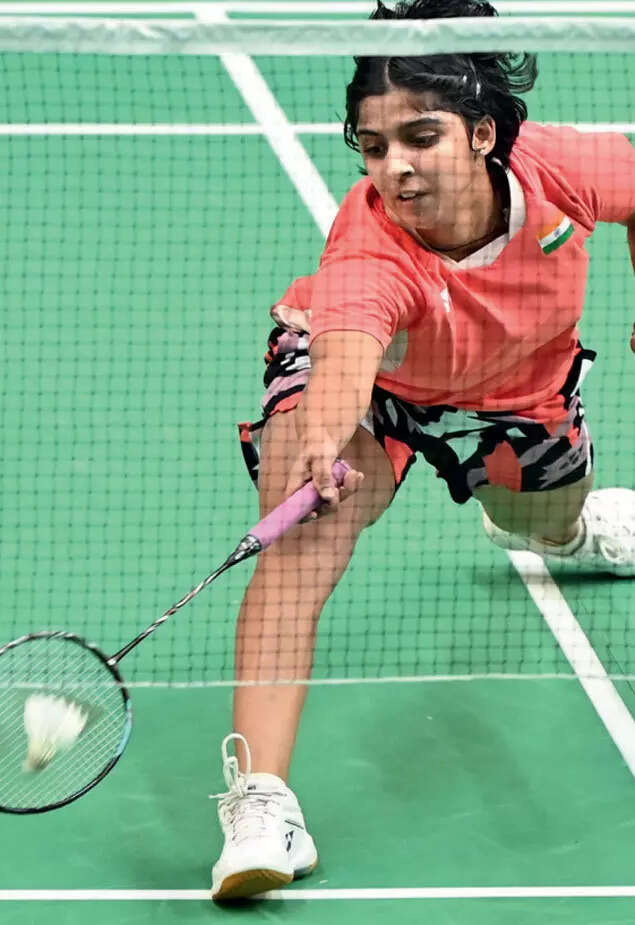
“I will have to work on my fitness, court endurance and net skills to go to the next level because playing at the highest level is not easy,” she says. The 17-year-old has a remarkable ability to hit sideline smashes and has a good backcourt game. But having lost three finals in 2025, the girl from Punjab will have to improve her big-match temperament if she hopes to continue her upward climb, knowing well how a nation that has learnt to follow and love badminton over the years will be looking at her to deliver. (By Prasanth Menon)TREESA & GAYATRI GOPICHAND GET BACK ON THEIR FEETTreesa Jolly and Gayatri Gopichand didn’t have the best year in 2025, as a string of mixed results and a shoulder injury to the latter laid them low. However, by claiming the Syed Modi Open women’s doubles title — their third BWF crown towards the end of the year — the two 22-year-olds showed they are getting back to their best and are now placed 20th in the world rankings.
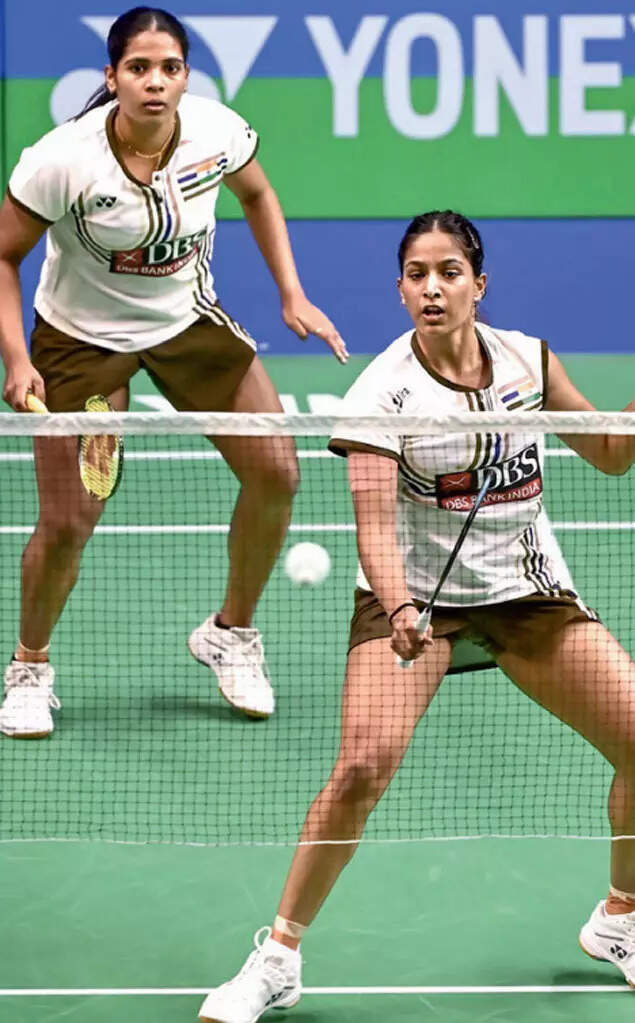
“We are combining well, and the understanding we share is the mantra behind our success,” says Gayatri. Having been on the circuit for over four years, the fire-and-ice combo of Indian badminton faces a make-orbreak year ahead and would like to emulate the success of their compatriots on the men’s tour, Satwiksairaj Rankireddy and Chirag Shetty. (By Prasanth Menon)CAN AND ABLE: ROSAN AND MANMEETAs the men’s hockey team sets its sights on a hat-trick of podium finishes at the 2028 Los Angeles Olympics, a realignment of talent and strategy has become imperative. The midfield is where India’s transition could prove most defining, especially with Hockey India looking beyond Manpreet Singh, who has held fort for almost 15 years. In that context, 20-year-old Manmeet Singh and Rosan Kujur are potential long-term answers.
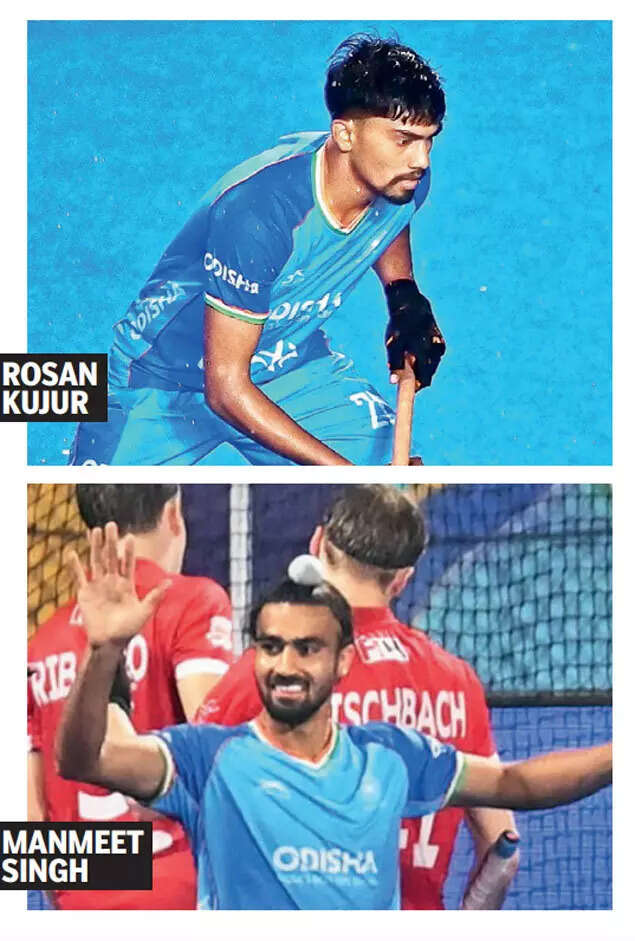
Manmeet’s strength lies in his defensive work and ability to break opposition momentum, while Kujur, 21, offers greater ball-carrying ability. Together, they represent the kind of balanced midfield profiles that India needs. The challenge over the next cycle will be to blend experience with emerging talent — and if the early signs are any indication, the next generation appears ready to shoulder the responsibility. (By Manuja Veerappa)SURUCHI, YOUNGSTER WITH A MASTER’S MINDWith the average age of the Indian shooting team shrinking by around eight years in the last decade, a teenager winning worldlevel medals has become the norm. Yet, a shooter with the spark of a youngster and the consistency of a veteran is still a delight whenever it is discovered. Haryana’s Suruchi Phogat has been one such discovery in 2025. The 18-yearold shooter made her senior international debut by winning gold in the women’s 10m air pistol at the Buenos Aires World Cup. Her first medal, a gold, came after beating double Olympic champion Jiang Ranxin of China.
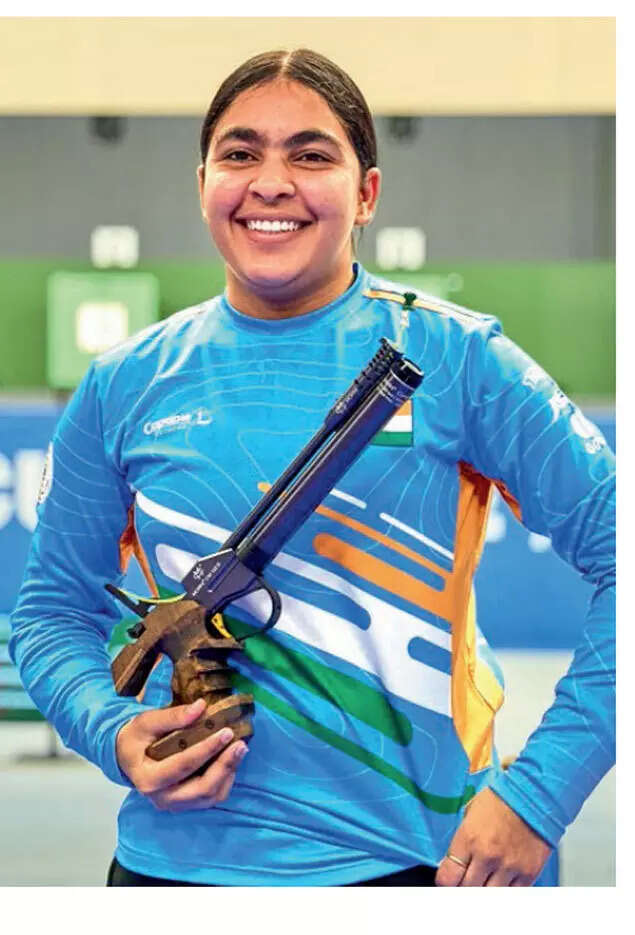
That Suruchi didn’t wish to be a onetime wonder is evident from the way the soft-spoken shooter won three more gold and a bronze at the World Cups. She concluded her year with another gold at the ISSF World Cup Finals in Dec. Suruchi first aspired to be a wrestler — an obvious choice for a girl who hails from Jhajjar in Haryana. Her father, Inder Singh, took voluntary retirement from the army to look after his children’s training. Suruchi’s brother is also a shooter.As 2026 approaches, the Indian pistol team will face a problem of plenty, with many contenders in the fray — especially when Olympic quotas will be at stake. With shooters like Suruchi setting the bar higher with each performance, her competitors cannot afford to put their feet up. (By Tushar Dutt)SAMRAT RANA, THE WORLD CHAMPION NO ONE SAW COMINGBefore November, not many had heard of Samrat Rana. The Karnal shooter made sure his name would be remembered by becoming the first-ever pistol world champion in the Olympics category with a coveted gold in the Cairo World Championships. Samrat’s 10m air pistol gold on debut was remarkable for the way he shot, nailing the toughest targets under pressure.Samrat, 20, defeated arguably the best shooter of the year, Hu Kai of China, who has won individual gold in all four editions of the World Cup this year, along with an Asian Championship gold and two mixed-team golds in World Cups. Hu concluded the year by winning gold at the World Cup Finals in Doha. Pertinently, the only silver he won this year was in the World Championships, behind Samrat by 0.3 points.
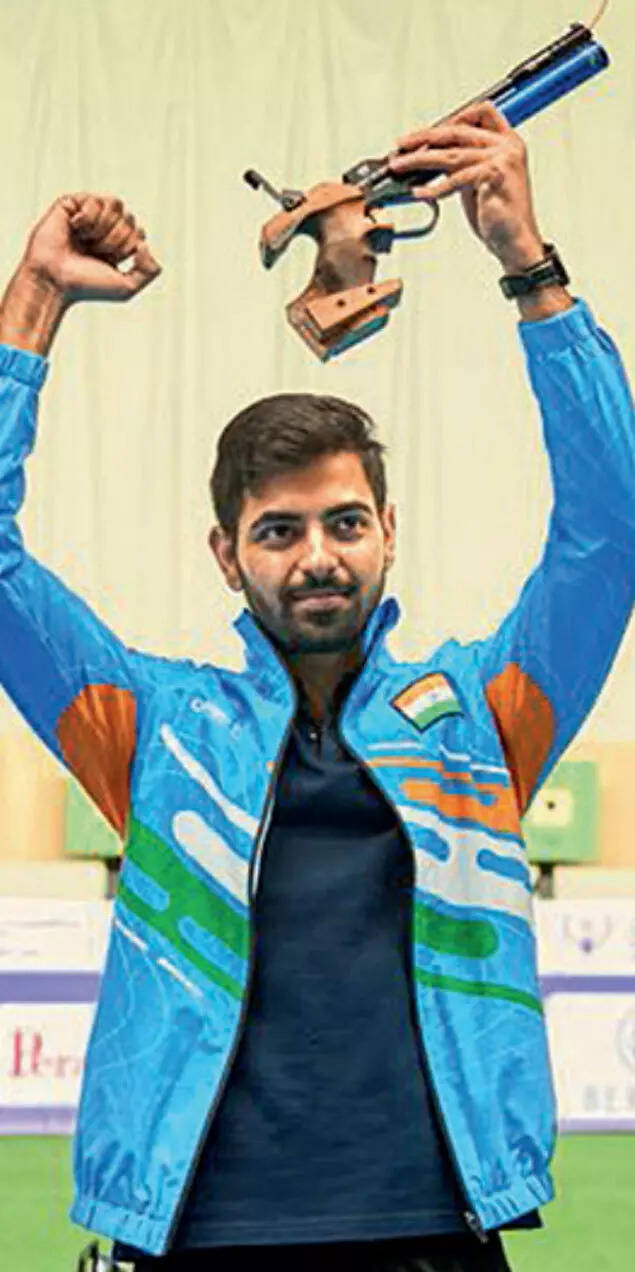
Samrat, who started shooting six years ago, trains at a modest range built by his father. The youngster proved his Cairo gold wasn’t a fluke by winning bronze at the World Cup Finals. Samrat’s arrival on the international scene has strengthened India’s men’s pistol team that once was strongest courtesy of Saurabh Chaudhary and Abhishek Varma, who had ruled the world stage. Following their decline in form, Varun Tomar has been the only consistent name for India. If this young duo holds its ground, India will have a strong men’s 10m air pistol team for the Los Angeles Games in 2028. (By Tushar Dutt)