
Vibes in Silicon Valley are bad, even venture capitalists are exhausted as …, warns CEO of $134 billion software company Databricks
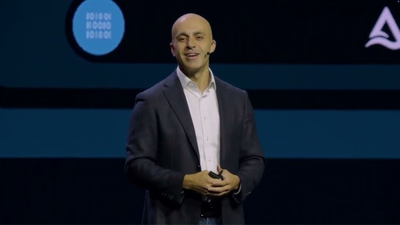
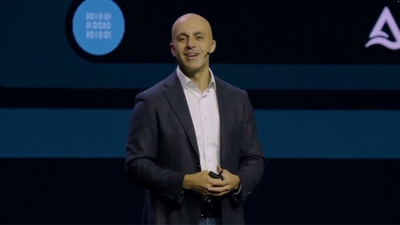
The CEO of $134 billion software analytics firm Databricks has issued a stark warning about the artificial intelligence industry, calling out companies valued at billions of dollars despite having zero revenue. Speaking at Fortune Brainstorm AI in San Francisco, Ali Ghodsi warned that “companies that are worth, you know, billions of dollars with zero revenue, that’s clearly a bubble, right, and it’s, like, insane.”Ghodsi, who holds a PhD in computer science, said the mood in Silicon Valley has soured significantly. He claimed that even venture capitalists funding the AI frenzy privately acknowledge the market’s unsustainable nature, with some telling him they should “just go on a break for, like, six months and come back and it’ll be, like, really financially good for me.”
Databricks CEO says circular financing deals inflate valuations artificially
The Databricks CEO criticized the circular financing arrangements, saying these types of deals are running afloat across the AI industry, where money flows between the same group of companies in complex loops. While Ghodsi didn’t name specific firms, OpenAI exemplifies this trend through its intricate web of deals worth over $1 trillion.OpenAI’s arrangements include receiving $13 billion from Microsoft before spending most of it back on Microsoft’s cloud computing services, securing $350 million in CoreWeave stock while committing $22 billion to the company for computing power, and signing a $300 billion deal with Oracle to build data centers that OpenAI will then pay roughly the same amount to use. Most recently, OpenAI obtained a 10% stake in AMD for chips and partnered with investment firm Thrive Holdings, whose parent company Thrive Capital is ironically one of OpenAI’s major investors.Rather than viewing the bubble as near its bursting point, Ghodsi predicts conditions will worsen before they improve. “I think like 12 months from now, it’ll be much, much, much worse,” he said, though he added that current market wobbles represent a healthy signal for CEOs to reassess their strategies.
Private company status are shielding companies from market volatility, argues Ghodsi
Ghodsi’s skepticism about the AI hype cycle explains Databricks’ reluctance to pursue an initial public offering despite “flirting” with the idea. He contrasted his company’s approach with competitors who rushed to go public during the 2021 boom, only to face severe corrections by 2022 that forced cost-cutting measures. Meanwhile, Databricks hired thousands of employees during that period.Despite his warnings, Ghodsi remained bullish on specific AI applications, particularly AI agents. The CEO tells that over 80% of databases launching on Databricks are now being created by AI agents rather than humans. Although, he argues the real revenue potential lies in the application layer where agents perform specific tasks, rather than in foundation models which he believes are becoming commoditized with low margins due to intense competition.