
Mumbai’s high rises springing up with no correlation to precincts or infra | Mumbai News
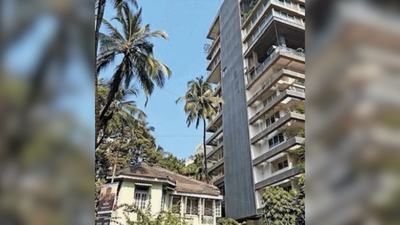
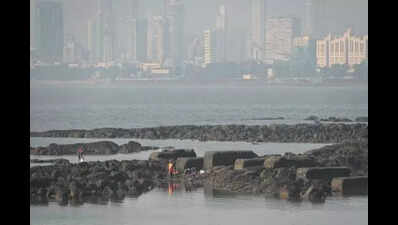
MUMBAI: Most global cities have regulations to control micro-skylines within precincts. These are conscious decisions taken to ensure that the ‘look’ of the city is managed in a controlled and planned manner, while simultaneously permitting development to take care of people’s needs. But unlike many global cities, Mumbai is perhaps the only one where the entire city (except areas governed by aviation rules) can go vertical without considering basic factors like infrastructure, design or density. So, a squat bungalow could sit next to a highrise, like two freaks in a circus, with little thought to aesthetic consistency within a neighbourhood.“Today, planning has been reduced to an arbitrary and ad hoc level with no correlation to infrastructure,’’ says Atul Kumar, founder trustee, Art Deco Mumbai Trust. “And there is no attempt to make it aesthetically viable.” Urban planners suggest that behind the emerging Dubai-like bling lies a vision that allows profit to override planning. A real estate-obsessed wave fuelled by what architect and urban planner Rahul Mehrotra calls “impatient capital”.There are many who caution against this approach that allows floor space index (FSI) to jump up “in leaps and bounds without any logical justification that takes into account the bigger plan”. Architect and urban planner Chandrashekhar Prabhu says, “There is no control on the height or shape of buildings coming up on threshold spaces like waterfronts, open spaces, prominent vistas etc. Ad hoc decisions are taken mostly to benefit builders.” No thought is given to ensuring proportionate public open spaces or adequate roads, leading to traffic snarls across the city. And this despite sufficient precedents within the city itself that placed a premium on organic town planning.In 1912, the Bombay City Improvement Trust formulated stringent norms that mandated adequate widths between so that they are spaced out equally. The rule which was finally implemented in 1919 was based on the concept that the right to light and air must be equal to the resident on the ground floor and those living on the top floor.“This was determined by the 63.5-degree rule; the minimum open space between two buildings and the maximum height,” says Kumar. The city’s first development plan in 1967 introduced the concept of FSI, unlike previous by-laws that regulated built development by the number of floors and footprint limits.Urban designer and architect Harshad Mehta points to areas like Cumballa Hill and Malabar Hill, where the skylines were once marked by crowns of treetops. “Buildings like Usha Kiran, Woodlands and Kanchanjunga rose higher than the treetops and were called ‘skyscrapers’ then. Nonetheless, they were also spaced apart by a prescribed distance from their immediate neighbours. Today, it can be said that building development in Mumbai is rising up, both literally and liberally. What were once considered iconic skyscrapers, seem lost amid newer taller neighbours,’’ said Bhatia.According to him, the current rising twinkling skyline appears attractive from afar, even portraying a mirage of growing prosperity —say when seen from the new coastal road. “But come up close and what you saw is not what you get. “Therefore, this present trend of indiscriminate high-rise development, though policy-driven, is foolhardy. Continuing this mindless building spree will be a self-induced disaster in the years ahead,” he warns.New York-based architect Arzan Sam Wadia points out that the Manhattan skyline is shaped by strategic zoning laws.“For instance, when it comes to very tall towers going up next to low-rise buildings or neighborhoods, the city relies on ‘contextual zoning’. “This helps manage height and bulk to make sure new developments fit in better with their surroundings,” he explains.In New York, there are special rules in place, like “tower setbacks,” which require taller buildings to be set back from the street. This keeps them from overwhelming the lower buildings nearby and helps maintain light access. As Wadia says, “It’s all about balance”. Currently, Mumbai appears to be challenging the idea of balance, in more ways than one.