

Why everyone will be sipping South Korea’s Black Sesame Latte in 2026 |


A new drink whose popularity has slowly started picking up is made with a very unique and less talked about ingredient, black sesame. In India, this still is quite an important ingredient associated with festivals and rituals and considered especially important during winter because of its warming effect on the body and relatively high calcium content. Sesame latte is especially becoming popular due to the influence of South Korean food, as a number of chefs and influencers can be seen sharing its recipe or talking about its benefits. This drink is basically a creamy, nutty coffee or shake made by blending ground sesame seeds with milk or black coffee. Black sesame gives it a dark, grey swirl and deep, unforgettable flavor. It is trending in South Korea because it taps into nostalgia, wellness culture, and the café world’s constant hunt for the “next matcha,” a drink that looks good on Instagram, feels premium, and promises real nutrition. What exactly is a sesame latte?A sesame latte is essentially a latte where the flavour base is sesame paste or powder rather than just coffee syrup. In Korean cafés, the Heukimja latte (black sesame latte) often layers a sweet black sesame paste, milk, and a shot of espresso, finished with whipped black sesame cream or a dusting of seeds. The Heukimja latte can be served with espresso, just like any other latte. This version uses only milk and sesame to create a caffeine-free, kid-friendly option.It can be hot, iced, or even frappé-style. Black sesame gives a bittersweet, tahini-meets-til-ke-laddoo flavor with a subtle smokiness that feels familiar to Indian palates too. Why it’s trending in South KoreaSouth Korea’s café culture is built on seasonal, photogenic drinks that feel comforting yet new, and sesame latte fits that brief perfectly. Black sesame lattes sit in the same family as sweet potato lattes, corn lattes, and other nostalgic, dessert-like drinks that remind Koreans of childhood flavors in a modern cup.A few reasons it has “a moment” right now:
- It inspired nostalgia. Black sesame has long been used in Korean and other East Asian desserts, so the flavour feels cosy and familiar, not experimental.
- It’s healthy! Post covid, a lot of attention has shifted to healthy eating. People are now looking for “functional” drinks beyond plain coffee. Black sesame’s reputation for supporting hair, skin, heart, and hormone health makes it an easy sell.
- It has a visual appeal and hence is a social media favorite. The soft grey swirls, sesame-speckled foam, and layered glasses photograph beautifully, which keeps it all over social media.
- Global coffee trend reports are already listing Korean-style lattes like black sesame as one of the new waves hitting international cafés, which suggests the beverage is not just a passing Seoul-only fad.
This is why it could be considered a “health drink” of 2026Calling anything the “ultimate” health drink is a stretch, but sesame latte does line up with several 2026-ish wellness trends that include plant-forward fats, mineral-rich ingredients, and culturally rooted “grandmother” foods. What makes black sesame particularly intriguing is its dense nutrition profile and the amount you can sneak into a daily drink. According to Chef Gautam Kumar, well known chefpreneur and hospitality experience designer, ” In high-profile weddings and events involving younger crowds, this drink is already becoming popular. It also has a great visual appeal, which makes it popular among foodies who love to flaunt their food on social media. In fact, even the other generation are liking this drink because of its numerous health benefits.”
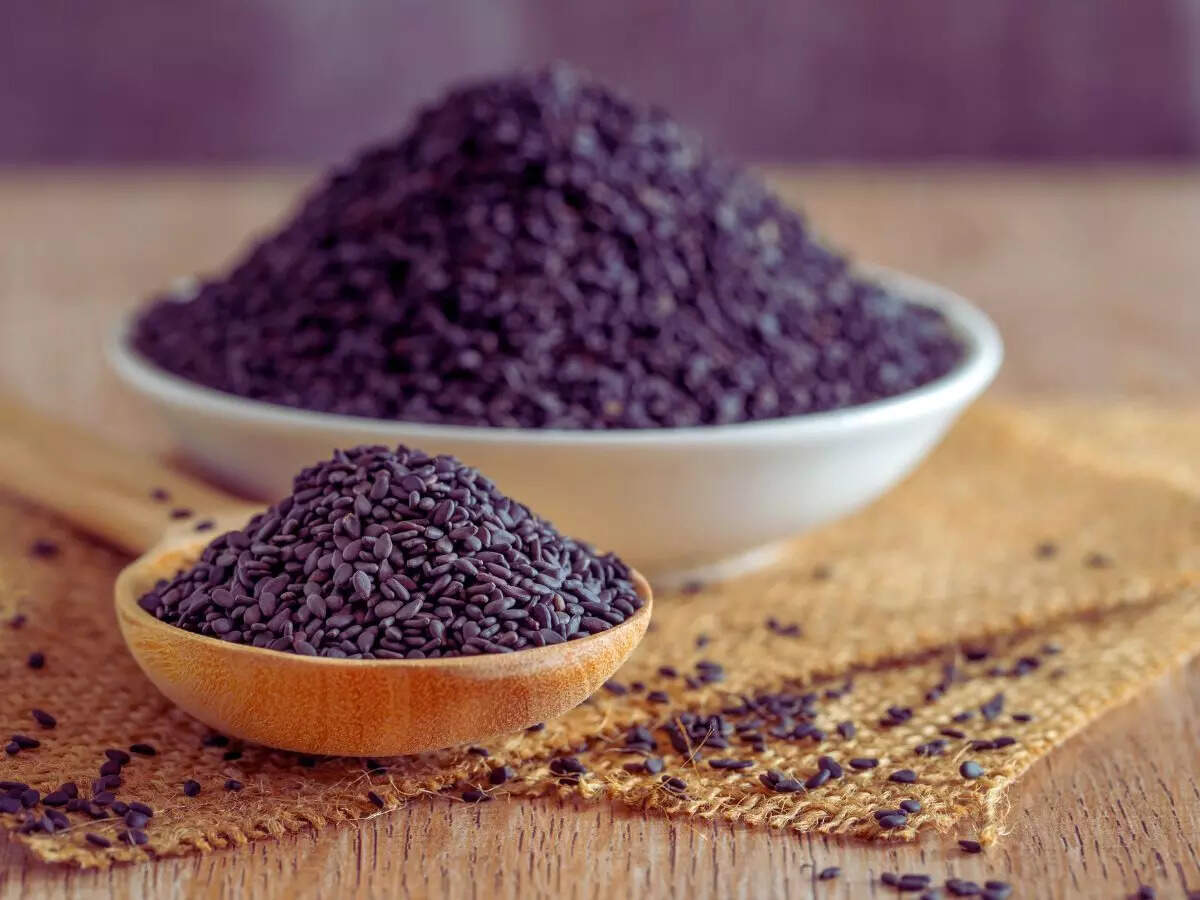
Black sesame seeds are rich in:
- Healthy fats (mainly unsaturated), with around 49–50 g fat per 100 g.
- About 17–18 g of protein per 100 g.
- Approximately 23 g of carbohydrates and nearly 12 g of fiber are present per 100 g.
- Minerals like calcium (~975 mg), iron (~14.6 mg), magnesium (351 mg), phosphorus (629 mg), and zinc (~7.8 mg) per 100 g.
That means:
- Just 10 g (about 1 tablespoon) of black sesame can give roughly:
- 57 kcal
- 5 g fat
- .7–1.8 g protein
- 2.3 g carbs
- 1.2 g fibre
- This amount is close to 97 mg of calcium, which is significant for bone and dental health.
- A meaningful bit of iron, magnesium and zinc for daily needs.
Research reviews highlight black sesame:Antioxidant and anti-inflammatory effects thanks to lignans like sesamin and sesamolin and dark pigments such as anthocyaninsStudies on animals and humans have shown potential benefits for blood pressure, cholesterol, and metabolic health, but more evidence is still emerging.So when a sesame latte uses a generous 10–15 g of ground seeds per serving, it becomes more than flavor—it is a stealth way to add good fats, minerals, and some protein into a daily coffee or milk ritual.Health benefits of black sesame seedsBlack sesame sits in that sweet spot where traditional wisdom and modern nutrition science overlap. These tiny seeds are not just considered a powerful source of nutrition in India but also find an important place in Korean, Chinese, and Japanese medicine systems. They have long associated black sesame with vitality, hair health, and longevity, and newer research provides some clues why.According to some studies, consuming these seeds regularly may help reduce blood pressure and improve cholesterol markers, possibly due to their healthy fats and antioxidant compounds. The presence of high calcium and iron content makes black sesame an interesting addition for bone health and anemia prevention, especially in diets low in dairy or meat. The seeds contain healthy fats, vitamin B1, and minerals like zinc and magnesium. They play roles in hormone production, skin barrier integrity, and hair strength. Animal and small human studies have revealed that black sesame extracts may help with insulin sensitivity and oxidative stress, although this aspect still needs larger trials.
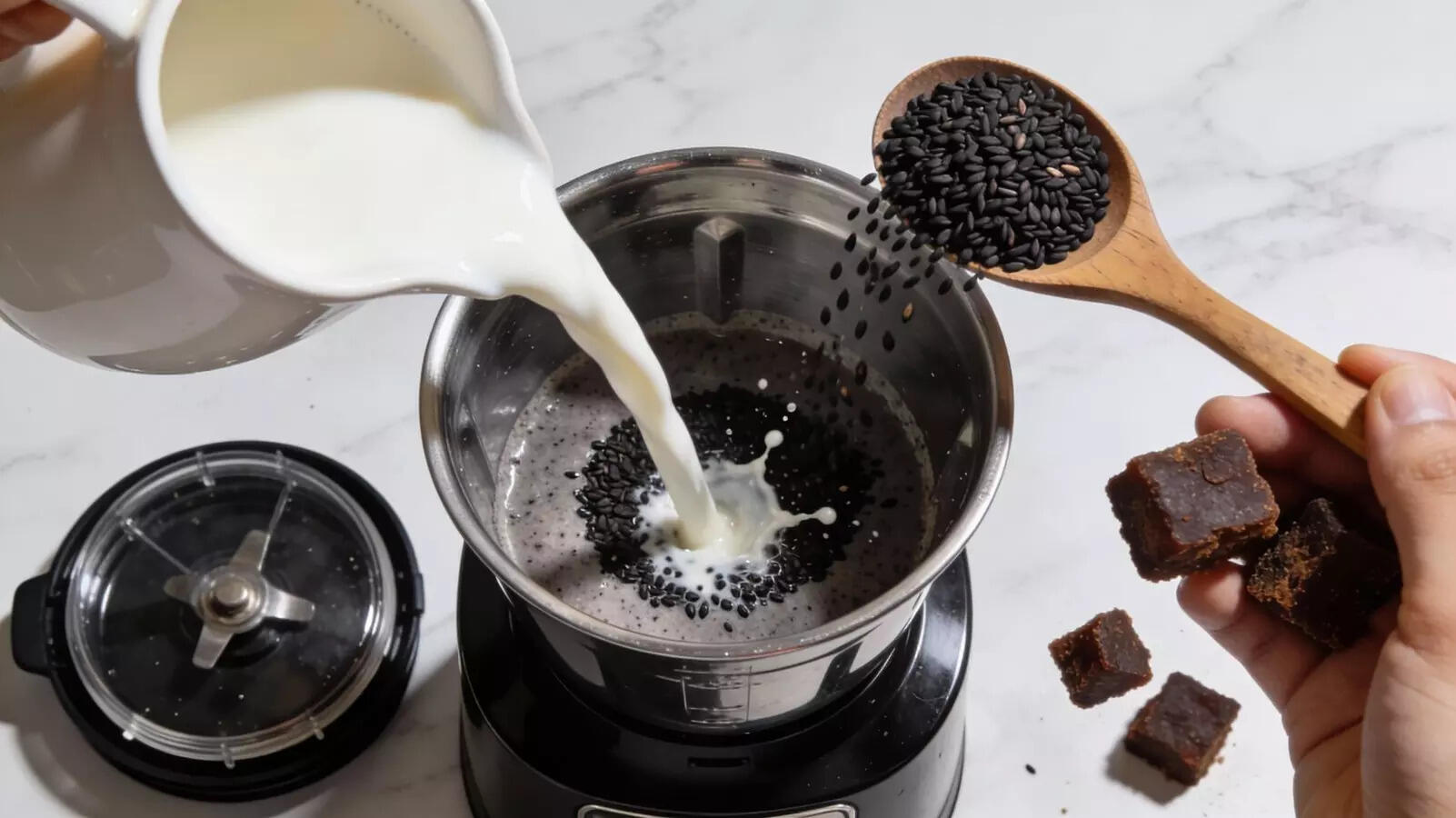
Simple Korean-style black sesame latte recipeHere’s a home-friendly version you can easily adapt for dairy or plant milk.Serves: 1 large mug or tall iced glassIngredients2 tablespoons black sesame seeds, lightly toastedUse 1–2 teaspoons of jaggery powder, brown sugar, or honey, adjusting the amount to taste.200 ml of milk, which can be cow’s milk, oat milk, soy milk, or almond milk, will work.1 espresso shot or ¼ cup strong coffee (optional if you want it caffeine-free)Pinch of salt½ teaspoon vanilla extract (optional but lovely)MethodDry-toast the black sesame seeds on low heat for 2–3 minutes until fragrant, stirring constantly so they don’t burn.Cool slightly, then grind them in a mixie or spice grinder with the sweetener and a splash of milk to form a thick, pourable paste. Scrape down the sides so it becomes smooth.Warm the remaining milk gently (or keep it cold if you want an iced latte) and whisk in a pinch of salt and vanilla.For a coffee version, pull an espresso shot or brew a powerful coffee.To assemble:Spoon the sesame paste into the base of your mug or glass.Pour in the milk slowly so you get that marbled grey swirl.If you are using it, finish with the espresso on top.Stir well before drinking so you don’t end up with all the sesame at the bottom.Tips to make it more “2026 wellness”Use oat or soy milk for extra creaminess and protein.Add a pinch of cinnamon or cardamom for an Indo-Korean crossover vibe.If you want more nutrition, increase sesame to 1.5-2 tablespoons, but keep an eye on calories and taste balance.Done right, a sesame latte feels like a grown-up version of a childhood sweet-comforting, slightly indulgent, and quietly packed with things your body actually needs