
Speed: etymology, culture and the modern addiction to going faster |
The Wordle word of the day on December 26 was speed, a word so familiar that it has stopped feeling like a choice. Speed is no longer something we pursue occasionally. It is something we live inside. It decides how quickly we expect replies, how intolerable silence feels, how cities are designed, how work is measured, how boredom is treated as failure. In a world organised around acceleration, to be slow is not a preference. It is a liability.Speed, today, is not merely about movement. It has become a form of legitimacy.
Where the word comes from
The irony is that speed did not begin its life obsessed with velocity at all. The word comes from Old English spēd, which meant success, prosperity, good fortune. To have speed was to fare well, to move through the world advantageously, to arrive intact and ahead. Motion mattered only insofar as it produced outcome. Arrival, not acceleration, was the point.Over centuries, that meaning thinned. Prosperity became efficiency. Efficiency became quickness. Quickness hardened into velocity. Somewhere along the way, speed detached itself from destination and attached itself to motion for its own sake. The word retained its moral glow even as its meaning hollowed out.That residue still works on us.
A brief, inconvenient physics aside
Physics, irritatingly precise as ever, makes a distinction modern culture prefers to ignore. Speed is a scalar. It tells you how fast something is moving, nothing more. Velocity, on the other hand, is a vector. It insists on direction. It asks the awkward follow-up question: fast towards where?Our culture talks obsessively about speed while avoiding velocity altogether. We celebrate how fast we are moving without pausing to ask whether the direction makes sense. In that sense, the triumph of speed over velocity feels less like progress and more like confession.
Speed as culture, compressed
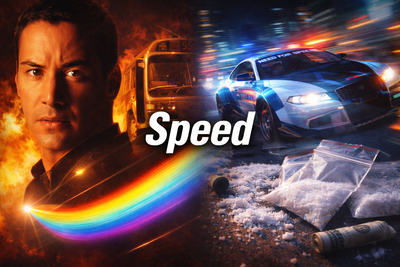
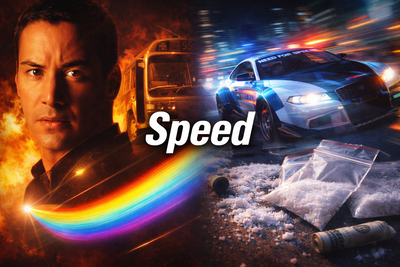
Modern culture absorbed this shift instinctively. Speed became street slang for amphetamines, stimulants that flood the nervous system with urgency and confidence, promising focus and productivity while quietly eroding rest, judgement and balance. It became the title of a 1994 action film where Keanu Reeves spends two hours trapped on a bus that must not slow down, a premise that works because it captures a deeper anxiety: once speed is imposed, stopping becomes catastrophic. It became the organising fantasy of video games like Need for Speed, where pleasure lies not in destination or mastery, but in sustained acceleration, cities dissolving into blur as physics bends to reward reflex over reflection. Across drugs, cinema and play, the same idea repeats itself in different costumes: motion equals survival, slowness equals danger.
Speed as expectation
What culture normalised, systems soon enforced. Speed now defines competence. Faster delivery is assumed. Faster response is demanded. Faster growth is rewarded. Slowness is treated not as deliberation but as inefficiency, delay as incompetence rather than choice. Even time itself is framed as an obstacle, something to be optimised away rather than inhabited. Language reflects this obsession without protest. We speed things up. We slow problems down. We rarely interrogate whether velocity, not effort, is the missing variable. The older meaning of speed, as wellbeing and favourable outcome, has quietly slipped away. What remains is motion stripped of reflection.
Why the word feels heavy now
Speed survives because it flatters us. It promises mastery over friction, boredom and limitation. It suggests progress even when direction is unclear. It allows urgency to masquerade as importance and acceleration to pass for meaning. That is why the word moves so easily between chemistry, cinema and culture. Each domain sells the same fantasy: that stillness is dangerous, that pause is indulgent, that slowing down risks being left behind. Once, speed meant arriving well. Now it means never stopping. And perhaps that is why the word feels so distinctly modern. Not because we move faster than before, but because we have grown profoundly uncomfortable with asking where we are headed at all.