
BSc Biotechnology vs BSc Microbiology: Which degree suits you better for a lab-based career?
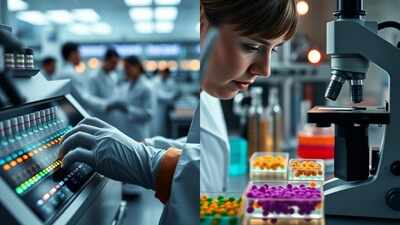
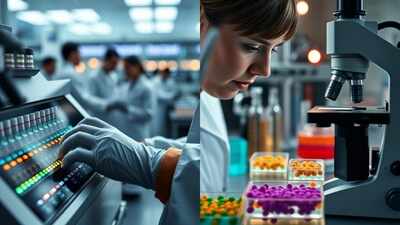
Many students who enjoy biology dream of working in a laboratory one day. School lessons about cells, diseases, and the human body often spark this interest. When it is time to choose a college course, two options often cause confusion—BSc Biotechnology and BSc Microbiology. Both courses are based on biology. Both degrees involve regular lab work and can lead to careers in science and healthcare. This similarity makes the decision difficult for students and parents alike. Some worry about jobs, while others focus on future studies. The good news is that both courses offer good work opportunities. The key is to understand how they differ and which one fits your interests better.
Lab life in both the degrees
BSc in Biotechnology is a course which requires applying biology to real-life problems. In this course, students learn how cells, genes, and proteins work and how this knowledge can be used in medicine, agriculture, and industry. Important subjects in the programme include genetics, cell biology, molecular biology, and biochemistry.Lab work is a major part of the course. Students get hands-on experience with DNA, cell cultures, and proteins. They perform many experiments using modern lab equipment. This course is ideal for students who enjoy practical work and want to see how science is used to make medicines, vaccines, and other useful products.BSc Microbiology, in contrast, is focused on tiny living organisms like bacteria, viruses, and fungi. Students learn how these microbes affect health, food, and the environment. Important topics under Microbiology include medical microbiology, immunology, and food safety.Lab sessions are very practical and hands-on. Students learn to grow microbes, test samples, and identify the causes of infections. This course is perfect for students who like hospital or diagnostic labs and want to work with diseases and testing work.
Where these degrees can take you
After completing BSc Biotechnology, most students start with entry-level lab jobs. They may work as lab technicians, research assistants, or quality control staff. Jobs are available in biotech companies, medicine firms, research labs, and vaccine production units. Some students also find roles in agriculture and environmental science labs.BSc Microbiology graduates often find work in hospitals and diagnostic centres. Common roles include microbiologist, lab technologist, and food safety assistant. Many also work in pathology labs and public health departments.In both courses, students should be prepared for slow but steady growth. Starting salaries are usually modest, but skills and experience make a big difference over time.
Thinking ahead before you decide
For both Biotechnology and Microbiology, higher studies are important for better career growth. Many students go on to do an MSc and later a PhD. Teaching and senior research jobs usually need higher degrees.Students should choose BSc Biotechnology if they are interested in genes, DNA, and modern lab techniques. BSc Microbiology is better for those who want to work with microbes, diseases, and testing labs.There is no right or wrong choice here. The best decision is the one that matches your interest and keeps you motivated to learn. A course chosen with clarity often leads to a more satisfying and successful career in science.