Guess the country: It touches both Europe and Asia |
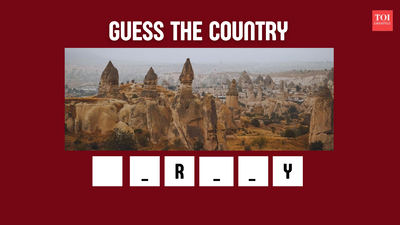
Ever thought about this? A country that touches two continents? Well, not many nations in the world are geographically located in such a manner or are fortunate enough to straddle two continents. But,one such country that touches both Europe and Asia, where cultures, histories, and landscapes from both sides collide for an interesting mix of life, is Turkey. It is officially called the Republic of Türkiye, wherein the impact of both the sides can be seen not only geographically, but also in various other aspects of culture, politics or economics making Türkiye one of the most interesting countries on earth!
Geography and location
Spread across a vast area of 783,562 sq km, bridging Western Asia and Southeastern Europe through the Turkish Straits and the Sea of Marmara, its geography is also intriguing to say the least. It needs to be noted that around 97% of its land lies in Anatolia, while Eastern Thrace in Europe holds roughly 10% of the population. Then the country is bordered by eight nations and surrounded by the Aegean, Black, and Mediterranean Seas. Turkey is divided into seven major regions — Marmara, Aegean, Central Anatolia, Black Sea, Eastern Anatolia, Southeastern Anatolia, and Mediterranean — featuring diverse landscapes from the Pontic and Taurus Mountains to the Lakes Region, home to Lake Beyşehir and Lake Eğirdir.
A cultural crossroads
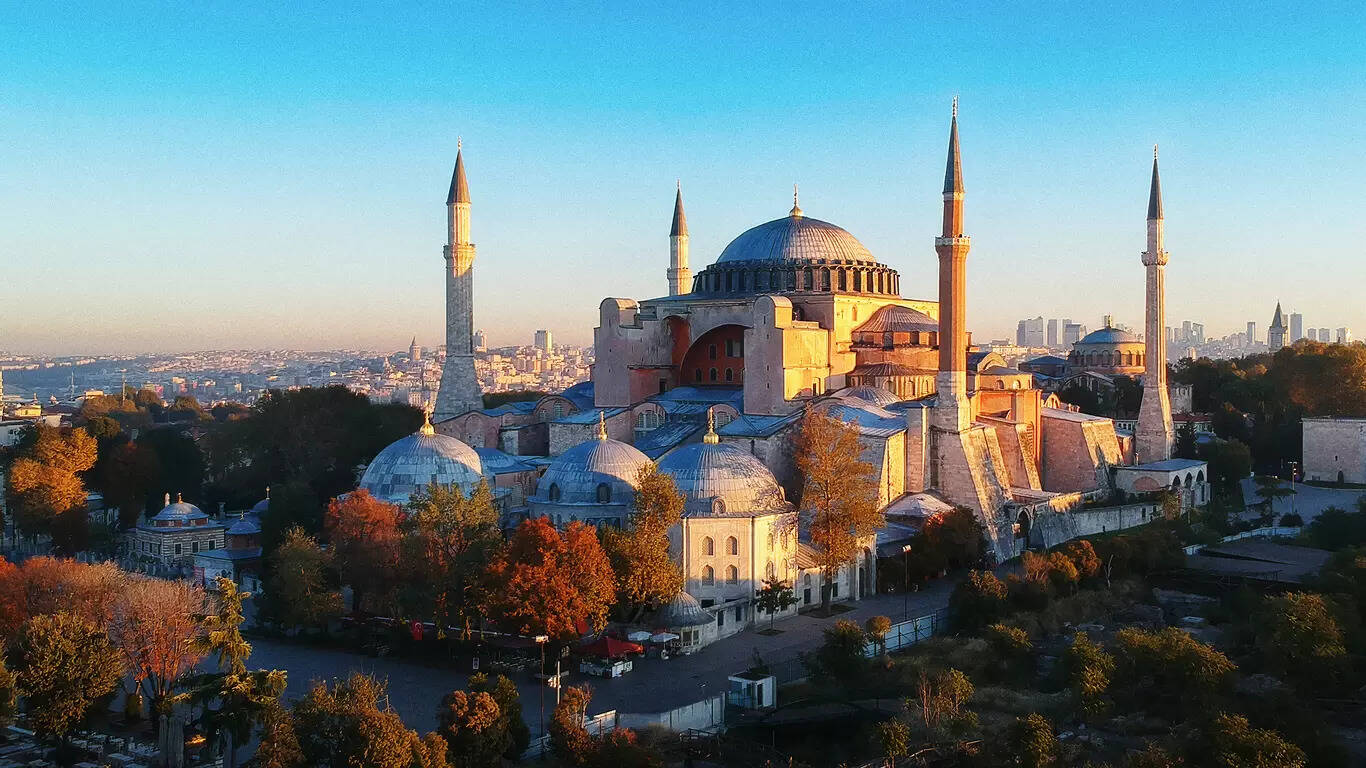
Because of its location Türkiye has served as a meeting place for civilizations for more than 11,000 years. Among them are Göbekli Tepe, the world’s oldest known temple, and the ruins of the ancient city of Troy. The legacies of the Hittites, Greeks, Romans, and Byzantines as well as the long domination by Ottoman Empire under whose rule it pampered are still evident in its national identity. Nowhere is this historical layering more apparent than in Istanbul’s skyline, where the Hagia Sophia, once a Byzantine cathedral and later an Ottoman mosque — stands front and center alongside sleek skyscrapers and hustling centuries-old bazaars.Read more: This place has been ranked as the world’s best country for retirement In terms of Turkish cuisine, it further reflects its diverse geography and history. Finding fusion of nomadic cooking traditions of Central Asia with the refined flavors of the Middle East, Mediterranean, and Balkans, is something that is worthy of noting. Slow-cooked kebabs and delicate baklava, to a steaming glass of Turkish tea, every dish that you find here will have a story to tell, about cultural fusion and centuries-old culinary artistry.
Strategic importance
Türkiye is more than a beautiful travel destination, it is an economic and energy magnet. Even though it was closed for nearly half a century as the Communists tightened their grip on Central Asia and Eastern Europe, its network of infrastructure, particularly gas and oil pipelines and transcontinental railroads — links European markets to Central Asian natural resources and emerging Middle East economies.Read more: Navi Mumbai International Airport is now open: Photos, videos, and what to know
A land of contrasts
Türkiye, on a geographical level, has landscapes that are truly extraordinary. From the snow-white summit of Mount Ararat, surreal fairy chimneys of Cappadocia, to the golden sun-kissed beaches in Antalya, this destination can surprise any kind of traveller. Here, ancient ruins coexist with modern cities; and where east manages to meet west — not only on a map but also in daily life.