

How the longest venomous King Cobra in history became a casualty of the Second World War |
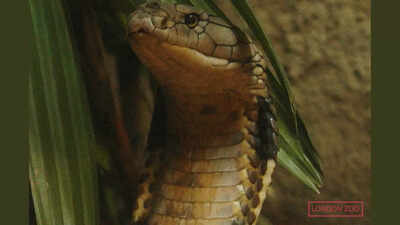
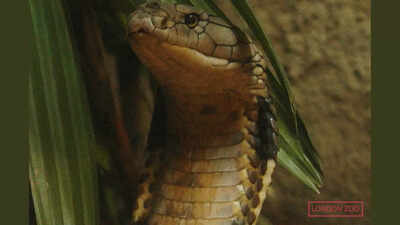
The king cobra occupies a singular position in the natural world-one defined not just by its biology but also by an unlikely linkage to human history. As the longest venomous snake ever recorded with reliability, it has long occupied a position of scientific interest for scholars researching reptile evolution, venom systems, and behavioural adaptation. One individual specimen, measured and preserved early in the twentieth century, came to represent the outer physical limits of the species. Its existence provided tangible evidence of what nature was able to create under the proper conditions. Yet this magnificent animal did not survive as a lasting scientific reference. During the Second World War, it became an unintended casualty of aerial bombing in Britain; its preserved remains were reduced to destruction. The story is poignantly subdued, a reminder of just how tenuous scientific knowledge can be when the forces shaping it lie far beyond the laboratory.
What makes the king cobra the longest venomous snake on record
The king cobra, also known as Ophiophagus hannah, differs from other venomous snakes in its morphology and physiology. Most of the venomous species depend on ambush and camouflage for hunting, but the king cobra is a brave hunter, and it feeds on snakes mostly. This highly selective diet maintains a very strong and long body, which can even be longer than that of other venomous reptiles. The longest individual that has ever been recorded was far over five meters, and this size has never been confirmingly exceeded. Several studies that reviewed the old records and checked the preserved specimens concluded that this specimen is the longest venomous snake ever documented, a distinction that is still uncontestable. Its venom is mainly neurotoxic; however, it is also produced in large amounts, thus, one bite is capable of causing the death of a large animal, and it is very helpful to researchers to understand the evolution of toxins.
What journey brought the record-holding king cobra to London
From forest to museum, the journey of the specimen epitomises scientific practices of the early twentieth century. In an age of colonial exploration, natural history institutions were actively seeking out rare and extreme examples of wildlife that would extend their collections. The record-holding king cobra was caught in Southeast Asia and transported alive to Britain. It was placed on display at London Zoo. Its size immediately made it stand out, the centre of attention among both zoologists and visitors. It was carefully measured repeatedly to make sure that the measurements were accurate, and photographs were made to visually document this evidence. Observations of its behaviour while in captivity contributed to early descriptions of the king cobra’s temperament and feeding behaviour. After death, the snake was preserved and moved into a museum collection that was supposed to serve as a permanent scientific reference. At the time, preservation equated to stability-a belief that once recorded and stored, knowledge could endure indefinitely.
Did the Second World War erase a once-in-history snake specimen forever?
That expectation of permanence collapsed during the Second World War. As London withstood months on end of bombing during the Blitz, the destruction extended far beyond industrial and military targets. Cultural and scientific institutions were hit, sometimes with disastrous repercussions. The museum where the pickled king cobra was kept sustained a direct hit, and the specimen was destroyed in the subsequent confusion. Its glass container broke, the preservation liquids leaked out, and what was left was irretrievable. Given the enormous losses of human life during the war, the disappearance of a snake did not attract much attention. To science, on the other hand, the loss came as a serious blow. The longest venomous snake on record ceased to exist as a physical object and remained only in the form of written measurements and photographs. The incident serves as a silent reminder of the ways in which war is able to destroy not just lives and buildings but also fragments of natural history that can never be recovered.
How the destruction of one snake affects scientific memory
The loss of the king cobra specimen still resonates in ways as stealthy. Specimens afford scientists the opportunity to revisit earlier conclusions, apply new techniques, and confirm records from the past when standards evolve. With the destruction of this snake, all such opportunities vanished, permanently. Its recognition by Guinness World Records now rests entirely on historical documentation, serving as a reminder of just how fragile verification can become without material evidence. The story has even influenced modern approaches to preservation, encouraging greater emphasis on duplication, digitisation, and global data sharing. Beyond museums, it reverberates with contemporary concerns about conservation. King cobras today face shrinking habitats and increased human conflict across parts of Asia, placing stress on a species already misunderstood and often feared. The fate of the longest venomous snake carries a muted sadness, not simply because of its size alone, but because it reflects how easily even knowledge, once thought secure, can be lost to forces entirely unrelated to science itself.In remembering this vanished giant, the episode urges renewed respect for both living species and preserved knowledge, highlighting why safeguarding biodiversity and scientific archives is essential in a world where conflict and environmental change continue to threaten both.Also Read | The snake whose invisible bite can be fatal; why the Common Krait is called the silent killer