
From NTA’s facial recognition to Aadhar verification by UPSC: How Indian exams are hardening identity checks, step by step
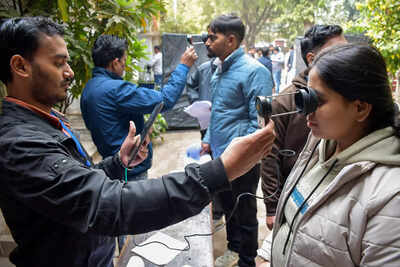
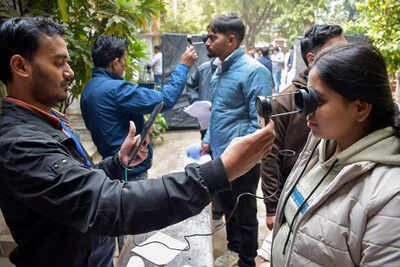
The National Testing Agency (NTA) is set to bring in facial recognition–based verification and live photograph capture for major entrance exams from 2026 — a move that could change the way high-stakes tests are conducted in India. As reported by TNN, this new system will apply to important exams like NEET and JEE, and aims to strengthen candidate verification at both the application stage and on exam day.Under the new system, candidates will need to capture a live photograph while filling out their application, in addition to uploading a regular image. This live photo will later be matched with the candidate’s stored facial data at the exam centre, creating a multi-layered security check to prevent impersonation or misuse. Here is a look at how India’s exams are tightening identity checks
NEET 2025: The testing ground
This is not the first time biometric technology has been used in Indian exams. While conducting the NEET-UG 2025 exam, authorities tested face authentication in real exam conditions. According to PTI, the Unique Identification Authority of India (UIDAI) conducted a Proof of Concept (PoC) to see how Aadhaar-based face verification could work for candidate identification.“During the 2025 NEET exam, UIDAI successfully conducted a PoC on the use of face authentication,” a source told PTI, adding that the exercise tested both the feasibility and effectiveness of the system.As part of the pilot, Aadhaar face authentication technology was deployed at select NEET centres in Delhi, and integrated with the National Informatics Centre’s digital infrastructure as well as NTA’s examination protocols. The rollout allowed officials to test biometric verification under the pressure of full exam halls and strict timelines.Encouraged by the results, NTA now plans to expand the system. “The same will be introduced in major entrance exams from next year,” the source told PTI.In addition, NTA is adding live photograph capture in the application process itself, offering another layer of verification. While facial biometric systems analyse unique features to create digital templates for identity matching, live photos help ensure that the person applying is the same as the one taking the test. These recommendations come from the Radhakrishnan Committee, set up by the Centre after several paper leak incidents highlighted gaps in exam security.
A trend across national exams
NTA’s move is part of a wider trend in India’s examination system, with other major exams tightening identity checks.The Union Public Service Commission (UPSC), which conducts some of India’s toughest recruitment exams, had already started using Aadhaar-based verification to improve exam security. In August 2024, the Government of India, through the Department of Personnel and Training (DoPT), officially allowed UPSC to use Aadhaar authentication, including Yes/No verification and e-KYC, for candidate registration and exams.The new system of verification was introduced when UPSC launched its new exam portal in May 2025. Candidates were given the option to use Aadhar verification voluntarily, and the response was impressive. As per media reports, over 92% candidates opted for Aadhar verification, showing that most views biometric checks as a convenient safety measure.
Towards a more secure exam ecosystem
The NTA’s plan to bring in facial recognition and live photo verification shows just how much technology is reshaping the way India conducts high-stakes exams. It’s no longer just about the questions on the paper — now, who takes the test matters just as much. At the same time, UPSC’s voluntary Aadhaar authentication points to a wider shift, where biometric checks are becoming a key part of recruitment exams.As these systems expand, the challenge will be to keep them reliable and accessible. Students in remote areas shouldn’t face extra hurdles. The aim is simple: fair, transparent, and secure exams for every candidate.