
Vajpayee’s democratic restraint holds lessons for a polarised South Asia | India News
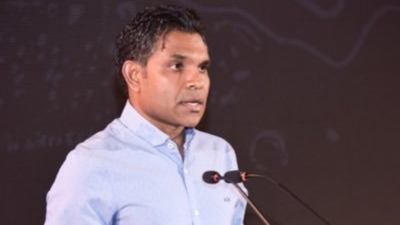
NEW DELHI: Recalling Atal Bihari Vajpayee as a statesman who believed peace had to be consciously practised through restraint and institutional respect, former Maldives vice-president Faisal Naseem on Wednesday said the late prime minister’s political legacy remains deeply relevant for South Asia amid democratic and social turbulence in the region.Delivering the 8th Atal Bihari Vajpayee Memorial Lecture on “Peace, Democracy and Islam – The Maldivian Experience”, Naseem described Vajpayee as a leader who demonstrated that “firmness and civility can coexist” and that leadership could be “decisive without being divisive” — an approach he said holds enduring relevance in an era marked by polarisation.“This year marks the birth centenary of a statesman whose legacy continues to shape India’s democratic journey and the wider neighbourhood of which the Maldives is a part,” Naseem said, speaking as a representative of “a small island nation in the Indian Ocean, a Muslim society and a young democracy”.Drawing parallels between India and the Maldives, he said peace in South Asia is often treated as an outcome, but leaders like Vajpayee understood it as “a practice cultivated through restraint, dialogue and respect for institutions”. “Peace is sustained not by uniformity, but by balance. It is preserved when differences are managed with dignity and when power is exercised with moderation,” he said.Naseem said Vajpayee’s long years in opposition reflected his belief in parliamentary democracy. “He believed in Parliament not because it was perfect, but because it embodied the people’s voice,” he said, adding that the lesson resonated deeply with the Maldives’ own democratic transition in 2008 from centralised authority to constitutional governance.The address acquired wider resonance amid political and social stress across South Asia. In Bangladesh, recurring political unrest and episodes of communal violence, particularly attacks on minority communities, have raised concerns about the state’s ability to protect pluralism and democratic norms. Sri Lanka’s post-crisis stabilisation has been accompanied by public unease over austerity and accountability, while Nepal continues to grapple with fragile coalition politics and leadership churn despite constitutional stability.Highlighting democratic outcomes in the Maldives, Naseem said democracy must deliver dignity and security. “This is what democracy delivers — protection, opportunity and shared prosperity,” he said, pointing to universal healthcare, pensions, minimum wages and free higher education.On India–Maldives ties, Naseem said the partnership was “written in deeds, not words”. Recalling India’s intervention during the 1988 coup attempt, he said the swift and restrained response “left a lasting imprint on Maldivian strategic thinking”. Vajpayee’s 2002 visit, he added, symbolised India’s enduring commitment to its neighbours.Naseem also credited Vajpayee with recognising the Indian Ocean’s strategic importance. “Maritime security is not only about naval strength, but about trust among neighbours,” he said, noting that current cooperation in maritime surveillance, coast guard capacity-building and emergency response reflects security built on partnership, not coercion.Concluding, Naseem said Vajpayee understood that while history could be shaped, geography could not. “Our shared responsibility is to ensure this region remains anchored in peace, democratic values and mutual respect,” he said.