
How much does daily care for a stray dog cost? Greater Bengaluru Authority pegs it at Rs 111 | Bengaluru News
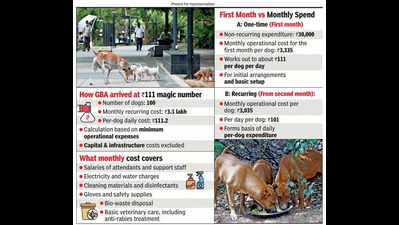
Bengaluru: Greater Bengaluru Authority (GBA) has estimated the cost of caring for stray dogs at Rs 111.2 per animal per day, according to records accessed by TOI. This figure was arrived at through a detailed expenditure assessment discussed during a recent review meeting, and has sparked questions over whether such an allocation is adequate to ensure basic animal welfare in the city.GBA has projected a recurring monthly expenditure of Rs 3.3 lakh to house around 100 stray dogs. The estimate is part of the authority’s planning exercise following recent Supreme Court directions on stray dog management, which require local bodies to establish systems for temporarily sheltering dogs that need care.For the first month for 100 dogs, the expenditure is calculated for food twice daily is Rs 1,50,000, staffing at Rs 1,18,483, medicine at Rs 10,000, administration cost at Rs 10,000 and catching of dogs at Rs 30,000 (cost of catching each dog at Rs 300), with the total cost coming to Rs 3,33,483 (Rs 3.3 lakh). From the second month, the catching expenses are not included in the cost.While GBA doesn’t have any shelters except around eight Animal Birth Control (ABC) centres, the local corporations are planning to build temporary shelters until permanent structures are built. GBA is also planning to ask NGOs to host the picked-up strays in their shelter homes and has worked out the calculation for expenditure on the dogs. An NGO in Bengaluru, registered under the Animal Welfare Board of India, told TOI that no NGO was consulted before planning the expenditure. “We would at least need over Rs 4,000 per month for one dog. But it would depend on the stray dog and its health. We are approached to house the picked-up strays in our shelters, but we are not consulted during the planning.” The animal husbandry department didn’t confirm if this expenditure is approved by the govt, but the five GBA city corporation commissioners said they have been given directions to refer to this structure. The break-up includes two meals a day for the dogs, salaries of attendants and support staff, electricity and water charges, disinfectants, gloves, bio-waste disposal, and basic veterinary care, including anti-rabies treatment. The calculation was meant to arrive at a “minimum operational cost” for running temporary facilities. The officials also discussed the need for coordination between multiple agencies, including GBA departments, health officials, and animal welfare organisations. Food and staffing logisticsThe committee revised the food cost to Rs 50 per dog for two meals, a significant rise from an earlier rate of Rs 22.4. The officials estimated the quantity for one cooked meal for a dog at 600 grams. This meal must include 150 grams of chicken and 100 grams of vegetables. Salaries for attenders and para-vets will be fixed based on the minimum wages set by the labour department and the 7th Pay Commission guidelines for junior veterinary examiners, respectively. The estimated expenditure does not include the cost of infrastructure. The construction of the shelter must be undertaken with a minimum budget, considering basic requirements, design standards, and public works department rates based on the Animal Welfare Board’s standard operating procedures (SOPs). The maintenance and infrastructure costs for these shelters will be the responsibility of the local municipal authority. The plan stipulates that only animal welfare organisations that are legally registered, have no criminal cases, complaints, or lawsuits in the previous three financial years, and veterinary doctors registered with the Veterinary Council of India can participate in sheltering and nurturing the dogs. Animal activists say the corporations are wasting taxpayers’ money on temporary shelters while there is no such provision in the SOPs or the SC order, and the work should be taken up only once the proper shelters are ready. Activists and veterinarians have long argued that inadequate budgeting affects the quality of care provided to strays, particularly in large urban centres. Feeding, hygiene, disease control, and staff availability are dependent on realistic financial planning, they point out. The timing of the expenditure assessment is significant, coming amid heightened public scrutiny of stray dog management following recent court interventions and a spate of dog bite incidents reported across the city. While the Supreme Court has emphasised the need for humane and scientific management of stray dogs, civic authorities are under growing pressure to balance public safety concerns with their animal welfare obligations.