Not just Call of Duty: How Vince Zampella changed first-person shooter video games | World News


Vince Zampella died recently in a car crash. He was 55. The announcement arrived stripped of drama, a few lines of factual closure, the kind reserved for people whose fame never quite escapes their industry. Yet for anyone who has spent the past two decades holding a controller, the news lands unevenly. Zampella shaped how modern video games breathe, how they pace themselves, how tension accumulates rather than detonates. His death came suddenly, without warning or buildup, bearing no resemblance to the worlds he built. Zampella’s games unfolded patiently. They lingered. They allowed dread to thicken, silence to matter, consequence to arrive slowly. His passing, by contrast, was instantaneous, indifferent to rhythm or design. The dissonance is unsettling. A man who taught an entire medium the value of hesitation is gone in a moment that allowed none. What remains feels less like nostalgia and more like a missing structural beam, something you only notice once the weight shifts and the space above you no longer holds in quite the same way. Entire genres carry his fingerprints.
The man who slowed the trigger finger
Zampella’s defining contribution was not graphical fidelity or technical ambition. It was mood. He understood that tension lives in restraint, that immersion deepens when players hesitate, and that fear is most effective when it feels earned rather than theatrical.This sensibility arrived at a moment when shooters were accelerating. Doom and Quake prized speed and dominance. GoldenEye introduced stealth and pacing but still promised eventual mastery. Zampella introduced something more unsettling: uncertainty that did not resolve itself neatly.He made the act of moving forward feel consequential.
Omaha Beach and the moment games grew heavier
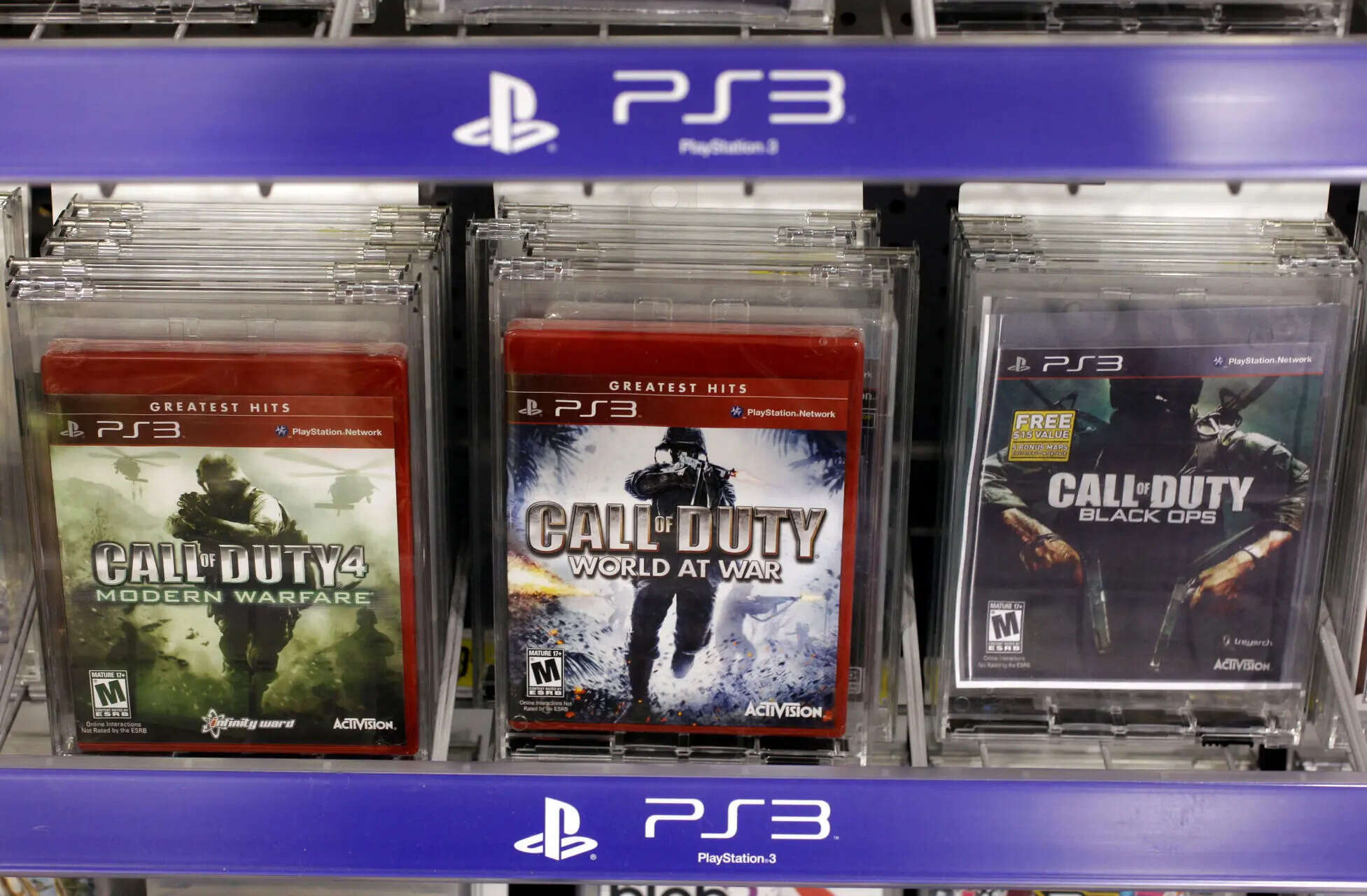
FILE – Three versions of Activision’s Call Of Duty games are seen on sale at Best Buy in Mountain View, Calif., Wednesday, Aug. 3, 2011. Vincent Zampella, one of the creators behind such best-selling video games “Call of Duty,” has died at 55. (AP Photo/Paul Sakuma,File)
Medal of Honor: Allied Assault remains the clearest articulation of his worldview. The Omaha Beach sequence did not behave like a level. It behaved like a memory. The beach stretched endlessly, the sound design smothered the senses, and cover felt insufficient. You did not conquer the space. You survived it, briefly.What made the experience transformative was not realism as accuracy, but realism as imbalance. The player was small, exposed, and replaceable. The game did not flatter you. It overwhelmed you.This was the point at which video games stopped being comfortable. Not darker. Heavier.
Call of Duty before it became an industry
Call of Duty began as refinement, but Call of Duty 4: Modern Warfare carried Zampella’s philosophy into the mainstream. The present-day setting collapsed distance. The conflict felt uncomfortably familiar. One of the game’s most discussed moments ends with the player dying after a nuclear blast, stripped of agency and certainty.That decision mattered. It placed vulnerability at the centre of a blockbuster experience and trusted players to sit with it.Alongside this emotional ambition came the multiplayer progression systems that reshaped gaming economics. Unlocks, ranks, persistent incentives. Nearly every modern online game borrowed that structure. Zampella did not just influence storytelling. He influenced how games hold attention.The industry followed because the formula worked.
Reinvention without self-mythology
After Infinity Ward, Zampella resisted repetition. At Respawn Entertainment, Titanfall restored joy to movement, verticality, and momentum. Apex Legends refined the live-service model through balance rather than excess, a rare achievement in an era obsessed with novelty.The Star Wars Jedi games revealed another aspect of his taste: discipline. Tight pacing. Deliberate combat. A refusal to drown players in content for the sake of scale. These were games that trusted structure.Even near the end of his career, Zampella remained a corrective force. When Battlefield drifted, it was Zampella who was asked to steady it. The industry turned to him not for reinvention, but for coherence.
The human core
Zampella often spoke about veterans, about visiting battlefields, about walking through Arlington Cemetery with his teenage son and seeing headstones belonging to boys his age. Those moments surfaced quietly in his work. Reloads lingered. Silence carried weight. Loss was not decorative.His games rarely preached. They absorbed experience and reflected it back through design.Vince Zampella leaves behind franchises, studios, and systems that continue to shape gaming. More importantly, he leaves behind a sensibility. A reminder that progress in this medium does not always mean moving faster or louder.Sometimes, it means teaching millions of players to pause before pulling the trigger.