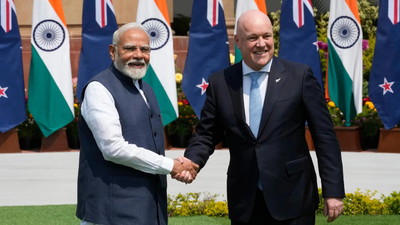
India-New Zealand FTA to create new opportunities for exporters
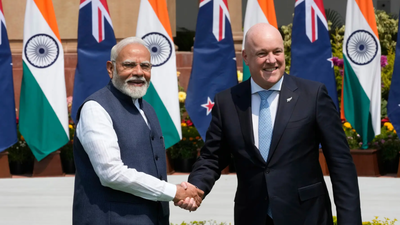
NEW DELHI: The India-New Zealand Free Trade Agreement (FTA) is set to ease mobility for Indian students and skilled professionals, while opening up fresh opportunities for exporters, manufacturers and service providers in a deal that is expected to widen New Delhi’s influence in the Indo-Pacific region. .The agreement removes numerical caps on Indian students in New Zealand and allows a minimum of 20 hours of work per week during study. Post-study work visas will be extended to up to 3 years for STEM graduates and 4 years for PhD holders.
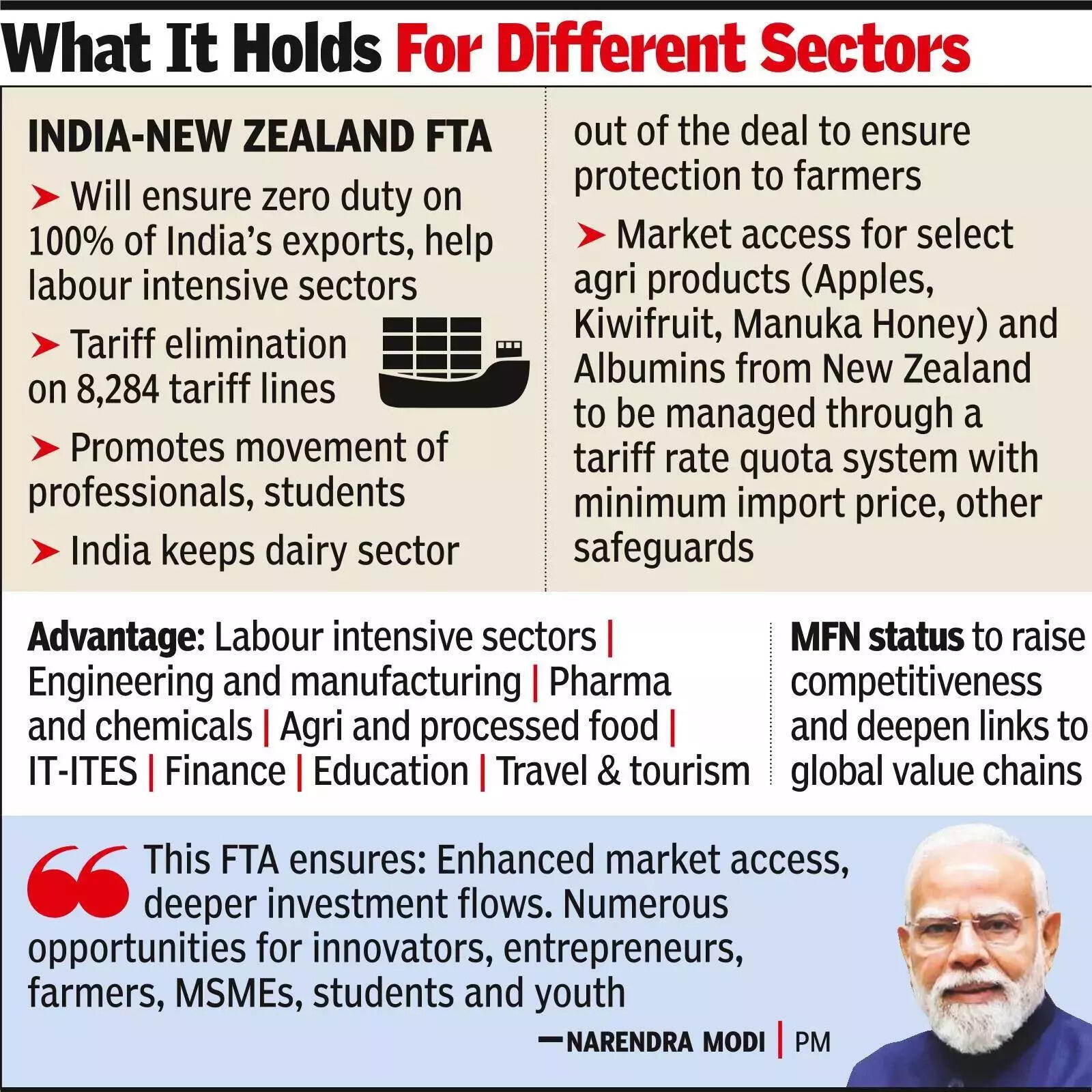
A new temporary employment entry visa will permit up to 5,000 Indian professionals at any given time to work in New Zealand for up to three years across sectors, such as IT, engineering, healthcare, education, and construction. The arrangement also covers Indian chefs, yoga instructors, AYUSH practitioners, and music teachers. In addition, 1,000 multiple-entry working holiday visas will be issued every year, allowing young Indians to travel and take up short-term employment.Agricultural and processed food exports will benefit from tariff removal by New Zealand on fruits, vegetables, spices, cereals, coffee, and cocoa. Organic products, such as basmati rice, tea, psyllium husk and flax seeds will gain from mutual recognition arrangements based on Australian standards. New Zealand will also support productivity plans for apples, kiwifruit and honey in India through centres of excellence, improved planting material, joint research and post-harvest support.New Zealand will provide 100% duty-free market access to all of India’s current exports and has committed market access across about 118 services sectors, including IT, professional services, education, telecom, construction, finance, tourism, and distribution. “We have also been able to open up 118 sectors, which will also give us an opportunity to participate in tourism, IT, telecom, audio, visual, etc. We are very happy to report back to the nation that there will be a fast track mechanism for approval of Indian pharmaceutical products, which will open up doors to the New Zealand market and help us capture a larger share of their current imports of pharmaceuticals and medicines,” said commerce and industry minister Piyush Goyal. Manufacturing and labour-intensive sectors are expected to see immediate gains. Textiles, apparel, and clothing will get duty-free access, supporting exports of garments, home textiles, and handlooms. Leather and footwear tariffs will be cut to zero from peaks of up to 10%. Engineering goods, chemicals, electronics, machinery, automotive products, plastics, and rubber items will see tariffs reduced or eliminated over time. In return, India has agreed to cut or eliminate duties covering 95% of current bilateral trade value. New Zealand will get immediate access for products such as wood, wool, sheep meat and raw hides, with phased access for petroleum products, malt extracts, vegetable oils, and selected electrical and mechanical machinery in 3 to 10 years, and access to India for apples, kiwifruit, Manuka honey, and milk albumins limited through quotas and price safeguards.