
‘Kochi Biennale challenges the practice of putting certain artists on a pedestal’ | India News
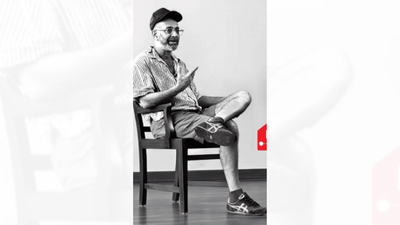
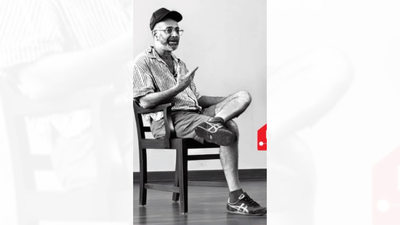
The Kochi-Muziris Biennale has never been about polished spectacle. Instead of wine and cheese, there are fried banana fritters, a curator dressed in shorts, with some works unfinished and others still finding their rhythm. Neelam Raaj spoke to curator Nikhil Chopra on why he wanted to blur hierarchies and invite viewers to experience contemporary art as something dynamic rather than fixedYou were one of the OGs of performance art in India, back when it wasn’t even widely accepted as art. You’ve done things like eating and sleeping at the Metropolitan Museum of Art in New York to trace the legacy of colonialism. As curator, the Biennale feels like it’s part of your attempt to expand the definition of art. Was that your aim?What interested me here was working with forms that don’t sit neatly in one category. Take the performance of French artist Uriel Barthélém. He is a drummer and composer but his was not just a music performance, it was also an experimental percussion and visual work. The drum kit is programmed to generate visuals, creating a multidimensional, multisensory experience. For me, it was almost like watching a live painting unfold.Your curatorial team at HH Art Spaces brought together established artists like Marina Abramovic and our own Gulammohammed Sheikh alongside artists who don’t even have gallery representation. That’s unusual, isn’t it?It was very much about dismantling hierarchy. We wanted to stop working with a pyramid structure where certain artists are placed on pedestals. By placing emerging artists alongside figures with established practices, the intention was to level the playing field and push back against gatekeeping. It allows younger voices to see their own work and research in dialogue with art history and excellence, and to recognise the strength of their own journeys.The Biennale also challenges the idea of art as something static or framed. There is Belgium-based Nigerian artist Otobong Nkanga who is growing a garden at Aspinwall and Argentine artist Adrián Villar Rojas who stuffed decaying food into obsolete fridges.Yes, art here is meant to be dynamic. Take Otobong’s garden, for example. It’s freshly planted now, but it will grow and change over the course of the Biennale. Time becomes a material. We have three months to cultivate this exhibition, almost like a garden, and that duration allows works to transform.The theme is ‘For the Time Being’. What does ephemerality mean to you in this context?It’s a series of moments. The Biennale has a beginning and an end, an entry and an exit. We’re acknowledging that we’re passing through time and place. Many of us have been living in Kochi for months, treating it as a residence rather than a temporary site. That kind of immersion is essential.Kochi itself feels deeply embedded in many of the works. Ghanaian artist Ibrahim Mahama was talking about how he sourced local sacks with the stamps of trade to turn a Mattancherry warehouse—a relic of its mercantile past—into a Parliament of Ghosts. How important was it that artists work closely with the city?Very much so. Many artists sourced materials locally, worked with students, carpenters, craftspeople, and technicians here. We’re crediting everyone involved, and their names will appear alongside the wall texts and in the catalogue. This exhibition was made collectively, with the city.The Biennale positions itself outside the commercial art market, yet collectors are clearly keeping an eye out for promising artists. Are you surprised by that?Artists need to sustain their lives. If art can become an agency for them, there’s nothing wrong with it. For me personally, as a performance artist, I never initially thought about my relationship with the market. Over time, drawing became a sustainable practice that fed my performances, and the performances fed the drawings. It became a symbiotic relationship.I’ve bumped into many locals and tourists here who admit they’ve never been to a gallery before, and many don’t have an ‘arty’ vocabulary. But you’ve spoken about how it’s okay if audiences don’t understand everything.That openness is crucial. Someone told me they didn’t understand everything, but they understood what they liked, and that was enough. Local residents, international visitors, first-time viewers, and specialists, everyone is invited to experience it on their own terms.Finally, what do you think is the function of a Biennale for someone encountering contemporary art for the first time?This Biennale, in many ways, is about demystifying making, watching, and interacting with art. It’s about instilling faith in the idea that art and poetry are essential to people’s lives. Contemporary art has the ability to poetically approach difficult conversations— about caste, gender, patriarchy, sexuality—within a space that feels safe and open. The aim is to allow people in, to break away from the white cube of galleries, and to make art feel lived, shared, and human.There were some grumbles about the spaces opening while many works were still in process. Did that unfinished state bother you?From the beginning, our curatorial note made it clear that we weren’t afraid of inviting people into that process. Some works were still being adjusted, some artists hadn’t fully completed their installations, and that was fine. People could walk through, see what was there, and also sense that things were still being fixed and tuned. Soon, everything will find its place, but the exhibition itself functions as an activation space over time.