100 yrs later, Left movement looks for ‘Inquilab’ | Mumbai News
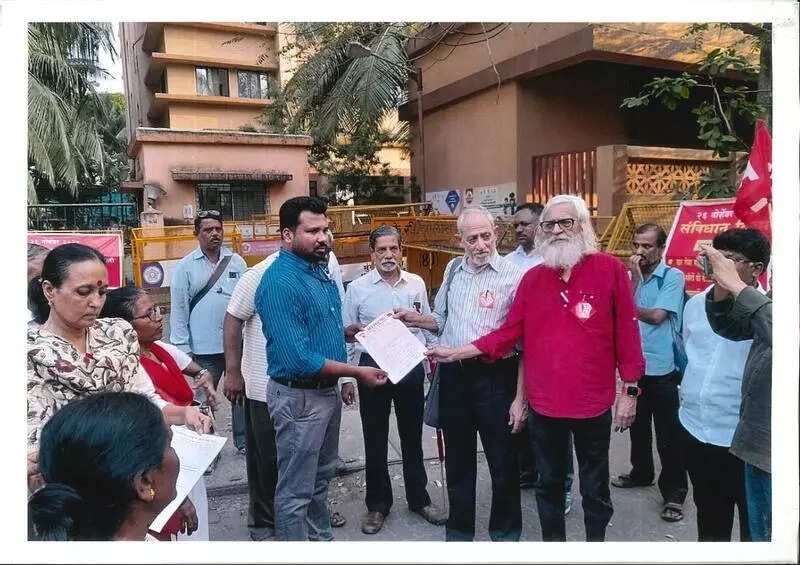
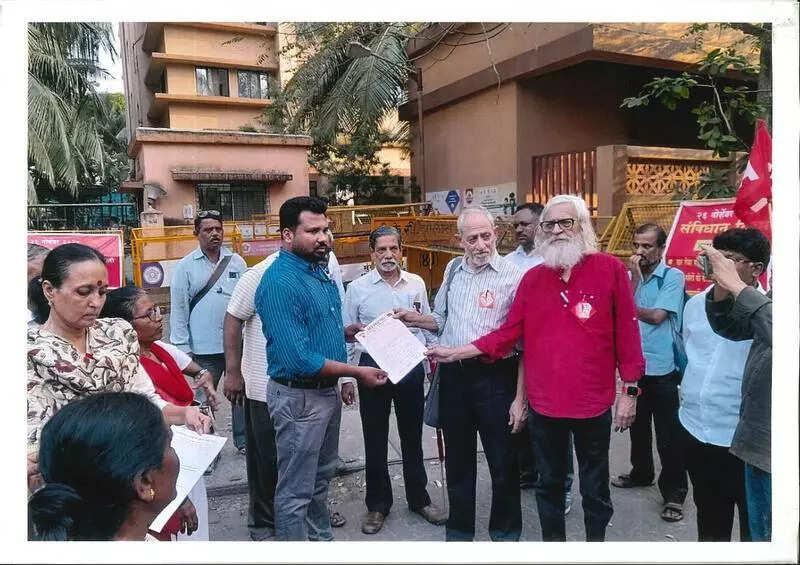
With a pair of thick glasses perched on his nose, Comrade Prakash Reddy, 75, peers out of the glass wall of his third-floor office. “The skyline has completely changed. Malls and residential towers have replaced mills and their chimneys, which dotted Parel and neighbouring areas,” sighs Reddy, a senior member of the Communist Party of India (CPI) in Mumbai. “We may not be politically very strong, but the left movement survives in our struggle,” claims Reddy, seated at a table silhouetted against a wall from where many stalwarts, including CPI founder-trade union leader S A Dange, look down benignly.As CPI prepares to hold a valedictory function of its centenary celebrations—founded on December 25, 1925, in Kanpur—at Dadar on December 26, it seems apt to look at where the left movement and its ardent supporters in the city stand today. Mumbai once reverberated with the revolutionary slogan of inquilab zindabad as girni kamgars (mill workers) battled owners’ alleged apathy even as their leaders dreamed of naya savera (a new dawn). Many critiqued these leaders as romantics who chased chimera and dreamed of utopia.The CPI’s current office—third floor of the 22-storey Rudra Heights in Parel East, replacing the famous Dalvi building—speaks volumes about the movement’s capitulation to the market forces. In exchange of nine rooms the party once owned at the famous Dalvi building, it now occupies two floors, including the one which houses offices of All India Federation, Mumbai Girni Kamgar Union, and National Federation of Indian Women.What has the left achieved, and what is left of the left in the city?“Communists were at the forefront of the Royal Indian Navy revolt (1946) and Samyukta Maharashtra movement. Nationalisation of banks, bonus, and reforms in sectors like LIC, GIC, end of the privy purses, all were achieved because of our struggle,” says CPI’s Secretary Milind Ranade, 63. As also general secretary of Maharashtra Municipal Kamgar Union and Kachra Vahtuk Shramik Sangh, which together have 15,000 members, Ranade commands influence. “We took our fight to the Supreme Court to make 4,500 contractual safai karamcharis permanent. The spirit to fight for the rights is alive,,” says Ranade.There were over 200,000 workers in 60 cotton mills in the city. Supporting them were members of the communism-inspired Progressive Writers’ Association (PWA) and Indian Peoples’ Theatre Association (IPTA). Sahir Ludhianvi’s haunting lyrics in Pyaasa (1957), “Jinhein naaz hai Hind par woh kahan hain” and “Yeh duniya agar mil bhi jaaye toh kya hai” echoed the working class’s yearning to end exploitation. The likes of P C Joshi and Kaifi Azmi were card-carrying members of the CPI. Sajjad Zaheer, Ali Sardar Jafri, Khwaja Ahmed Abbas, and many others helped the left movement.”Post-independence, our target has changed, but the aim to help the working class remains,” says Charul Joshi, 72, a former millhand who is holding a photo exhibition of left-leaning writers and poets at the December 26 event.Left-aligned theatre and cinema, says theatre and film director Ramesh Talwar, have suffered a setback. “Sagar Sarhadi of the film ‘Bazaar’ (1982) fame put Rs 1 crore to make ‘Chausar’ but could not release it as no one bought it.