

Can Andhra’s rare earth corridor fuel India’s clean-energy dreams? | India News
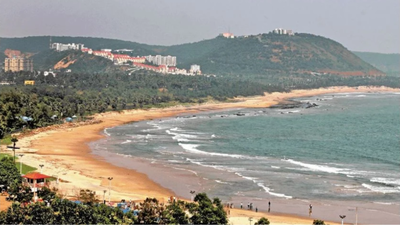
Along Andhra Pradesh’s sweeping 974km coastline, the waves wash more than picturesque beaches and bustling fishing harbours. Beneath the dark, heavy sands — from Srikakulam in the north to Nellore in the south — lies one of India’s most valuable and underexploited geological assets: rare earth mineral reserves that could define the nation’s cleanenergy, defence and semiconductor future.These beach sands contain vast quantities of monazite, the primary source of rare earth elements (REEs) and thorium, along with ilmenite, rutile, zircon, garnet and sillimanite, making the state a rich natural repository of strategic minerals.What distinguishes Andhra’s reserves is not only their abundance, but also their grade. Monazite extracted along this coast carries 55-60% rare earth oxides — among the highest in global benchmarks — and 8-10% thorium, considered a potential fuel for India’s next-generation nuclear reactors.The ore houses a complete suite of light REEs such as lanthanum, cerium, praseodymium, neodymium, samarium, europium and gadolinium, elements that power permanent magnets essential for electric vehicles, wind turbines, missile guidance, satellite systems, fibreoptics, superconductors and advanced medical diagnostics.The mineral-rich belt stretches like a continuous corridor. Geological surveys identify promising deposits at Bhimunipatnam, Kalingapatnam, Kakinada, Narsapur, Machilipatnam, Chirala, Vodarevu, Ramayapatnam and Dugarajapatnam, forming an uninterrupted chain of strategic material potential. Estimates by the Atomic Minerals Directorate and Indian Rare Earths Limited (IREL) place India’s total deposits at over 300 million tonnes of heavy mineral sands (sand deposits rich in dense, valuable minerals like ilmenite, rutile and zircon), with 12-15 million tonnes of monazite, enough to support 40-50% of domestic rare earth requirements for decades. Andhra is estimated to hold 3035% of India’s monazite reserves.For long, these beaches have remained underutilised, overshadowed by concerns around atomic regulation, limited processing capacity and policy restrictions. Now, with global supply chains tightening and countries scrambling to diversify away from China — which controls nearly 85% of global REE processing capacity — the state has quietly moved into strategic focus.APMDC steps on the gasRecognising the opportunity, the Andhra Pradesh Mineral Development Corporation (APMDC) has stepped up exploration and monetisation efforts with renewed urgency. The Centre has granted 16,000 hectares of beach sand-mining leases to the corporation, marking one of the largest allocations for any state. Of this, operational clearance has been issued for 1,000 hectares, recently allotted to a private developer through open tender. Encouraged by potential revenue prospects, the state has sought approval to open another 4,000 hectares, after which the corporation plans to scale out activities across the remaining 11,000 hectares on a fast-track basis.APMDC’s shift is not confined to mining. The focus now is on value addition within India — crucial because exporting raw ore leads to importing high-value end products at a steep cost. “We are concentrating on downstream processing facilities to make the country self-reliant,” APMDC managing director and senior IAS officer Pravin Kumar told TOI, underlining the state’s aggressive roadmap. “Exporting raw minerals forces us to import finished rare earth magnets, chips and components at a high premium. The Centre’s PLI (production-linked incentive) will be a game changer.”
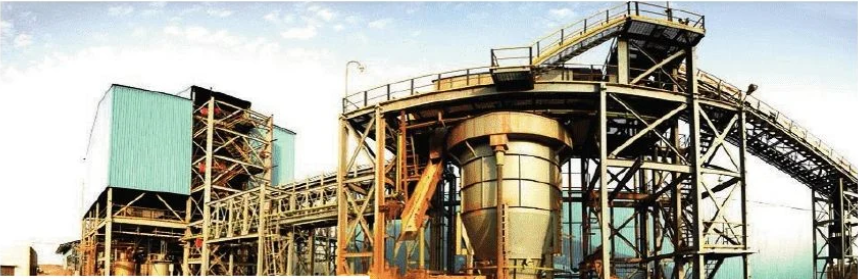
At present, monazite processing remains the exclusive domain of IREL, a Central PSU operating under atomic mineral regulations. Private players can mine associated minerals such as garnet, ilmenite and zircon but must hand over monazite to IREL after separation. To increase domestic refining capacity, IREL is establishing a 10,000-tonne-perannum monazite processing plant at Gudur, Nellore, scheduled for commissioning in 2026. Once operational, it is expected to become a central pillar of India’s REE value chain.Centre’s PLI pushIn a major policy intervention aimed at cutting import dependence and accelerating green-tech manufacturing, the ministry of mines has rolled out guidelines for pilot projects to recover critical minerals — including REEs — from mining waste, red mud, fly ash and industrial tailings. The programme, approved under the National Critical Mineral Mission (NCMM), earmarks funding of up to Rs 100 crore from the National Mineral Exploration and Development Trust (NMEDT) for recovery-oriented R&D and commercial pilots.The mission targets securing domestic supply of 24 strategic minerals such as neodymium, dysprosium, yttrium and cobalt, vital for EV batteries, solar wafers, turbines and missiles. “These guidelines mark a pivotal step towards converting waste into wealth,” said Geetika Sharma, director (projects), NMEDT. Pilot studies may receive 90% central funding, enabling partnerships across PSUs, academia, startups and private mining companies.This policy push is particularly advantageous for Andhra Pradesh. Though placer deposits have for decades supported India’s titanium and zircon industries, enormous quantities of tailings with recoverable REEs, thorium and uranium have remained unprocessed due to lack of technology and regulatory clarity.Existing infrastructureAndhra Pradesh already possesses early-stage infrastructure that could scale with the new policy. A private REE-processing plant in Anantapur is operational and handles thousands of tonnes annually. IREL runs a beach sand separation plant in Visakhapatnam, generating tailings suited for rare earth extraction using hydrometallurgical and solvent-extraction techniques. Officials estimate that reprocessing alone could unlock a Rs 5,000-crore annual opportunity through circular extraction.“Our monazite reserves can yield dysprosium for EV magnets and terbium for high-performance turbines,” a senior mines and geology department official told TOI.To ensure accountability, proposals will be screened by an inter-ministerial project sanctioning committee, while technical validation will come from experts at IITBombay, IIT-ISM Dhanbad and CSIR-IMMT Bhubaneswar. Implementation pathways will be led by Jawaharlal Nehru Aluminium Research Development and Design Centre, Nagpur for mining waste recovery projects and Anusandhan National Research Foundation (ANRF), under the Centre’s department of science and technology, for tech-driven pilots.Pilot projects in pipelineThe Andhra government is preparing applications to recover REEs from thermal plant fly ash in Nellore and Krishnapatnam, known to contain trace rare earths. Collaboration possibilities with IIT-Hyderabad, National Mineral Processing Laboratory (Jamshedpur) and geologists are being explored, especially around bio-leaching and electrochemical extraction. Scientists say tailings (ore residues) at Andhra Pradesh and comparable IREL operations in Kerala suggest that over 80% REE extraction is achievable with modern technology.DAR Subramanyam, a retired economics professor from Acharya Nagarjuna University, noted that rapid scale-ups can reduce India’s import dependence from 95% to nearly 50% within five years, provided commercial plants are deployed under the National Critical Mineral Mission (NCMM) framework. With global REE demand expected to grow tenfold by 2030, Andhra stands positioned to emerge as the country’s critical-mineral capital.The first call for proposals under the PLI window is expected shortly, signalling what experts describe as the beginning of a mineral renaissance on the state’s shoreline.From being a silent geological marvel, Andhra’s beaches are on the cusp of powering India’s transition to clean mobility, renewable energy and advanced electronics. The sands are no longer just a coastal landscape — they are India’s next strategic frontier.